School Bus Plunges 100 Feet Into Rocky Ravine, Killing 25 as Investigators Examine Braking System
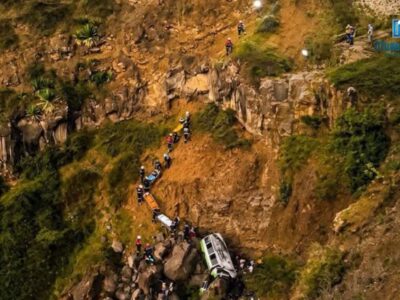
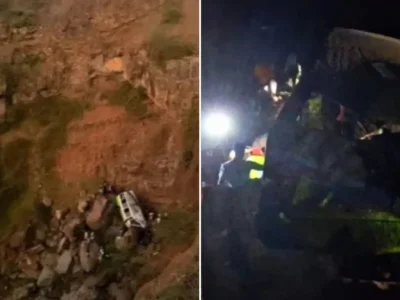
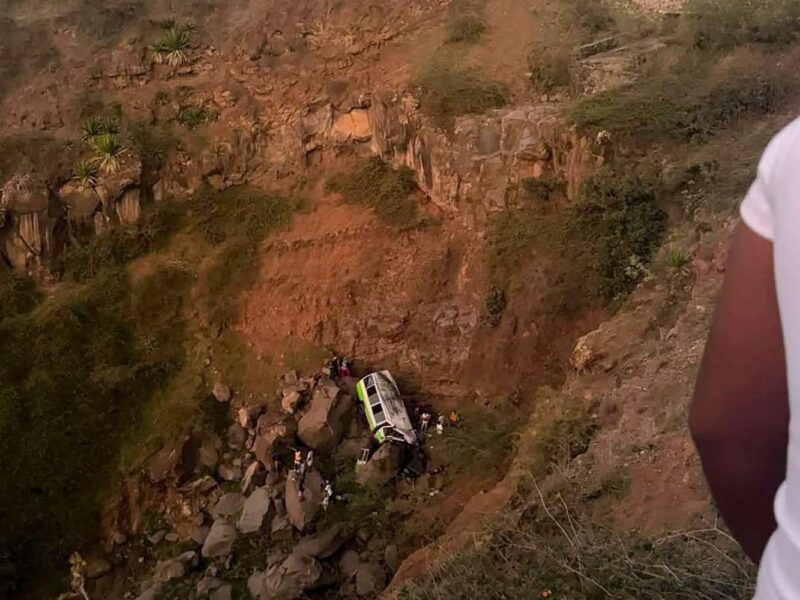
A school bus carrying dozens of students plunged roughly 100 feet into a rocky ravine after leaving a mountain road in Cape Verde, killing at least 25 people and triggering a difficult rescue operation on Fogo Island. The vehicle reportedly went off the roadway near Campanas de Cima while returning from an outing to Chã das Caldeiras. Witness accounts and early descriptions of the crash indicate that the bus passed a sharp bend before leaving the road and falling into steep terrain below. Emergency crews faced dangerous conditions as they descended toward the wreckage, where survivors and victims were found among the rocks. Investigators have now begun examining the vehicle and crash scene to establish why the bus failed to negotiate the mountain road. Questions surrounding the vehicle’s braking system have emerged, but authorities have not yet publicly confirmed that brake failure caused the crash.
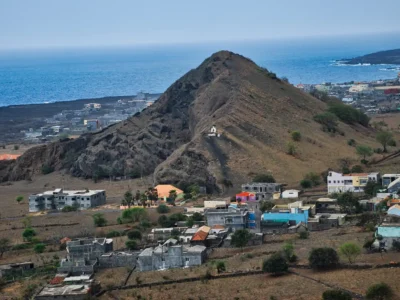
The accident occurred on Saturday, Sept. 5, on a mountainous route in northern Fogo. The bus was carrying approximately 32 people, many of them school-age children and teenagers. The group had traveled to Chã das Caldeiras, an area located within the volcanic landscape of Pico do Fogo, before beginning the return journey toward São Filipe. The trip had reportedly been organized by the bus driver as an annual outing for students he normally transported to school. What was intended to be a recreational journey became a mass-casualty disaster when the vehicle left the roadway and descended approximately 30 meters into a ravine. The force of the fall left the bus severely damaged and created immediate difficulties for rescuers attempting to reach the passengers. Because the wreckage was located far below the road and surrounded by uneven volcanic terrain, emergency workers had to negotiate steep slopes and exposed rocks to reach those inside.
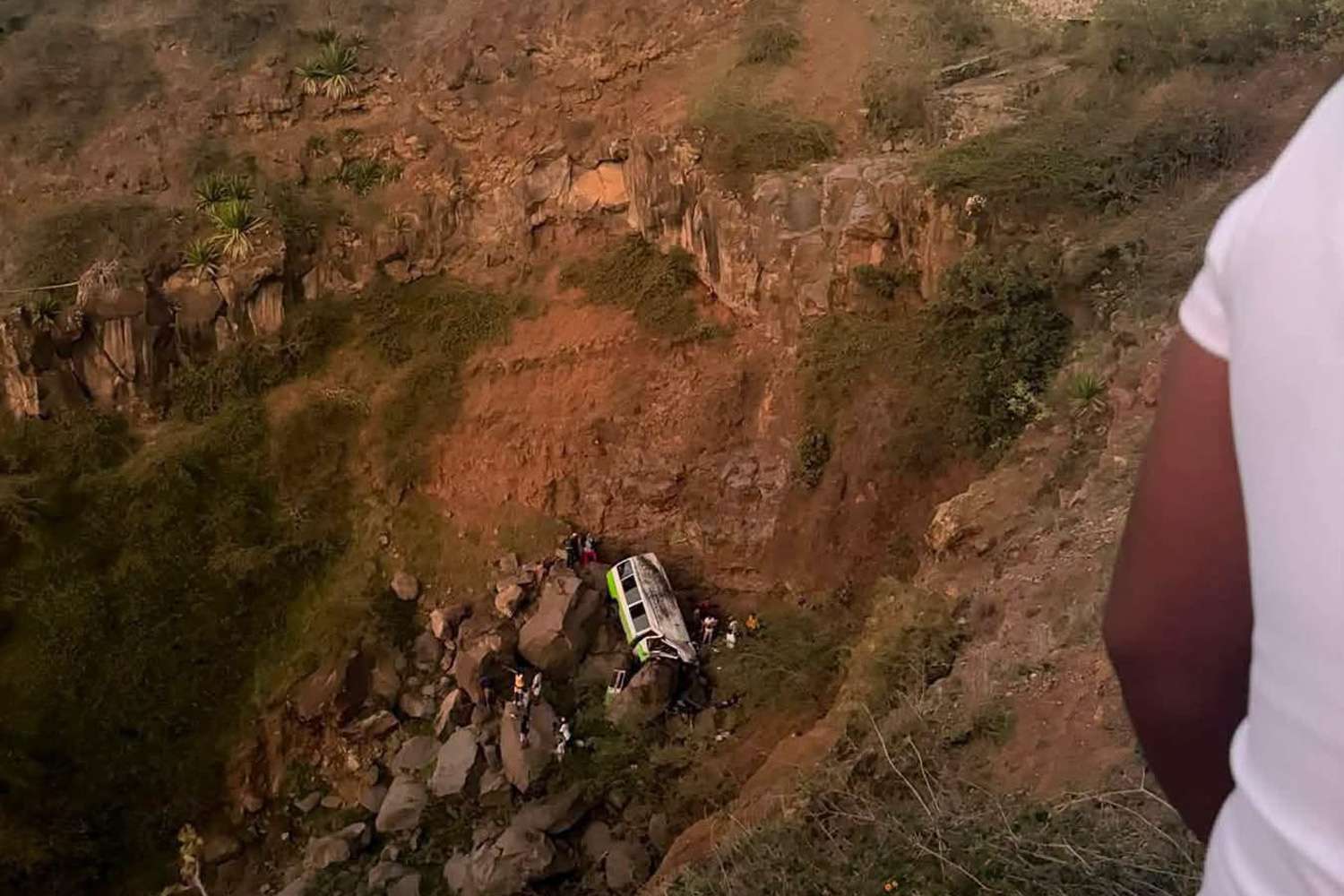
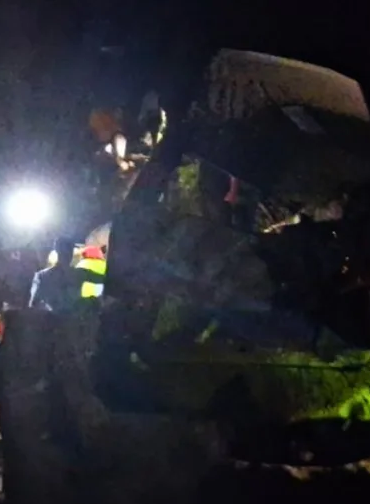
The scale of the tragedy became apparent as rescue crews reached the wreckage. At least 25 people were killed, including numerous students and the driver. Nineteen injured passengers were transported to São Francisco de Assis Regional Hospital in São Filipe, where doctors and medical staff treated survivors. Several of those injured were reportedly in serious condition, adding another layer of urgency to the response. The hospital became a gathering point for relatives searching for information about their loved ones as authorities worked to identify those who had died. The difficult location of the crash meant that rescuers could not rely solely on standard roadside recovery equipment. Victims had to be brought up from the ravine before being transferred for medical treatment or identification. The operation continued under challenging conditions as teams worked around the overturned vehicle and the surrounding rocks.
The possibility of a braking problem has become one of the issues investigators are examining. The bus reportedly left the road after approaching a sharp section of the mountain route, raising questions about whether the driver was able to slow the vehicle sufficiently before reaching the bend. Investigators are expected to inspect the braking components, steering system, tires and other mechanical systems as part of the reconstruction. However, there has been no definitive official finding that a brake failure caused the accident. Mechanical evidence collected at the scene must be examined alongside witness statements, road conditions and the driver’s actions before the crash. A damaged component discovered after a severe collision does not automatically prove that the same component failed beforehand. Investigators therefore face the difficult task of determining whether any mechanical problem existed before the bus left the road or whether damage occurred as a consequence of the plunge.

The road itself will also be an important part of the investigation. Mountain routes on volcanic islands can present sharp bends, steep gradients and limited margins for error. At Campanas de Cima, the bus was traveling through terrain where leaving the roadway could result in a dramatic drop. Investigators will likely document the curve, roadway surface, visibility and roadside barriers while attempting to reconstruct the vehicle’s path. Any available video footage, photographs or witness accounts could help establish how the bus approached the bend and whether it appeared to slow before leaving the road. Investigators may also examine whether the vehicle was traveling at an appropriate speed and whether its load or passenger distribution affected its handling. Until those examinations are completed, it remains premature to identify a single cause. The fact that the bus went over the edge without stopping is clear from the aftermath, but what prevented the vehicle from remaining on the road is still being determined.
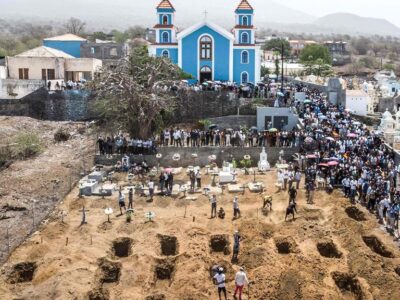
The victims were traveling as part of an outing connected to the driver, rather than an official school excursion, according to reports. The students came from communities around Fogo and included children and teenagers who had been looking forward to the trip. The tragedy has therefore affected multiple families and school communities across the island. Funerals began soon after the crash, with relatives, friends and residents gathering to mourn the victims. Seven people were reportedly buried on Sunday, while further funeral services were expected to follow. The government responded by declaring two days of national mourning, reflecting the scale of the disaster. President José Maria Pereira Neves expressed condolences to the victims’ families and described the incident as a devastating catastrophe. The national response has underscored how profoundly the crash has affected Cape Verde, far beyond the immediate area where the bus went over the cliff.
The investigation will now determine whether the tragedy resulted from mechanical failure, driver error, road conditions or a combination of factors. Investigators must distinguish between evidence showing what happened during the crash and evidence establishing what caused it. The braking system will be particularly important if examination confirms that a component was defective before the collision. Investigators will also need to establish whether the driver attempted to brake, whether braking pressure was recorded in any available system and whether tire or roadway evidence supports the sequence described by witnesses. Other mechanical systems will receive similar scrutiny. The goal will be to reconstruct the final moments before the bus crossed the roadside boundary and determine why it could not be brought safely around the bend.
For now, the human toll remains the most devastating part of the disaster. At least 25 people died after a journey that had begun as an ordinary outing for students ended with a plunge into a rocky ravine. Nineteen others survived and were taken to hospital, with some facing serious injuries and lengthy recoveries. Families continue to mourn as authorities investigate the circumstances of the crash and emergency teams complete recovery work. The reported concerns involving the braking system could become central to the investigation, but no final mechanical cause has yet been established. What investigators ultimately uncover could determine whether the crash was caused by a sudden mechanical failure, a problem that developed before the journey, driver error or another factor entirely. Until that evidence is fully examined, the unanswered question remains why the bus failed to slow and negotiate the mountain bend before crossing the cliff edge — a question now carrying enormous consequences for the families of at least 25 people who will never return home.