Father Dies Days After Plane Crash That Killed Wife and Two Sons, Leaving Two Teenagers Orphaned
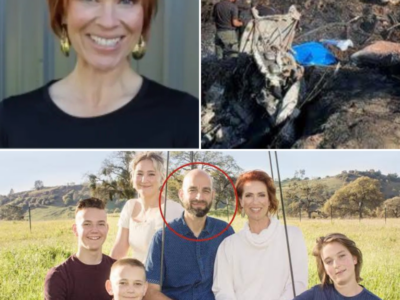
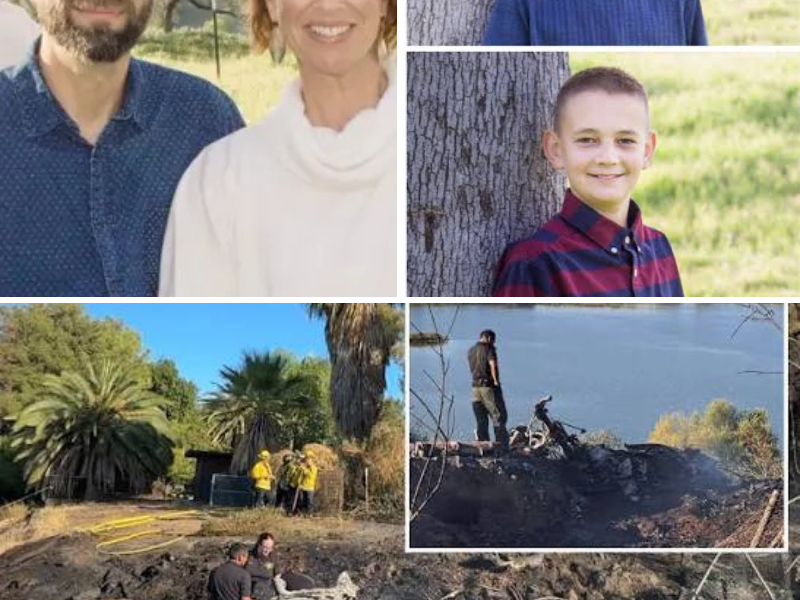
A California family has suffered an extraordinary loss after a devastating plane crash claimed the lives of four members and left two teenage children without either parent. Craig Eady, 44, reportedly survived the initial crash that killed his flight-instructor wife, Danna Eady, and their two younger sons. After being transported to a Fresno hospital with serious injuries, Craig later died, according to the account surrounding the tragedy. His death left the couple’s two eldest children, Lucien, 17, and Felicity, 18, facing the loss of both parents and their younger brothers in the aftermath of a single catastrophic flight.
The family had reportedly been traveling together when their single-engine aircraft crashed near Sierra Sky Park. Danna, an experienced flight instructor, was said to have been at the controls as the aircraft approached the area. The plane struck terrain and caught fire, producing a devastating scene for emergency responders. Danna and the two younger boys died in the initial crash, while Craig survived long enough to receive hospital treatment. His subsequent death transformed an already devastating aviation accident into a tragedy involving the loss of an entire immediate family unit, leaving relatives and friends to support the surviving teenagers.
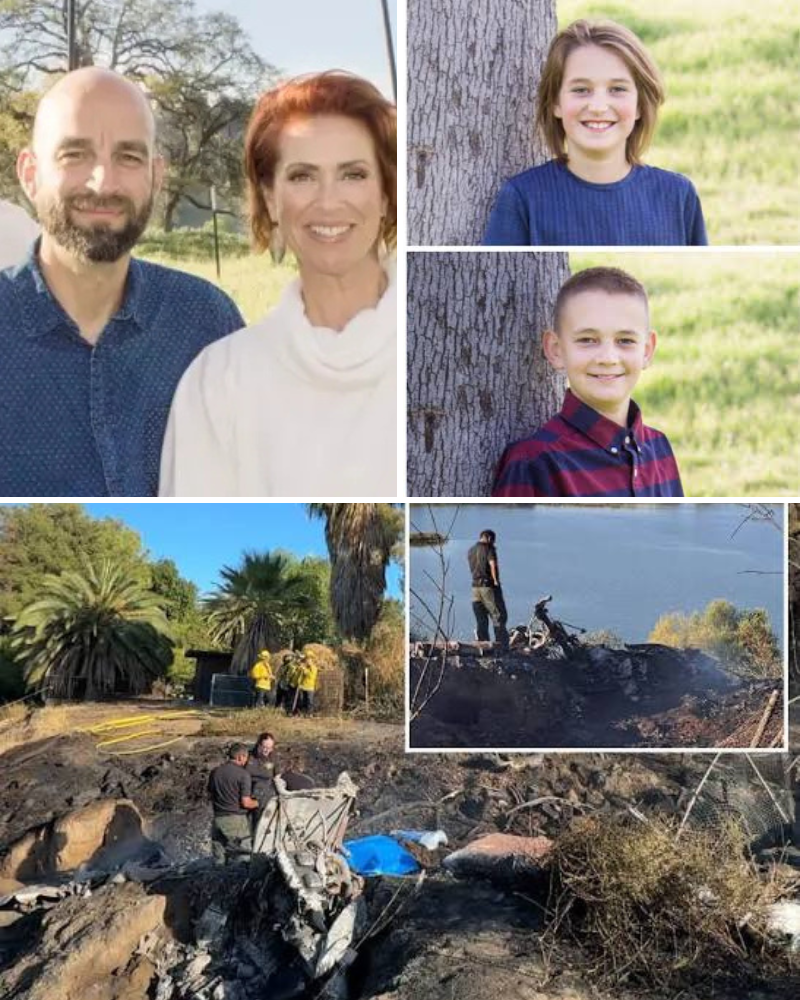
The circumstances surrounding the crash remain the focus of investigators. A fatal general-aviation accident can involve numerous possible contributing factors, including mechanical failure, weather, pilot workload, aircraft performance, medical emergencies or problems developing during flight. Investigators from the National Transportation Safety Board examine these possibilities by studying the wreckage, aircraft maintenance records, flight data, communications and environmental conditions. The fact that Danna had professional flight experience may make the circumstances particularly difficult to understand for those who knew her, but it does not by itself establish what caused the aircraft to lose control.
Attention has also focused on communications between the aircraft and air-traffic controllers. The account surrounding the crash describes a gap in the final radio transmission before the aircraft struck the ground. Such a gap can occur for many reasons and does not necessarily indicate an undisclosed emergency. Radio communications can be interrupted by signal limitations, cockpit workload, frequency changes or an emergency that leaves the crew unable to communicate. Investigators can compare available recordings with radar information and other flight data to establish exactly when communication stopped and what the aircraft was doing at that time.
If an emergency occurred inside the cabin, investigators may be able to determine its nature through physical and digital evidence. The aircraft’s flight instruments, navigation equipment and engine components may contain information about its final operating conditions. Depending on the aircraft’s equipment, investigators may also recover GPS or other electronic data showing changes in altitude, speed and heading. These records can help establish whether the aircraft experienced a sudden loss of power, a change in flight direction or another event shortly before impact.
The condition of the wreckage will be especially important. Investigators must determine which components failed before the crash and which were damaged as a result of the impact and subsequent fire. This distinction can be difficult when an aircraft suffers a high-energy collision followed by extensive burning. Engine components, propellers, flight controls and fuel systems can all be examined for evidence of pre-impact failure. Investigators may also reconstruct sections of the aircraft to determine its configuration at the moment of impact.
Craig’s survival following the crash could have provided an important potential source of information, depending on his medical condition and whether he was able to communicate with investigators. Survivors of aviation accidents can sometimes provide details about events that are not captured by flight data. However, severe injuries can affect memory and consciousness, and investigators must compare any recollections with objective evidence. Craig’s death days after the accident means any information he may have been able to provide would have had to be obtained during a very limited period.
The loss has been particularly devastating because the surviving children were teenagers. Lucien, 17, and Felicity, 18, were reportedly not aboard the aircraft when the crash occurred. They are now facing the deaths of their parents and two younger brothers at the same time. Losing one close family member can be overwhelming; losing four members of an immediate family in a single event creates an extraordinary emotional and practical burden. Relatives, friends and community members may now be helping the teenagers navigate funeral arrangements, housing, education and other responsibilities while they grieve.
For the family, the sequence of events is almost impossible to comprehend. Danna, whose professional life was connected to aviation, was reportedly piloting the aircraft. Craig survived the initial impact but ultimately succumbed to his injuries. Their two youngest sons died at the crash site. Their two eldest children were left behind. What began as a family flight therefore became a chain of losses extending from the crash scene to the hospital several days later.
The investigation will also examine whether the aircraft had any history of mechanical problems. Maintenance records can reveal whether required inspections were completed and whether previous defects had been documented. Investigators may review recent repairs or component replacements and determine whether any systems were overdue for inspection. If a mechanical failure is identified, authorities may examine whether similar aircraft or components require additional attention. Such findings can eventually lead to safety recommendations intended to prevent another accident.
Weather information could provide another important piece of the reconstruction. Even experienced pilots can face rapidly changing conditions, particularly when operating near mountainous or uneven terrain. Wind direction, visibility, cloud cover and temperature can influence aircraft performance and navigation. Investigators may compare official weather observations with the flight’s recorded trajectory and determine whether environmental conditions played any role. At this stage, however, the existence of challenging weather would not establish that weather caused the accident.
The aircraft’s route and altitude before the crash will also be examined. Radar information, if available, can help investigators map the final portion of the flight. A sudden change in altitude could indicate a loss of control, while an unexpected turn could point toward a navigation or operational issue. A gradual descent could suggest a different sequence of events. Investigators will likely compare the aircraft’s actual trajectory with the expected route to determine when the flight first deviated from normal operation.
The reported radio gap is therefore only one element of a much larger investigation. Investigators may reconstruct the final minutes by combining air-traffic-control recordings, radar tracks, flight data and physical evidence. If the last transmission ended abruptly, authorities can examine what was said immediately beforehand and whether any unusual sounds or background activity were recorded. The absence of a distress call does not necessarily mean no emergency occurred. A sudden mechanical or medical problem can leave little time for a pilot to communicate.
Danna’s experience as a flight instructor could also become relevant to investigators as they examine the possible responses available during an emergency. Professional training may provide a pilot with established procedures for engine failure, loss of control and other problems. Investigators can determine whether the aircraft’s trajectory was consistent with an attempted emergency response. They may also consider whether the emergency developed too quickly for a conventional response to be possible. The goal is to establish what happened, rather than assume that experience either caused or prevented the accident.
The tragedy has resonated beyond the immediate family because of the number of lives lost in a single aviation accident. Friends and members of the aviation community are mourning Danna, while relatives are now supporting the surviving teenagers through an unprecedented period of grief. The loss of the younger boys has compounded the family’s pain, while Craig’s later death means that the initial survival offered only a temporary reprieve from an already catastrophic event.
Investigators will ultimately seek to determine the probable cause of the crash and whether any contributing factors can be identified. That process can take considerable time, particularly when an aircraft is destroyed by both impact and fire. Evidence must be collected, examined and independently evaluated before investigators can issue reliable conclusions. Early theories can change as additional information becomes available.
For Lucien and Felicity, the investigation may provide answers to questions that are now impossible to answer personally. The loss of their parents and two younger brothers has created an enormous absence in their lives. While federal investigators work through the aircraft evidence, the teenagers and their extended family are left to deal with the human consequences of the accident.
The reported interruption in the final radio communication may eventually become an important part of the timeline, but it does not by itself prove that an undisclosed emergency occurred. The cause could ultimately involve mechanical, operational, environmental or medical factors, or a combination of circumstances. Only a complete investigation can establish what happened.
For now, the crash near Sierra Sky Park remains a heartbreaking aviation tragedy with a family at its center. Danna Eady’s experience as a flight instructor, Craig Eady’s brief survival and the deaths of their two younger sons make the sequence particularly difficult to process. Their two eldest children, Lucien and Felicity, are now left to rebuild their lives after losing the people who formed their immediate family. As investigators continue examining the aircraft’s final moments, the search for answers carries significance not only for aviation safety but also for a family seeking to understand how a single flight could change their lives forever.