THE ILLUSION OF RECOVERY: INSIDE THE TRAGIC BREAKDOWN AND TIMES SQUARE RAMPAGE OF PAMELA CISNEROS.
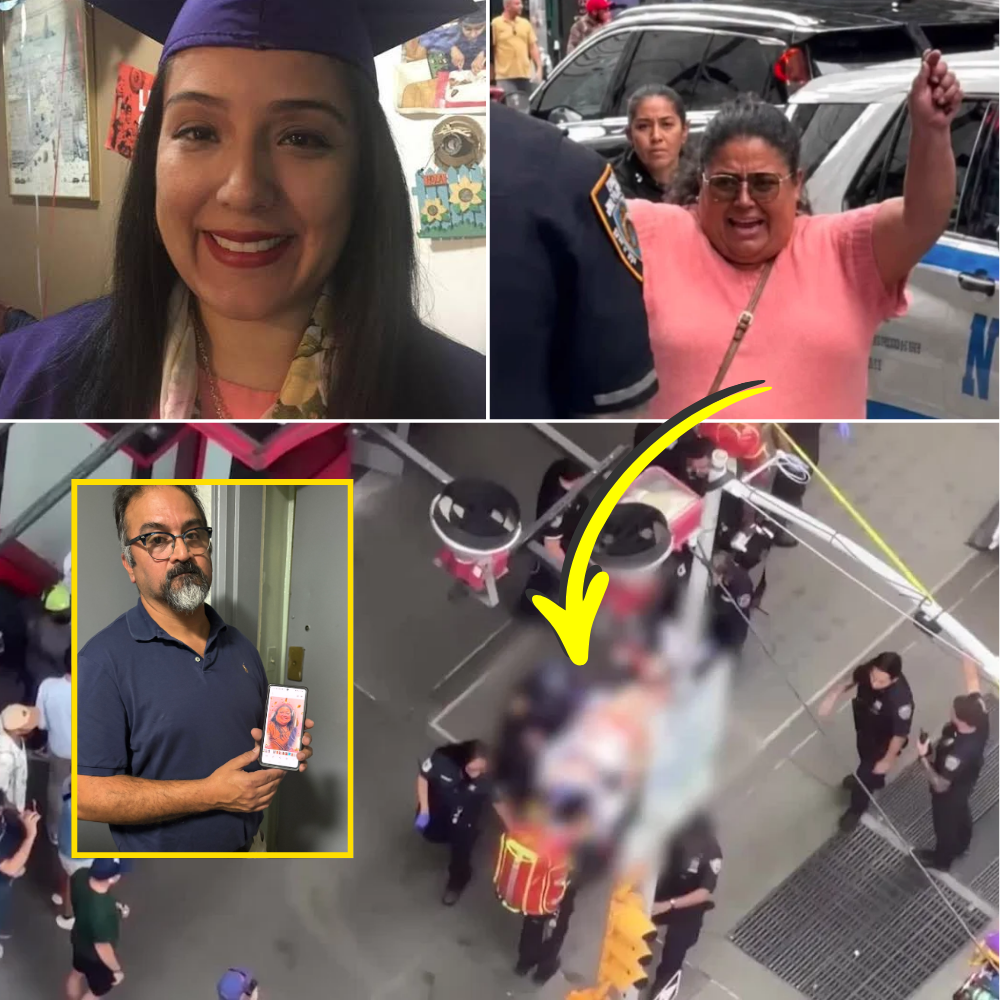
The ride to a treatment appointment earlier this year felt like a routine milestone to Mario Cisneros. When his 49-year-old daughter, Pamela Cisneros, asked him to drive her, he did not hesitate. For years, her family had stood by her side through a grueling wellness journey, navigating the turbulence of severe mental health struggles that had surfaced following the birth of her children. Seeing her maintain stability, adhere to her monthly medication injections, and manage life as a mother of three, her father believed she had finally turned a corner. The rest of the family saw no reason to think otherwise.
Yet, that fragile sense of security vanished on a chaotic Monday afternoon in the heart of Manhattan. In an unprovoked and violent rampage that stunned millions, Pamela’s life culminated in a terrifying sequence of events in Times Square that left a community in grief and police facing heavy scrutiny. Behind the flashing lights, sirens, and global headlines lies a devastating portrait of personal collapse, a family’s blind trust, and a mental health system pushed to its absolute limits.
The Anatomy of a Public Catastrophe
The afternoon tranquility of Midtown Manhattan was shattered near West 41st Street and Seventh Avenue. According to New York City Police Commissioner Jessica Tisch, Pamela pulled two large knives from a red shopping bag and targeted innocent bystanders in broad daylight. Within a span of roughly 20 seconds, she allegedly stabbed a 68-year-old man in the abdomen as he waited to cross the street, then moved north to attack a 32-year-old woman.
The second victim, identified as Erin Piacenti, a Bank of America vice president, succumbed to her injuries at Bellevue Hospital. The male victim survived and remained in stable condition. Witnesses immediately alerted authorities stationed nearby, leading to a tense, four-minute standoff between police and the armed suspect on Seventh Avenue. Body-camera footage later captured officers repeatedly pleading with Pamela to drop the weapons, to which she chillingly responded, “I’m not dropping anything. I would rather kill both of you”. When multiple Tasers failed to subdue her as she advanced toward law enforcement, two officers discharged their service weapons, fatally striking her.
Unraveling the Behind-the-Scenes Turmoil
As the dust settled on the asphalt of Times Square, investigators began digging into the background of a woman whom friends and family remembered through entirely different lenses. Court records and family accounts reveal that Pamela’s life had been unraveling under immense private pressures for years. Her marriage had dissolved through a contentious divorce finalized the previous year, her employment stability had fractured, and her relationships with her three children had grown increasingly strained.
While her brother noted that she had historically managed her bipolar disorder and worked on and off in legal offices, law enforcement records show a history of severe psychiatric crises. Police had previously interacted with her during a 2018 Manhattan hotel incident involving aggressive behavior and a 2019 suicide attempt where she jumped onto subway tracks. Despite these harrowing markers, her inner circle clung to hope, blinded by moments of apparent lucidity.
Community Outcry and Reluctant Grief
The incident has ignited fierce public debates across New York City regarding police protocols, public safety in tourist hubs, and the systemic failures in handling severe mental illness. While Mayor Zohran Mamdani and Police Commissioner Tisch defended the officers’ use of lethal force as a necessary measure to prevent further bloodshed, questions from grieving relatives highlight a deeper community anguish. Pamela’s mother expressed profound confusion to local media outlets, questioning why officers could not have physically subdued her instead of utilizing lethal force.
Meanwhile, her father, Mario, is left grappling with the agonizing dissonance of his final memories with his daughter. He knew her as a gentle soul who would never intentionally hurt anyone, yet he was entirely unaware of the psychological storm brewing beneath her surface. The tragedy in Times Square serves as a haunting reminder of how quickly invisible burdens can shatter public safety, leaving behind grieving families, lost lives, and unanswered questions that will linger long after the crowds return to the avenue.