Nightmare on Runway: Inside the Fiery Miami Crash That Left a Path of Destruction and 5 Dead.
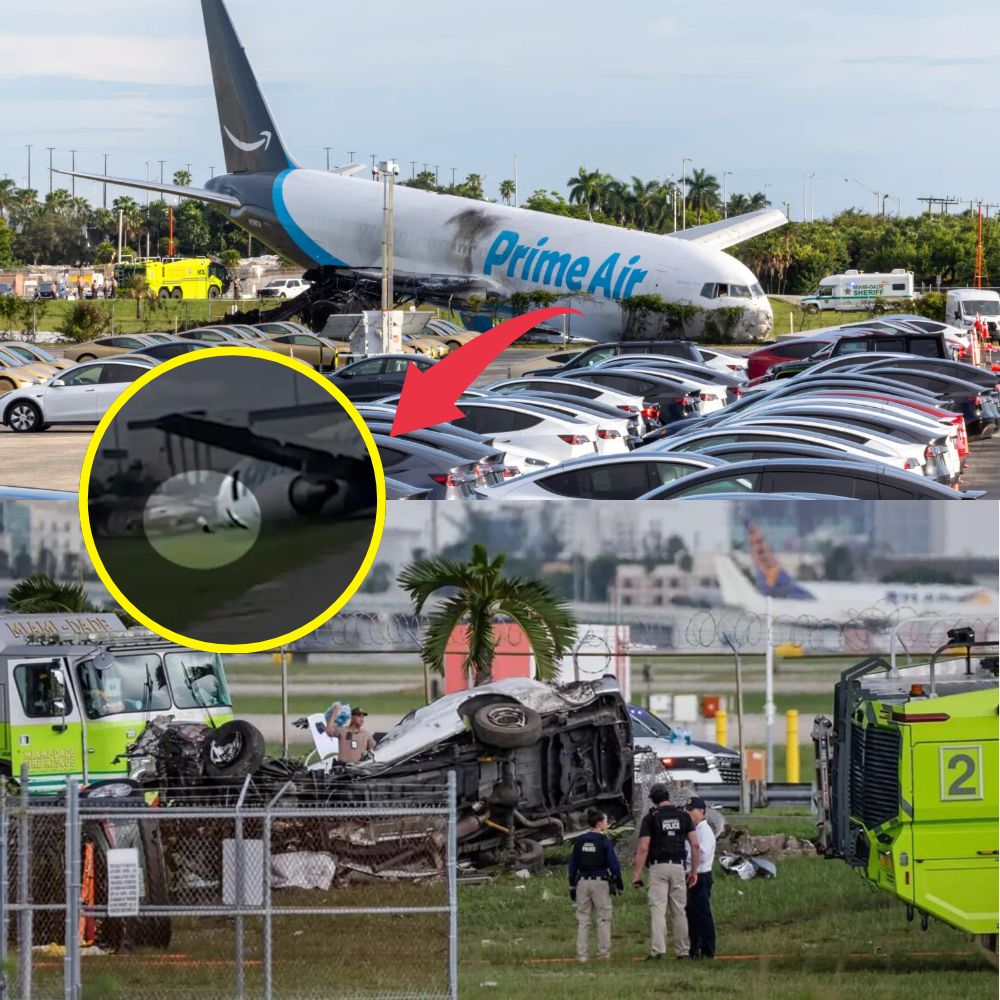
The roar of a jet engine is a familiar soundtrack to aviation hubs worldwide, but on a fateful Sunday afternoon at Miami International Airport (MIA), that sound curdled into shrieks of terror. Prime Air Flight 7598, an Amazon-contracted cargo jet operated by 21 Air, was descending toward the tarmac after a routine flight from San Juan, Puerto Rico. Carrying hopes of swift package deliveries, the 32-year-old Boeing 767-300 freighter instead delivered an apocalyptic nightmare.
Overrunning the runway with terrifying momentum, the massive aircraft barreled past safety barriers, smashed directly into ground vehicles, and erupted into a massive, blinding fireball. When the thick black smoke finally cleared, the grim reality set in: at least five lives were snuffed out in an instant, multiple others were left clinging to life, and a global logistics titan was thrust straight back into the crosshairs of a safety scandal.
Anatomy of a Disaster: The Final Seconds of Flight 7598
According to federal aviation authorities and the National Transportation Safety Board (NTSB), the incident unfolded rapidly just before 2:00 p.m. The aircraft failed to stop within the designated runway boundaries, plowing through the perimeter.
The plane’s destructive path on the ground was nothing short of catastrophic. NTSB Chair Jennifer Homendy described the scene using a single, haunting word: “Utter devastation.” Tire marks scarred the pavement before cutting deep into the grass, where debris was scattered across a wide radius.
The cargo jet first violently struck a service van belonging to an airport cleaning company. Tragically, seven people were inside that vehicle. The impact completely tore the Econoline van apart, crushing hopes of survival for multiple occupants. The unstoppable momentum of the Boeing 767 then mangled a Toyota Corolla Cross SUV before finally grinding to a halt near a secure perimeter fence, dangerously close to an area housing autonomous Tesla robotaxis.
While the pilot and co-pilot were trapped inside the cockpit amidst active fuel leaks and heavy smoke, heroic emergency response teams rushed to the scene. Over 60 rescue units and roughly 200 personnel swarmed the area. Miraculously, the flight crew managed to escape or were pulled out from the fiery wreckage, but the ground toll was devastating: five dead, three critically injured, and two others hospitalized with severe trauma.
The Machine and the Maintenance: Questions Surrounding an Aging Fleet
As investigators comb through the recovered flight data recorder (FDR) and cockpit voice recorder (CVR), intense public scrutiny has shifted toward the age and history of the aircraft involved.
Flight tracking data reveals that the Boeing 767-300 was an aging veteran of the skies, boasting a 32-year lifespan. Having spent more than two decades carrying civilian passengers for various commercial airlines before being converted into a dedicated freighter in 2015, critics are once again questioning the structural integrity and safety margins of retrofitted cargo planes.
For Amazon, a company whose Prime Air network has revolutionized global e-commerce logistics, this disaster revives painful memories. Industry watchers immediately drew comparisons to the tragic February 2019 Atlas Air Flight 3591 crash—another Boeing 767 freighter operating on behalf of Amazon Prime Air that plummeted into a Trinity Bay marsh in Texas, claiming three lives.
Is the push for lightning-fast delivery putting undue pressure on maintenance schedules, fleet upgrades, and operational oversight? While investigators emphasize that it is far too early to point fingers at mechanical failure versus human error, the correlation between aging fleets and high-stakes logistics is driving intense debate across online aviation communities.
Public Outcry and the Ripple Effect
Social media platforms have erupted with reactions, ranging from heartfelt condolences for the victims’ families to fiery accusations directed at corporate negligence. Videos and photos of the black smoke billowing over Miami International Airport have gone viral, sparking widespread anxiety among regular flyers and local residents alike.
“How many more tarmac disasters will it take before cargo fleets face the same rigid safety oversight as passenger lines?” posted one outraged aviation safety advocate on X (formerly Twitter).
Meanwhile, 21 Air released a brief official statement expressing profound grief: “We are devastated by the accident involving one of our aircraft in Miami today. Our deepest condolences are with the families and loved ones of those who lost their lives.”
Despite partial reopenings of MIA’s runway system by Sunday evening, the psychological and infrastructural scars remain raw. Major questions linger about airport perimeter safety, ground vehicle protocols, and whether automated warning systems could have mitigated the tragedy.
Conclusion: Seeking Justice in the Ashes
As the NTSB and the Federal Aviation Administration (FAA) press forward with their exhaustive investigations, the world watches with bated breath. The fiery crash in Miami is more than just a localized aviation accident; it is a grim reminder of the heavy human cost hidden behind the seamless machinery of modern consumerism.
For the families of the five victims, no amount of corporate restructuring or safety updates can heal the wounds of this sudden loss. As transparency demands answers, the ultimate hope is that the black boxes recovered from the charred fuselage will speak volumes—ensuring that the horrors of Flight 7598 are never repeated.