From Master’s Degree to Times Square Horror: The Tragic Breakdown of Pamela Cisneros That Shocked a Nation.
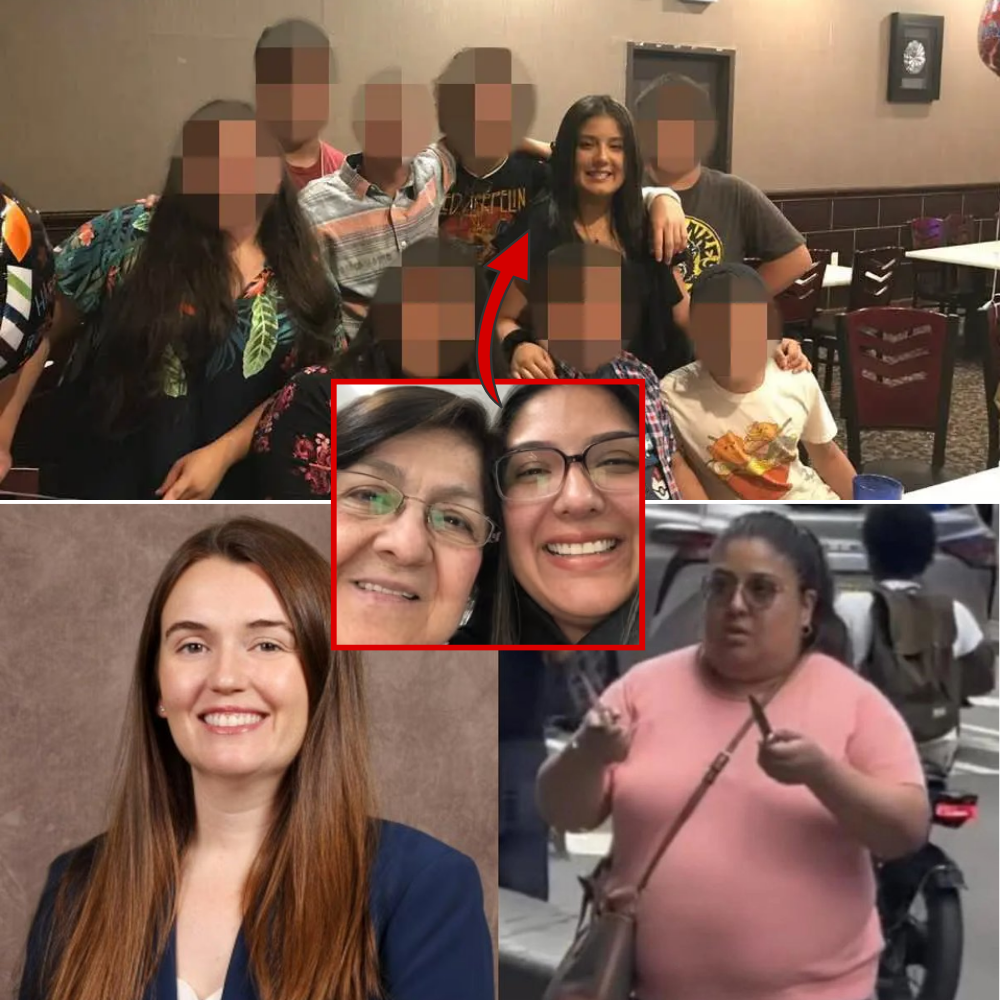
The flashing neon signs of Times Square usually serve as a symbol of New York City’s unstoppable energy. But on the afternoon of August 31, 2026, the heart of Manhattan became the stage for a chilling tragedy. A 49-year-old woman, armed with two large knives pulled from a shopping bag, launched a sudden, unprovoked rampage that left commuters and tourists paralyzed with terror.
The attacker, identified as Pamela Cisneros of Queens, fatally stabbed Erin Piacenti, a 32-year-old Bank of America vice president, and critically injured a 68-year-old man within a terrifying span of twenty seconds. When NYPD officers confronted Cisneros, she refused to drop her weapons, chillingly telling them, “I’m not dropping anything, I would rather kill both of you”. After tasers failed to stop her, police opened fire, ending a nightmare that immediately triggered global headlines and intense debates over public safety and mental health infrastructure.
Yet, for the people who knew her best, the woman lying on the pavement in Times Square bore almost no resemblance to the daughter, mother, and scholar they loved. How did a brilliant mind with a master’s degree in psychology cross the invisible line from private struggles to a public executioner’s rampage?
A Life Built on Scholarly Dreams and Quiet Quiet Despair
To understand the shock wave rippling through Pamela Cisneros’s family, one must look past the gruesome police body-cam footage and examine the life she built long before that fateful Monday.
Relatives paint a portrait of a woman who was deeply intelligent yet heavily burdened. Cisneros held a master’s degree in psychology—a bitter irony given her own lifelong invisible war with mental health. Years prior, she had been diagnosed with bipolar disorder, a condition that her family noted began manifesting or intensifying significantly following the birth of one of her children, pointing toward severe postpartum complications.
Despite these psychological hurdles, those closest to her watched her fight for stability. She was a devoted mother to three children, trying desperately to piece together a normal existence in Queens. Friends and family recalled periods of relative calm where Cisneros managed to hold her ground against her diagnosis. But life dealt her compounding blows. Her marriage unraveled, culminating in a painful divorce that finalized legal proceedings after years of strain.
Left to rebuild her life independently, Cisneros tried to find work and maintain equilibrium in a city that offers little grace to those struggling on the margins. According to her father, Mario Cisneros, she had been receiving regular monthly medical injections to manage her mental health. When he saw her just a week prior to the incident, she appeared calm, coherent, and entirely non-violent.
“I knew my daughter very well, but I didn’t know what was going on with her,” Mario Cisneros shared in an emotional interview. “What I do know is she was getting injections… She was not known to be a violent person.”
The Red Flags and the Breaking Point
As investigators dug deeper into her past, a paper trail of distress began to emerge. The NYPD confirmed that Cisneros had a documented history of mental health-related interactions with law enforcement, notably during a 2018 incident involving aggressive behavior at a Manhattan hotel, and a harrowing 2019 episode where she jumped onto subway tracks in an apparent suicide attempt.
Despite these alarming historical markers, Cisneros had never been arrested, slipping through the cracks of a fragmented social safety net designed to manage crises rather than provide continuous, preventative care.
In the three weeks leading up to August 31, family members noted subtle, unsettling shifts in her demeanor—details that now loom large in hindsight. While she showed no outward signs of intent to harm others, the invisible machinery of her mind was clearly fracturing under pressure. The monthly medical routines and familial touchpoints were no longer enough to anchor her against a severe psychotic break.
When Cisneros stepped out in her pink shirt and jeans on August 31 carrying a red shopping bag, she was no longer navigating the world as a mother of three or a psychology graduate. She was entirely untethered from reality.
Fallout, Grief, and an Unanswered Question
The aftermath of the Times Square attack has left two families shattered in entirely different ways. On one side are the loved ones of Erin Piacenti, a promising corporate executive whose life was snuffed out in a random act of urban violence. On the other side is the Cisneros family, grappling with an incomprehensible grief compounded by public stigma.
In the wake of the shooting, questions have inevitably turned toward police tactics. Cisneros’s mother questioned why officers felt compelled to use lethal force instead of physically subduing her. However, Police Commissioner Jessica Tisch and New York City Mayor Zohran Mamdani defended the actions of the responding officers, emphasizing that Cisneros’s advanced refusal to drop her weapons and her active advance left them with no other choice to protect innocent bystanders. Both the New York Attorney General’s Office of Special Investigation and local authorities have launched standard reviews into the shooting, though body-camera footage clearly corroborates the imminent danger officers faced.
Ultimately, the tragedy in Times Square transcends a simple narrative of crime. It stands as a haunting monument to the devastating intersection of untreated mental illness, systemic oversight, and human frailty. Pamela Cisneros’s family is left to mourn a ghost—wondering how a woman who once studied the human mind could become so entirely lost to her own.