The Heartbreaking Final Photo of Evangelina Olivarez: An 18-Year-Old’s Fight Against Leukemia Ends in Tragedy.
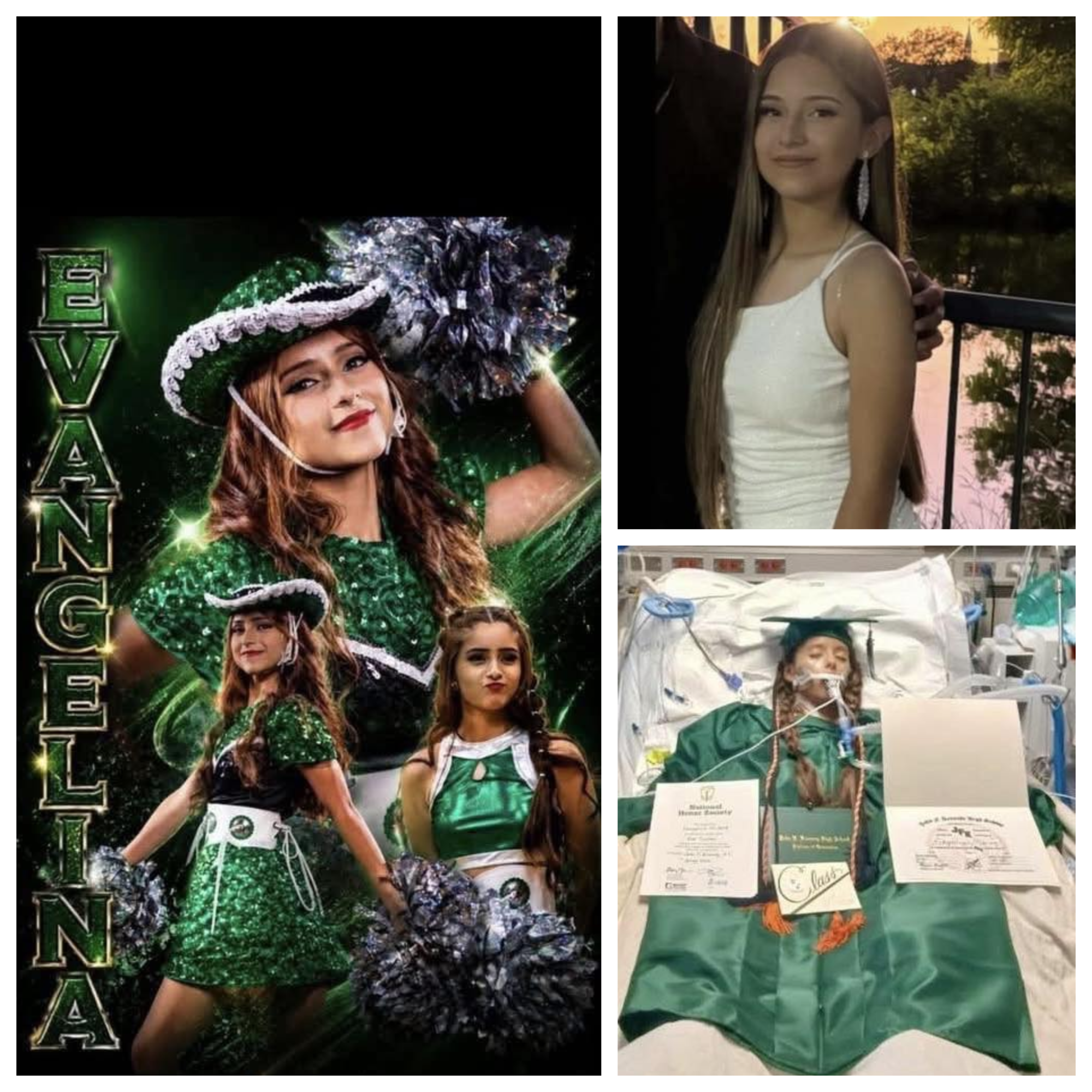
In the sterile glow of a hospital ICU, where hope often battles against the inevitable, an image emerged that captured the cruel intersection of celebration and devastation. Eighteen-year-old Evangelina Olivarez lay in her bed at Methodist Hospital in San Antonio, Texas, her body connected to life-sustaining machines, yet proudly wearing the graduation cap and gown she had dreamed of donning for her Kennedy High School commencement. What should have been a milestone of joy became a symbol of profound loss as leukemia claimed her life before she could cross the stage.
Evangelina’s journey began with ordinary teenage aspirations. A vibrant student accepted into the University of Texas at Austin, she excelled academically and was set to graduate with honors. Her involvement extended far beyond the classroom—she danced on the school team, played soccer, ran track, participated in band and color guard, competed in powerlifting, captured moments through photography, engaged in Bible study groups, and contributed to the yearbook. Friends and family remember her as energetic, kind-hearted, and full of plans for a bright future filled with education, adventure, and community service.
The diagnosis of Acute Myeloid Leukemia arrived suddenly, shattering those dreams. In June of the previous year, Evangelina visited the emergency room, leading to her transfer to specialized care at Simon Cancer Center. What followed was a courageous but grueling battle. Her family rallied around her, sharing updates and pleading for prayers as she endured chemotherapy and other treatments. Doctors emphasized the urgent need for a bone marrow transplant, a potentially life-saving procedure that required a compatible donor. Despite widespread appeals and community efforts to register donors, no suitable match was found in time.
As weeks turned into months, Evangelina’s condition worsened. By early May 2026, she was back in the ICU, fighting with remarkable strength. The now-viral photograph of her in her cap and gown, shared by loved ones, served as both a tribute to her spirit and a heartbreaking reminder of what was stolen. Thousands across South Texas and beyond joined in prayer vigils, holding onto hope for a miracle. Yet on May 11, 2026, Evangelina passed away, leaving her family—the Olivarez and Maldonado families—and her entire community in mourning.
The loss resonates deeply because Evangelina represented the best of youthful potential. She wasn’t defined by her illness but by her passions and relationships. Classmates recall her infectious smile during dance performances and her dedication on the soccer field. Teachers praised her work ethic and leadership in extracurriculars. In a world where young people often face invisible pressures, Evangelina stood out as someone who embraced life fully—balancing academics with creativity and faith.
Her story has ignited important discussions about bone marrow donation and blood cancer awareness. Organizations like Be The Match highlight the critical shortage of diverse donors, particularly for Hispanic and minority communities where matches can be harder to find due to genetic factors. Evangelina’s case underscores how one simple swab on a registry could save a life. Her family and supporters now hope her legacy encourages more people to register, turning grief into actionable change.
Beyond the medical aspects, this tragedy touches on universal themes of parental love, community solidarity, and the fragility of life. Evangelina’s mother and relatives shared intimate moments of her strength, even as machines hummed around her. The decision to photograph her in graduation attire was an act of defiance against the disease—a way to affirm her identity as a graduate, even if she couldn’t physically walk the stage. Memorial services and online tributes have poured in, with friends posting memories and photos from happier times.
In the broader context of adolescent cancer, Evangelina’s story is both unique and tragically common. Leukemia remains one of the leading causes of cancer-related deaths in young people, yet survival rates have improved with advances in treatment. However, when a transplant is needed, the clock becomes merciless. Stories like hers remind society of the importance of early detection, research funding, and equitable access to care. Schools in San Antonio have held moments of silence, and local news outlets have amplified calls for donor drives in her honor.
As the community processes this loss, reflections turn to what Evangelina might have accomplished. Accepted to UT Austin, she dreamed of higher education and perhaps pursuing fields aligned with her creative and athletic interests. Her involvement in photography suggested a keen eye for beauty amid chaos, while her Bible group participation pointed to a deep spiritual foundation that likely provided comfort during her illness.
The photo of Evangelina in the ICU continues to circulate, evoking strong emotions. It humanizes the statistics of cancer, showing a young woman on the cusp of adulthood whose life was cut short. For her family, the pain is immeasurable—planning a funeral instead of a graduation party. Yet amid sorrow, there’s a call to action: register as a donor, support cancer research, and cherish every moment with loved ones.
Evangelina Olivarez’s brief but impactful life serves as a poignant lesson. She embodied resilience, joy, and potential. Though leukemia took her future, her memory inspires others to live fully and give selflessly. In South Texas and across the nation, her name now echoes as a reminder that behind every diagnosis is a story of dreams interrupted—and a challenge to ensure fewer such stories end in tragedy.