Human Bone Discovered Near Nancy Guthrie’s Home Sparks Hope — Then Raises New Questions in the Ongoing Mystery.
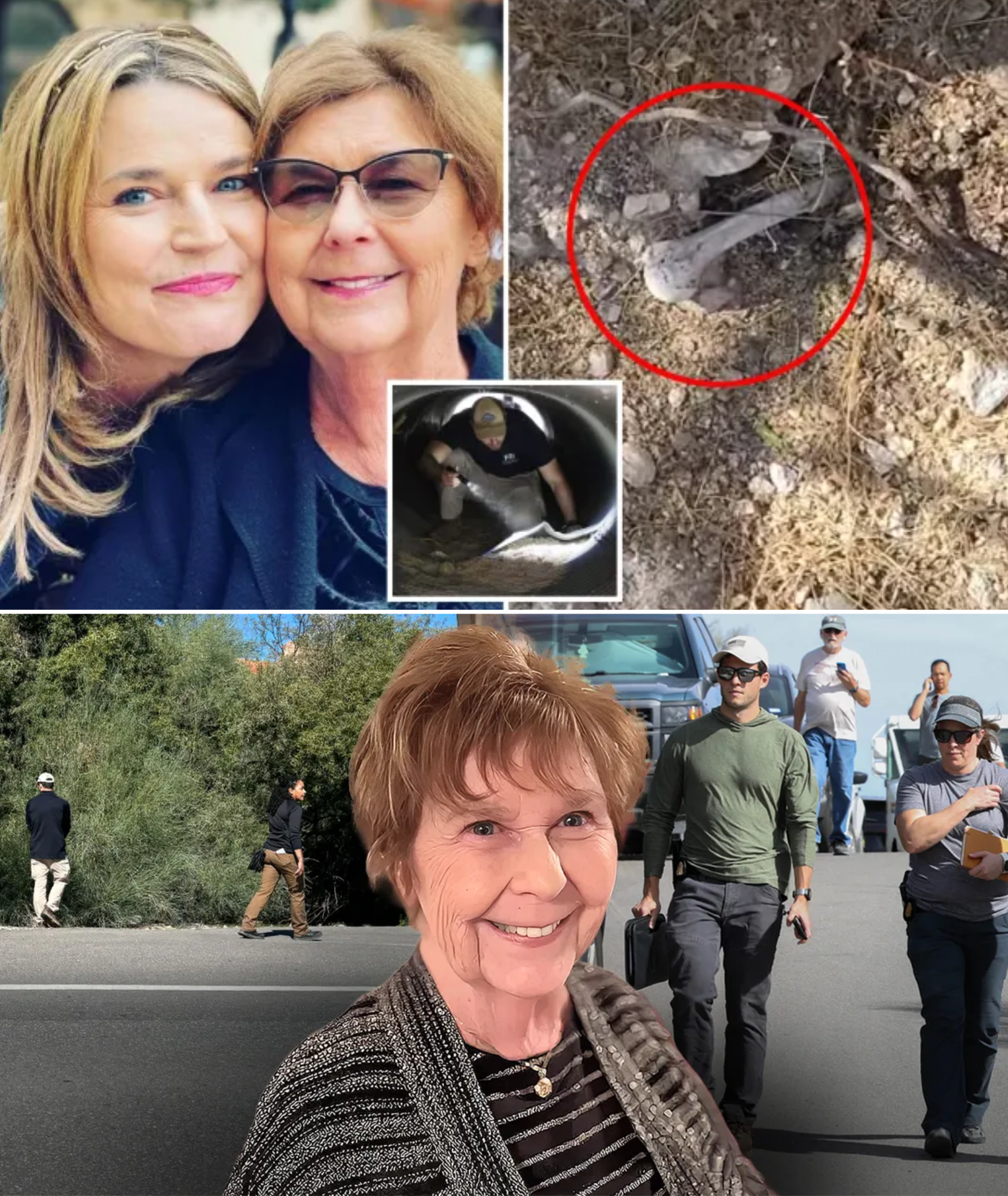
In the high-stakes search for missing 84-year-old Nancy Guthrie, every new piece of evidence carries enormous weight. On May 7, 2026, a true crime streamer made a startling discovery: a human bone found approximately seven miles from Nancy’s home in the Catalina Foothills area of Tucson, Arizona. The find immediately triggered speculation that it could be linked to the high-profile disappearance that has gripped the nation since January 31, 2026. However, authorities moved quickly to clarify details, turning what seemed like a potential breakthrough into a more complex chapter in an already puzzling investigation.
The bone was located near North Craycroft Road and East River Road. Tucson Police Department officers responded promptly, confirming it was indeed human. Yet officials emphasized that the discovery appears unrelated to Nancy Guthrie’s case. A spokesperson described the matter as a “prehistoric anthropological investigation,” suggesting the remains could date back centuries rather than connect to a modern crime. The area around Tucson has a rich archaeological history with ancient indigenous settlements, making such finds plausible in desert washes and foothills.
Despite the official ruling, the timing — just past the 100-day mark of Nancy’s disappearance — reignited public interest. Nancy, mother of NBC’s Savannah Guthrie, was taken from her home in a brazen abduction captured on doorbell camera. A masked intruder in a ski mask and backpack was seen striking her before carrying her away. Blood was found outside the residence, and mixed DNA evidence inside continues to undergo advanced FBI analysis. The bone find added another layer of intrigue at a moment when the investigation has faced criticism over internal coordination and slow public progress.
Pima County Sheriff’s Office, which leads the case with FBI support, stated the bone is not criminal in nature and will be handled through anthropological channels. No DNA testing linking it to Nancy or the suspect is reportedly planned, as preliminary assessment pointed to its ancient origins. Still, the discovery highlights how easily hope and speculation can surge in a case starved for concrete answers. True crime communities and online sleuths immediately began connecting dots, only for authorities to temper expectations.
This development occurs alongside ongoing forensic work on evidence from Nancy’s home. Mixed DNA samples, including potential contributor profiles from gloves and hair, are being examined with cutting-edge techniques at FBI labs. Experts like genetic genealogist CeCe Moore have noted the challenges of mixed samples, where separating perpetrator DNA from innocent household contributors requires sophisticated whole-genome sequencing. The bone, while ruled out, serves as a reminder that the desert landscape can yield human remains unrelated to active cases.
The Guthrie family continues to endure an agonizing wait. Savannah Guthrie has made public appeals while balancing her high-profile role on the TODAY show. A substantial reward remains in place, and tips continue to pour in. Profilers have theorized the abduction showed organized elements, possibly involving a “boss” figure beyond the visible “porch guy.” Whether the prehistoric bone distracts from or indirectly aids the search by keeping attention focused remains to be seen.
Tucson’s Catalina Foothills region blends suburban homes with rugged desert terrain. Ancient burial sites and historical artifacts occasionally surface, especially after rains or in washes. The streamer who found the bone was documenting local true crime angles when the discovery occurred. Police quickly secured the area, but the swift classification prevented it from becoming a full crime scene tied to Nancy.
This episode underscores broader challenges in missing persons cases involving elderly victims. Nancy’s case has drawn national scrutiny partly due to her daughter’s celebrity status, yet it also exposes gaps in rapid response, inter-agency coordination, and public communication. Internal sources previously described early investigative days as disorganized, with duplicated interviews and delayed FBI handoffs. The bone incident, though unrelated, amplified calls for transparency.
As summer heat intensifies in Arizona, the search for Nancy faces environmental hurdles. Evidence degrades faster in extreme conditions, and vast desert areas complicate ground searches. Authorities continue analyzing surveillance from dates before the abduction and pursuing digital leads. The mixed DNA remains the strongest potential link, with hopes that advanced genealogical tools can build family trees even from partial profiles.
For the public following the case, the bone discovery served as both a false alarm and a sobering lesson. Not every human remain found near a missing person’s location signals resolution. Yet it keeps the conversation alive and pressure on investigators. Brian Entin and other journalists have maintained relentless coverage, surfacing insider accounts and expert analysis that challenge official optimism.
Nancy Guthrie’s story is one of a loving mother, grandmother, and active senior suddenly ripped from her ordinary life. Her abduction has no clear motive — no ransom, no obvious personal grudge. Theories range from targeted retaliation linked to Savannah’s journalism to opportunistic crime. Until answers emerge, every new clue, even one ultimately ruled prehistoric, fuels determination.
The desert around Tucson holds many secrets — ancient and modern. While the bone near North Craycroft and East River Road belongs to history rather than this tragedy, the real breakthrough may still lie in the mixed DNA, overlooked connections, or a tip from someone who saw something on that fateful January night. As the investigation pushes past 100 days, the Guthrie family and a watchful public refuse to let Nancy’s case fade. Persistence, science, and community vigilance remain the best hopes for bringing her home.