The Haunting Four-Word Chalk Message That Launched the Search for Five Italian Divers Lost in Maldives’ Deadly Shark Cave.
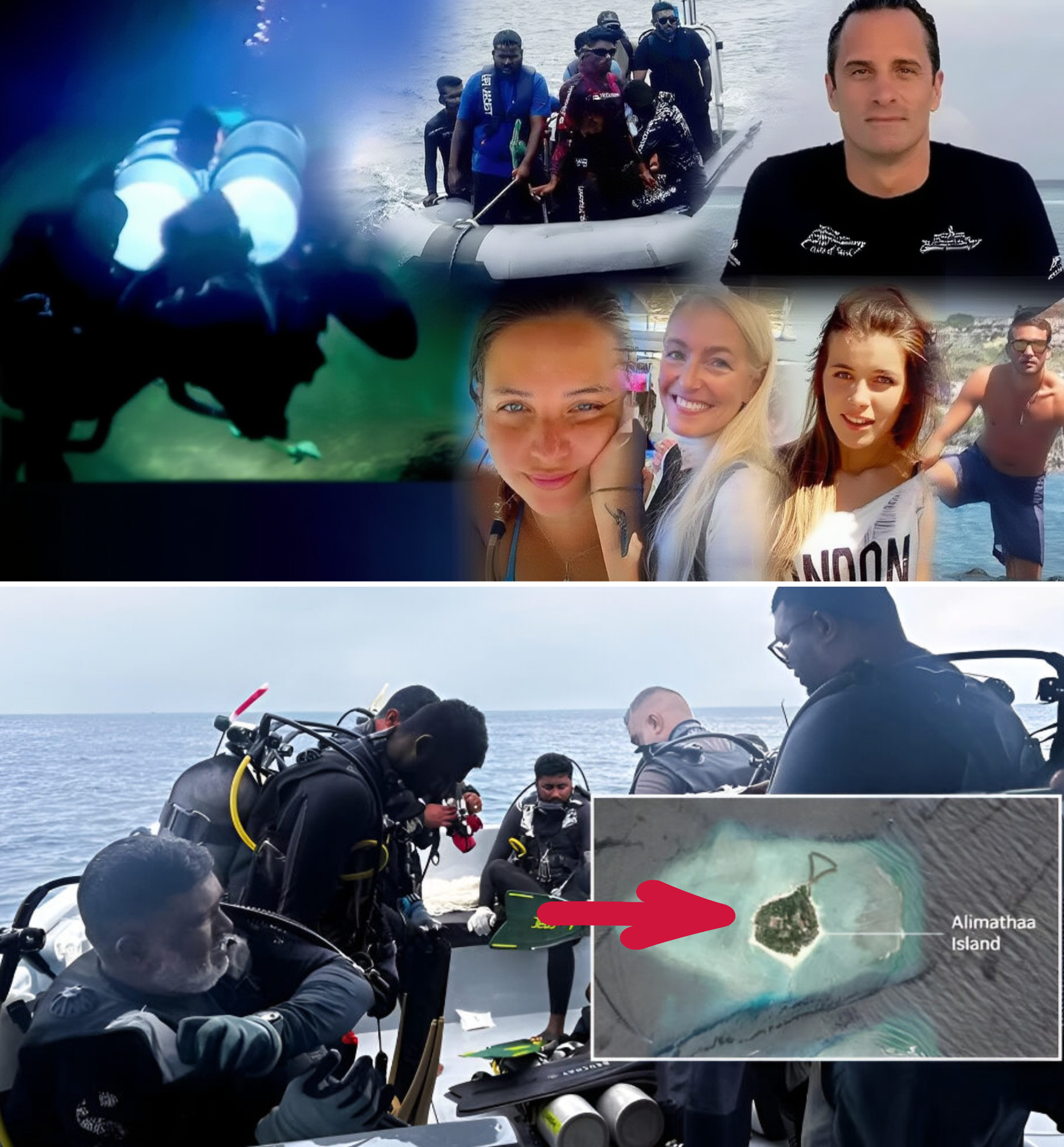
In what is being called one of the deadliest single diving incidents in Maldives history, five experienced Italian divers — including a renowned marine biologist and her young daughter — lost their lives while exploring a deep underwater cave system in Vaavu Atoll on May 14, 2026. A chilling four-word message scrawled in chalk, reportedly left as a final sign of life, became the emotional catalyst that intensified the international rescue effort and captured global attention.
The group, led by Professor Monica Montefalcone (51), a marine ecology expert from the University of Genoa, included her 20-year-old daughter Giorgia Sommacal, marine biologist Federico Gualtieri (31), research fellow Muriel Oddenino (31), and diving instructor Gianluca Benedetti. They were conducting scientific research on soft corals when they entered the Devana Kandu (or Thimwana Kandu) cave system — popularly known as the “Shark Cave” — at depths reaching approximately 50-60 meters (160+ feet), well beyond standard recreational limits.
One body, believed to be Benedetti’s, was recovered near the cave entrance shortly after the group failed to surface. The remaining four were located deep inside the cave’s inner chambers days later by a specialist Finnish-led recovery team working alongside Maldivian authorities. The operation was tragically complicated by the death of Maldivian military diver Lt. Mohamed Mahudhee, who succumbed to decompression sickness during the search.
According to reports circulating from the liveaboard vessel and initial briefings, the four-word message “WE ARE STILL HERE” was discovered scrawled on a surface or slate in chalk — a desperate signal from the trapped divers that galvanized rescuers and the public. This haunting note underscored the group’s final moments of awareness and hope before the cave’s extreme conditions — strong currents, poor visibility, bottlenecks, and overhead environment — proved fatal.
The victims were highly experienced: Montefalcone alone had thousands of dives, including many in Maldives caves. The group held permits for technical scientific diving, but questions remain about whether the expedition pushed beyond safe parameters in a site not equipped for such deep overhead penetration with standard recreational equipment.
The tragedy has prompted a full investigation by Maldivian authorities into dive permits, operator responsibility, and safety protocols. Italy’s Foreign Ministry and University of Genoa are also involved, with autopsies planned to determine exact causes — likely a combination of nitrogen narcosis, oxygen toxicity, equipment issues, or entrapment.
Tributes have poured in for the victims, described as passionate scientists dedicated to marine conservation. Montefalcone’s husband and colleagues emphasized her cautious nature, making the incident all the more shocking. The loss of a mother and daughter together has particularly devastated the Italian scientific community.
This event highlights the inherent risks of technical cave diving, even for experts. The Maldives, while a diver’s paradise, has strict recreational depth limits of around 30 meters. Deeper penetrations require advanced training, specialized gear (such as rebreathers), and meticulous planning — factors now under intense scrutiny.
As recovery operations conclude and families begin the painful process of bringing their loved ones home, the four-word message stands as a poignant reminder of human resilience and the unforgiving power of the ocean. It transformed a missing persons case into a focused, urgent mission that ultimately brought closure, albeit heartbreaking.
The incident serves as a stark warning for the diving community worldwide: even paradise has teeth. Enhanced training, stricter oversight of technical dives, and better emergency protocols in remote atolls may be among the lasting legacies of this tragedy.