The Hidden Layers: Why Brian Entin’s Latest Report Suggests Nancy Guthrie’s Kidnapping Was Far More Organized Than We Thought.
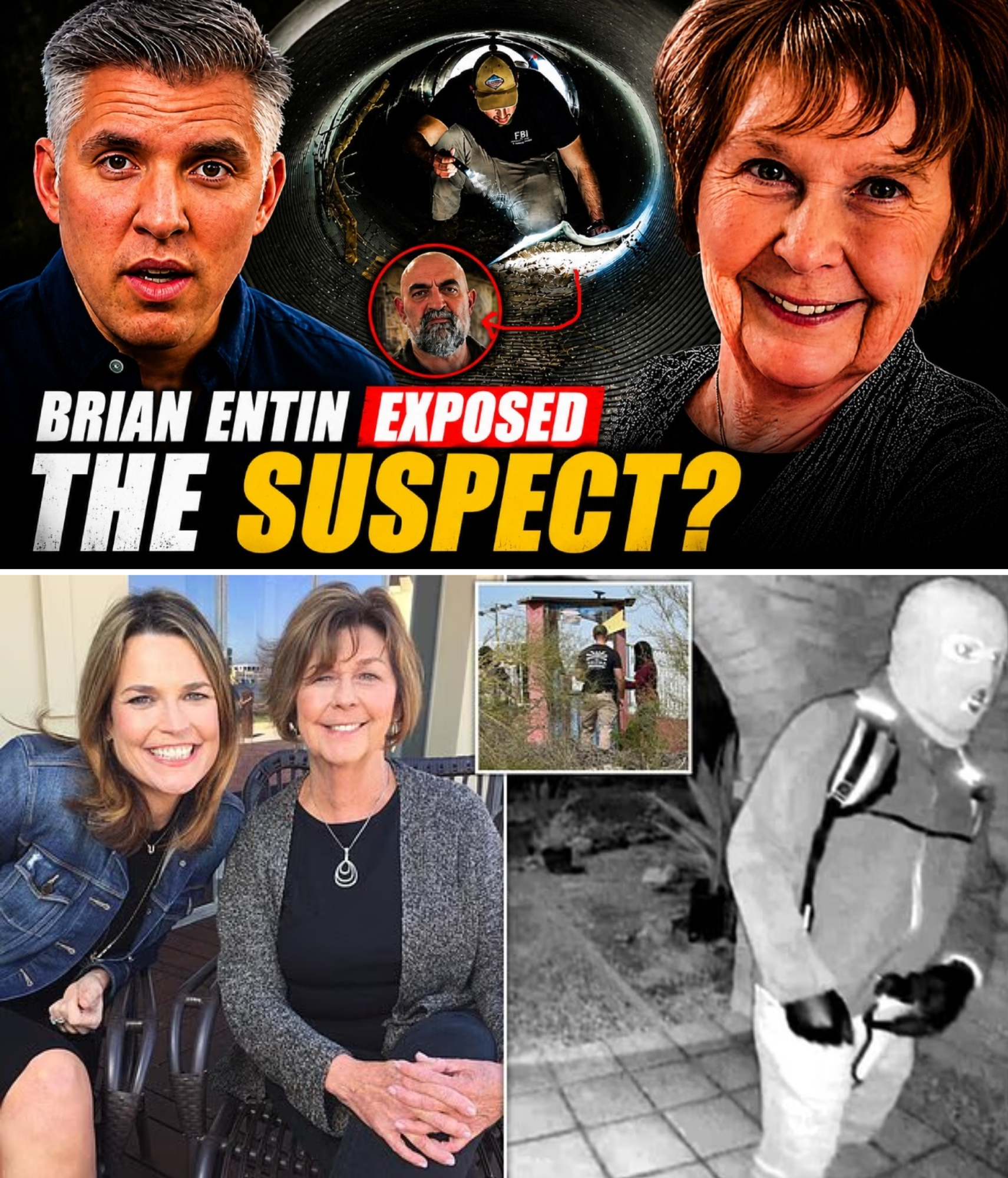
In the high desert foothills of Tucson, Arizona, an 84-year-old woman vanished from her home on the night of January 31, 2026. Nancy Guthrie, mother of NBC’s Savannah Guthrie, left behind a scene of sudden violence captured on doorbell footage: a masked figure in a ski mask and backpack striking her before carrying her away. For months, the public narrative centered on a lone “porch guy” suspect, DNA evidence, and steady but vague updates from law enforcement. But investigative journalist Brian Entin’s newest reporting challenges that simplicity, painting a picture of potential layers, disconnects, and a crime that may involve planning, resources, and a hierarchy far beyond a random abduction.
Entin’s report highlights a striking contrast between public statements and private realities. At the 100-day mark, Pima County Sheriff Chris Nanos responded to journalists asking if the case was advancing with a simple “yes” before driving off in his Corvette. Yet sources close to the investigation, speaking to Entin, describe a probe that has advanced little since day one despite thousands of tips, FBI involvement, and forensic work. No named suspect. No confirmed theory. This gap between optics and substance has fueled growing skepticism.
The case exploded into national attention early on with a dramatic law enforcement action just two weeks after the disappearance. A SWAT team and FBI agents descended on a residential area near the Catalina Foothills, focusing on a gray Range Rover in the parking lot of a Culver’s restaurant roughly two miles from Nancy’s home. The vehicle’s trunk was sealed with evidence tape, loaded onto a flatbed, and towed away. Three individuals—two men and one woman—were detained for questioning but later released without charges. Officials confirmed the operation related to the Guthrie case at the FBI’s request, yet provided no further public details on ownership, findings, or the individuals’ connections.
Forensic interest in the Range Rover was not casual. Federal agents do not deploy such resources lightly. Even though those detained were released, “released” in complex federal kidnapping investigations often means continued scrutiny rather than full clearance. Phone records, inconsistencies in statements, and surveillance can still build cases quietly. The absence of follow-up closure—neither arrest nor public exoneration—leaves this thread dangling, potentially significant.
Central to the evolving discussion is the “porch guy” from the doorbell camera. He appears masked, carrying an Ozark Trail backpack, and matches descriptions tied to DNA from a glove and hair found inside the home. For months, he has been treated as the primary focus. However, criminal profilers featured in Entin-hosted discussions, including experts like Dr. Ann Burgess, Dr. Gary Brucato, and Dr. Casey Jordan, propose a different framework. They suggest the visible perpetrator may be an “operator” rather than the architect. A “boss” figure could have planned, resourced, and directed the operation from afar, leaving no direct trace at the scene.
This theory reframes the evidence. DNA and physical traces might lead only to the executor, not the decision-maker. Profilers noted the crime’s organized nature—well-researched target, executed method, clean getaway—unlike typical opportunistic or grudge-driven abductions. One expert even speculated the “porch guy” himself might have been eliminated post-crime to tie off loose ends, a chilling possibility in hierarchical operations. Such a structure explains why, despite advanced FBI lab analysis, the investigation feels stalled publicly.
Nancy Guthrie’s background adds context but few clear motives. As the mother of a prominent journalist, speculation has ranged widely, from personal connections to broader implications involving her family’s visibility. Yet investigators have emphasized no immediate ransom demand or obvious personal grudge. The family’s cooperation, including polygraphs in some reports, has been noted positively, though the case remains open.
The sheriff’s office has maintained optimism in briefings, citing progress and community tips. A substantial reward remains active. However, Entin’s on-the-ground perspective in Tucson underscores frustrations with the lack of transparency. Quiet threads in federal cases can signal ongoing deep analysis rather than dead ends, but prolonged silence also risks eroding public trust.
As weeks turn into months—now over 100 days since that January night—the case of Nancy Guthrie stands as a stark reminder of how modern disappearances can defy simple explanations. Advanced surveillance, forensic tech, and multi-agency efforts have not yet yielded resolution. The Range Rover lead, the potential “boss” dynamic, and the sheriff-sources disconnect suggest investigators may be navigating a more sophisticated puzzle than initially presented.
For the Guthrie family, the wait continues amid national attention. Savannah Guthrie and relatives have made public appeals while respecting the investigation’s boundaries. The broader public, drawn by the human element of an elderly mother taken from her home, continues to speculate and share tips.
Entin’s reporting does not claim definitive answers but urges a reevaluation of assumptions. If the “porch guy” is merely one piece, the real breakthrough may lie in tracing funding, communications, or overlooked connections predating the abduction. In high-profile cases, patience and persistence often prove as vital as initial dramatic actions.
The desert night of January 31 holds its secrets still. Whether the investigation shifts toward organized elements, resolves through forensic matches, or uncovers unexpected motives, one truth remains: Nancy Guthrie’s story demands answers, and the public scrutiny amplified by journalists like Brian Entin may be the force that ultimately delivers them.