One Fatal Stab and a Mother’s 14-Month Fight: How Jahara Malik’s “Horseplay” Claim Crumbled in the Killing of Star Athlete Keimo Lollar.
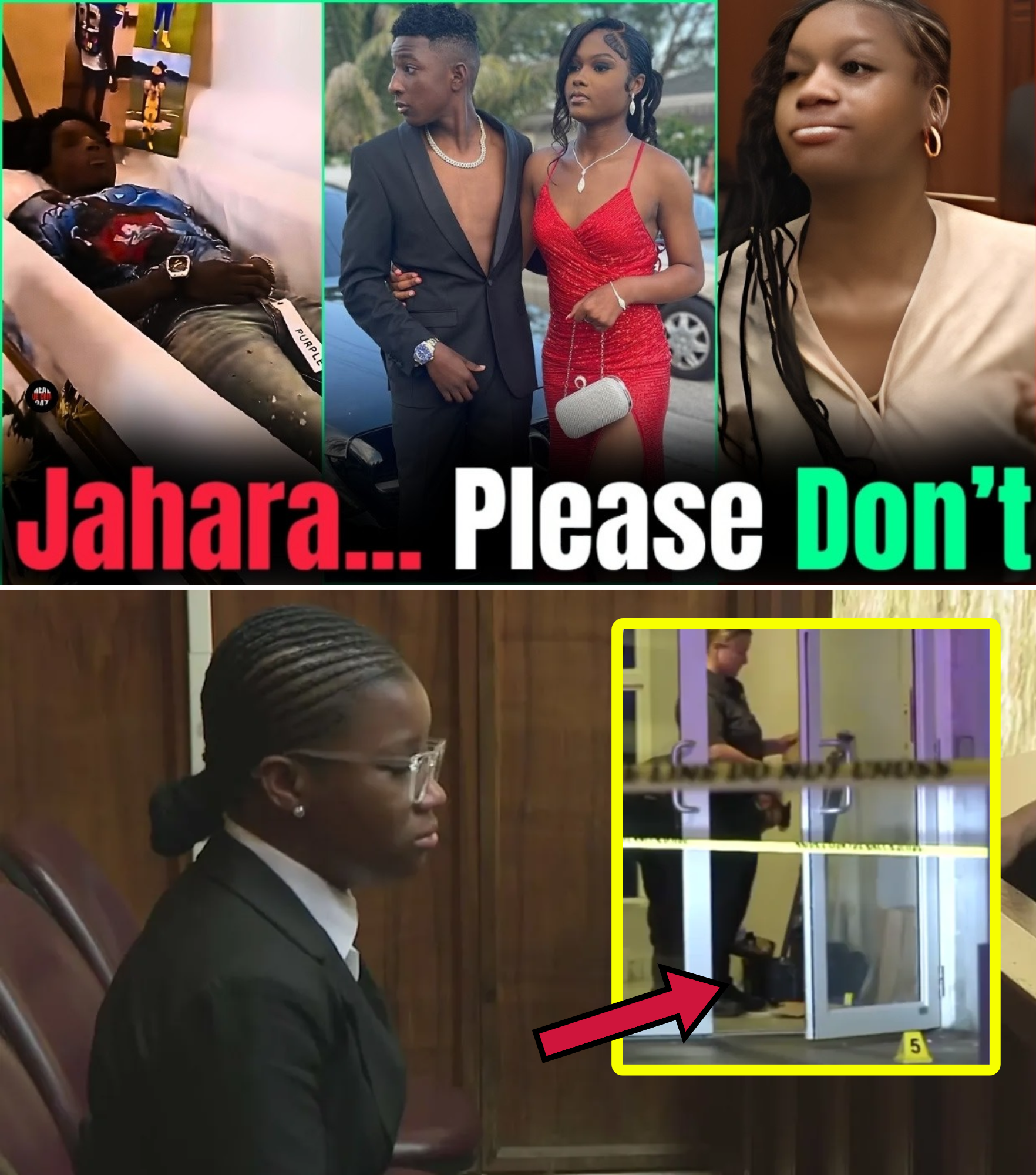
On December 20, 2024, just four days before Christmas, 17-year-old Yahkeim “Keimo” Lollar walked out of his family’s apartment in Miami’s Liberty City after joking about a pink Christmas tree and singing Mariah Carey with his mother and sister. Hours later, he lay bleeding out in the third-floor parking garage of his own building, a single knife wound piercing his heart. The person who called 911 was his 17-year-old on-again, off-again girlfriend, Jahara Malik. Her story to police was simple: it was an accident during horseplay.
What followed was a 14-month battle that exposed the raw pain of a family demanding answers, the power of surveillance evidence, and the limits of the justice system when a promising young life is cut short. On May 5, 2026, an 18-year-old Malik stood before a Miami-Dade judge and received 17 years in Florida State Prison followed by five years of probation after pleading guilty to manslaughter. For Keimo’s mother, Nathalie Jean, it was a partial victory after relentless advocacy that included protests, media appearances, and sleepless nights.
Keimo was everything a parent dreams their child will become. A junior at the legendary Miami Northwestern Senior High School, he was a standout running back whose highlight reels made coaches take notice. Straight-A student. Aspiring finance professional. A homebody who loved his family deeply and carried the quiet pride of a tight-knit Haitian-American community in Little Haiti. His father called him the ultimate competitor — on the field, in video games, in life. His mother remembered him as the kid who would wander in during holiday decorating and instantly critique the tree color before joining in the singing.
That Friday night started innocently enough. Keimo had been at home. The family was setting up their pink Christmas tree. Mariah Carey played in the background. Then he left to meet Malik. Their relationship had been turbulent — classic teenage push and pull. By December they were in an off-again phase, with Keimo reportedly ending things. Malik, according to accounts, was not handling the breakup well.
Just after 11 p.m., Malik dialed 911 from the parking garage. Paramedics found Keimo with a single stab wound to the chest, the blade entering between the third rib on the left side, traveling about an inch deep and striking his heart. He was rushed to Jackson Memorial Hospital’s Ryder Trauma Center but died roughly an hour later.
In her initial statement, Malik claimed she had grabbed a knife she carried for protection instead of her usual pepper spray during what she described as playful horseplay. She insisted the stabbing was unintentional. Police initially released her as the investigation continued. The medical examiner’s office later ruled the death a homicide, shifting the case dramatically.
The turning point came in court more than a year later when surveillance footage from the parking garage was played. The video showed Malik and a friend arriving at the complex. It captured the confrontation. It recorded Keimo bleeding. Crucially, it included audio of Keimo’s voice saying words to the effect of “Jahara, don’t” or “stop” in his final moments. That audio, confirmed by a police sergeant on the stand, shattered the accident narrative. Family members fled the courtroom or sat in stunned silence as the footage played.
Prosecutors argued the force used was not accidental. The judge agreed, noting during sentencing that the evidence did not support Malik’s version of events. Malik, who turned 18 by the time of sentencing, had pleaded guilty to manslaughter and carrying a concealed weapon in March 2026. Her defense had pushed for boot camp or lighter penalties, while Keimo’s family and prosecutors sought the maximum — up to 30 years. The judge settled on 17 years in prison plus probation.
In a tearful courtroom statement, Malik expressed remorse: “I was wrong for what I did and every day I sit and think about the damage I caused… I’m in my own prison for the rest of my life. I wish I could go back and change what happened, but I can’t.” Keimo’s mother listened, later telling reporters she hoped Malik would reflect on the lives destroyed. Nathalie Jean had fought tirelessly — protesting outside the State Attorney’s Office, using hashtags, speaking to local news, and refusing to let the case fade. She chose her son’s casket while still hearing Mariah Carey echoes in her mind.
The sentencing hearing brought raw emotion from both families. Keimo’s loved ones described a bright future stolen too soon. Malik’s supporters highlighted her youth and the volatility of teenage relationships. Yet the judge’s decision underscored a clear message: actions in the heat of emotion carry permanent consequences, and surveillance technology increasingly holds people accountable.
This case highlights broader issues facing American youth: the dangers of intense teenage romances, the presence of weapons among minors, and the challenges of prosecuting cases where initial statements clash with video evidence. Miami Northwestern, a school known for producing NFL talent and sending students to college, lost one of its own — a reminder that talent and potential offer no protection against sudden violence.
Keimo’s family continues to grieve while finding some measure of closure. The community that once cheered him on the football field now mourns a young man who represented hope in a neighborhood that rarely makes national headlines except in tragedy. His mother’s fight ensured his story would not be dismissed as a simple “accident.”
As Malik begins her sentence, questions linger for many: Was 17 years enough? Could stronger intervention have prevented this? What does this say about how society handles youth violence and domestic conflicts among teenagers?
Keimo Lollar’s life ended in a parking garage before he could chase his dreams in finance or further his athletic promise. His final recorded words — asking the girl he once cared for to stop — remain a haunting footnote in a case that gripped Miami for over a year. His legacy lives on through a family that refused to stay silent and a community that still believes in the potential he embodied.
Anyone reflecting on this tragedy is reminded that behind every headline is a mother decorating a pink tree, a son singing Christmas songs, and a split-second decision that changed everything.