The Staged Abduction: How Top Profilers Say Nancy Guthrie’s Crime Scene May Have Been Fabricated to Mislead Everyone.
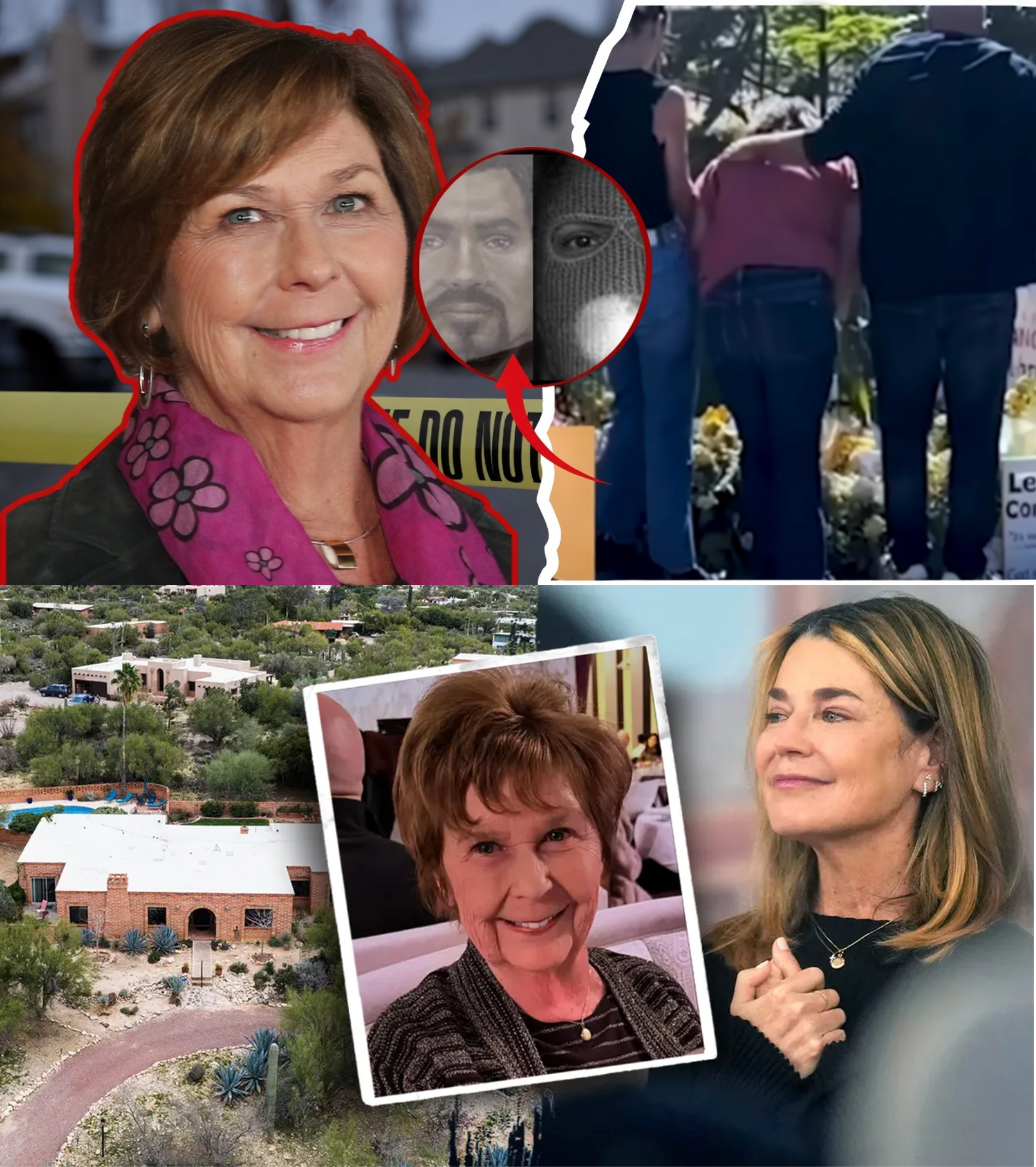
On February 1, 2026, 84-year-old Nancy Guthrie, mother of NBC’s “Today” co-anchor Savannah Guthrie, disappeared from her home in the upscale Catalina Foothills neighborhood near Tucson, Arizona. What began as a missing persons case quickly escalated into a high-profile abduction investigation involving the FBI, blood evidence, doorbell camera footage of a masked intruder, ransom demands, and a nationwide search. Yet, more than three months later, Nancy remains missing, and the case has produced more questions than answers.
Now, a groundbreaking CW special hosted by NewsNation’s Brian Entin has brought together three of America’s most respected criminal profilers — Dr. Gary Brucato, Dr. Ann Burgess, and Dr. Casey Jordan — whose analysis suggests the investigation may have been chasing a carefully constructed illusion from day one. Their insights challenge the foundational assumptions of the case and point toward a scenario that feels ripped from the pages of a psychological thriller: a staged crime scene designed to send law enforcement in the wrong direction.
The Night Everything Changed
Nancy had dinner with her daughter Annie and son-in-law Tommaso Cioni on the evening of January 31. She was dropped off at her home around 9:45-9:50 p.m. The garage door closed. Everything appeared normal. Then, in the early morning hours, the doorbell camera was tampered with at approximately 1:47 a.m. Residual footage captured a masked, armed figure on the porch. Blood later confirmed to belong to Nancy was found on the porch, with drops suggesting she may have been coughing or struggling. The back doors were propped open with flower pots. Her phone, purse, keys, and critical medications were left behind. She has not been seen since.
Initial assumptions pointed to a forced abduction by an unknown intruder. But Dr. Gary Brucato, a forensic and clinical psychologist with decades studying violent crime, introduced a game-changing possibility during the special: the crime scene itself may have been staged after the fact.
“What if the blood on the porch was placed there? What if the flower pots were positioned afterward?” Brucato asked. He noted he has seen multiple cases where blood and scenes were manipulated to mislead investigators. Nancy could have been harmed elsewhere, with someone returning to her home to create the appearance of a dramatic kidnapping. The open doors, the visible trail, the seemingly amateurish elements — all potentially manufactured to look like an outsider’s work.
Profilers’ Shocking Consensus
Dr. Ann Burgess, the legendary FBI behavioral scientist whose work inspired the Netflix series “Mindhunter,” described the case as having “no known precedent” in behavioral science literature. She suggested the person seen on the porch may have been an “operative” who knew Nancy (or her property) but whom Nancy likely did not recognize. Crucially, Burgess raised the possibility that this operative was later “eliminated by the boss” — killed by a higher authority once the job was done. The planning appeared sophisticated, yet the execution left puzzling loose ends.
Dr. Casey Jordan offered another lens: “beginner’s luck” — not a criminal mastermind, but someone whose incompetence or panic didn’t fit standard profiles, making the case harder to crack. She floated a burglary-gone-wrong scenario where the abduction was an unplanned escalation after something catastrophic occurred inside the home. Items might have been taken that the family hasn’t yet connected to the crime.
All three experts agreed on a key point: the perpetrator likely knew Nancy or had knowledge of her life and home. This was not a random stranger crime. Dr. Brucato introduced the concept of “elimination murder” — a pragmatic removal where the victim stands in the way of money, silence, freedom from burden, or a long-buried grudge. In such cases, staging is almost always present to push suspicion outward toward phantom kidnappers and random criminals.
The Wall of Silence
Compounding the intrigue is the reported request from the Guthrie family asking Nancy’s closest friends to remain silent publicly. Three months in, not a single close friend has spoken on camera about her daily routines, worries, or personality — a stark departure from typical missing persons cases where friends flood the media immediately. This controlled narrative, combined with the potential staging, raises uncomfortable questions about what information is being protected and why.
Burgess urged investigators to ask: “Who is suffering the most from this crime?” It may not be the victim alone. Motives could involve making Savannah suffer through uncertainty and guilt tied to her fame, or other personal dynamics within the family orbit. Yet authorities have repeatedly stated that family members are not suspects.
Why This Case Defies Patterns
Nancy’s age (84) makes her abduction statistically rare. Most kidnapping victims are far younger. The presence of ransom notes demanding Bitcoin sent to media outlets, the pacemaker reportedly disconnected, gloves found miles away — every element adds layers of strangeness. No sexual motive appears evident. The home was left “impeccable,” with no signs of a frantic search for valuables. The body (or person) was removed rather than left at the scene — classic staging indicators according to the profilers.
The investigation has involved 30,000 tips, extensive DNA analysis, and multi-agency efforts, yet no arrests. A substantial reward remains in place. Sheriff Chris Nanos has reported ongoing progress, but the public is left wondering if the entire framework of the case needs rebuilding from the ground up.
Broader Implications
This case highlights vulnerabilities even in affluent, security-conscious homes. It underscores how celebrity adjacency can both amplify attention and complicate investigations. Most importantly, it demonstrates the power of behavioral analysis in challenging assumptions. If the scene was indeed staged, every hour spent pursuing a fictional abduction narrative delayed potential leads toward the real perpetrator — someone likely close enough to know the layout, routines, and vulnerabilities.
As the search continues into its fourth month, the profilers’ warnings serve as a sobering reminder: sometimes the most obvious crime scene is the one designed to hide the truth. Nancy Guthrie’s whereabouts remain unknown. Anyone with information is urged to contact the FBI at 1-800-CALL-FBI or the Pima County Sheriff’s Department.
The mystery endures. But with these expert revelations, the lens through which we view it has forever shifted.