The Evil Words Tanner Horner Said to Athena Strand Before Her Murder — And the Death Sentence That Followed.
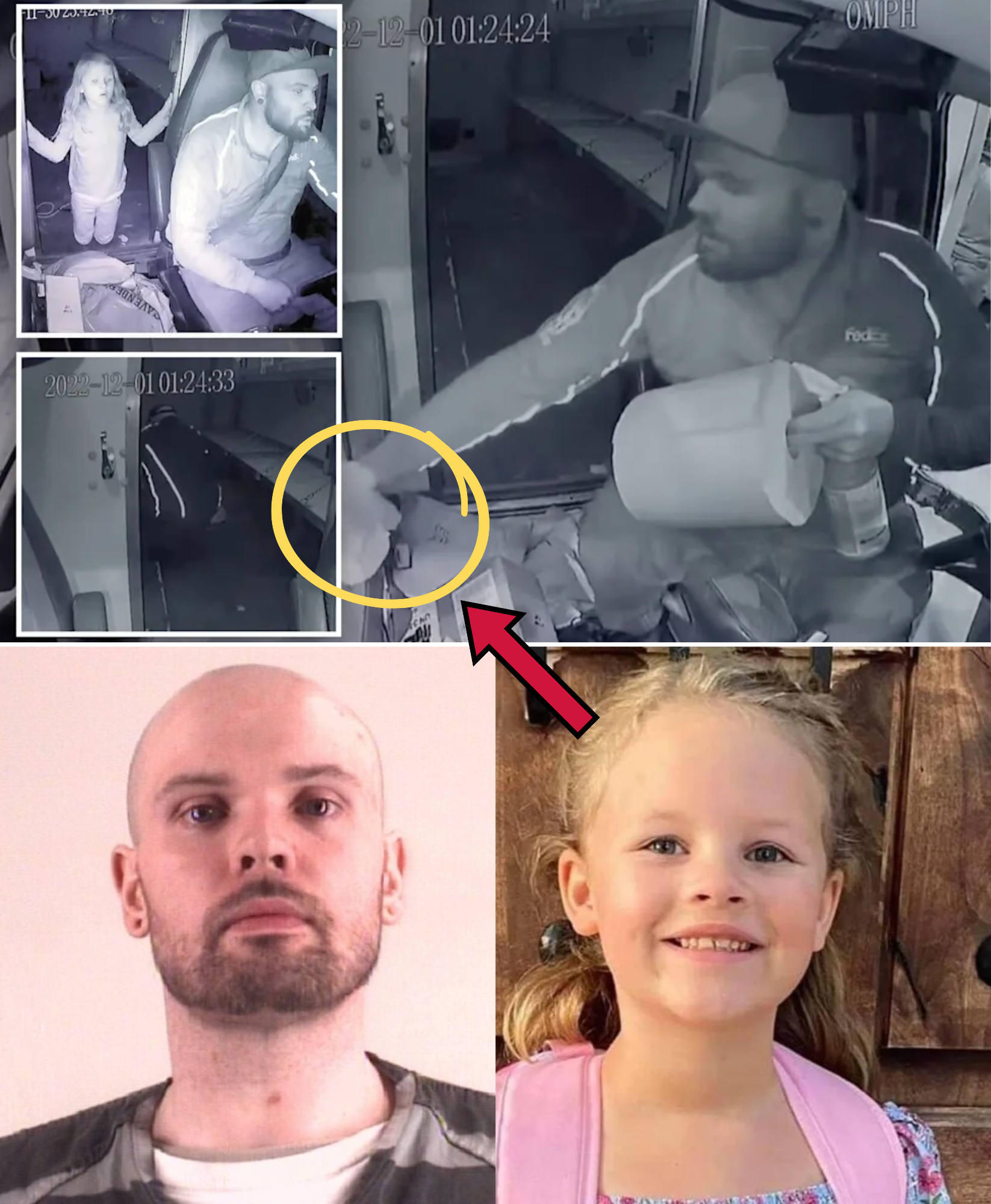
The final words Tanner Horner spoke to 7-year-old Athena Strand still echo as one of the most heartbreaking deceptions in a case filled with horror. On November 30, 2022, while delivering a Christmas package to her home in Paradise, Texas, the 34-year-old FedEx contract driver lured the trusting little girl into the back of his delivery van with a simple promise: “Just get in the back of the van, we’re going to the hospital.”
What happened next inside that van would shatter a family, outrage a nation, and ultimately lead to Horner’s conviction and death sentence by lethal injection.
Athena Strand had been playing outside her family’s home when Horner arrived. Surveillance video captured him approaching her, speaking calmly at first. Prosecutors say he abducted her, sexually assaulted her, beat her, and strangled her over the course of more than an hour. An audio recording from inside the van, played in court, captured Athena’s terrified screams, her pleas for her mother, and Horner’s escalating rage. At one point, he threatened her: “If you don’t shut up, I will hurt you worse.” He was heard singing “Jingle Bell Rock” on the radio while the attack continued.
Horner later dumped Athena’s body in a creek near the Trinity River. Her remains were found two days later.
During his trial in Wise County, Horner pleaded guilty to capital murder and aggravated kidnapping at the outset. The penalty phase focused on whether he would receive life without parole or death. After hearing chilling evidence — including the van audio, forensic testimony, and victim impact statements — the jury deliberated for less than three hours before sentencing him to death by lethal injection on May 5, 2026. He was subsequently transferred to death row at the Allan B. Polunsky Unit in Livingston, Texas.
The case revealed disturbing details. Horner had a history that prosecutors used to paint him as a calculated predator, not someone acting on impulse or mental illness alone. He attempted to blame an alter ego he called “Zero,” claiming this other personality took over. Defense experts discussed his autism diagnosis, but prosecutors argued his actions showed planning, deception, and cruelty. He covered the van’s camera before the fatal attack but left the audio running.
Athena’s family delivered powerful statements in court. Her uncle looked directly at Horner and said: “You did not just take a life, you destroyed the family. You took a little girl who trusted the world, and repaid that innocence with violence. You chose to cause pain that will last for generations.” Another relative called him “nothing — a footnote in Athena’s story.”
The decision to seek and impose the death penalty came after emotional testimony from Athena’s mother, who recalled her last words to her daughter: telling her she loved her and would see her soon. The community in small-town Paradise rallied around the family, turning grief into calls for stronger protections for children.
Horner’s sentencing brings a measure of justice, but it cannot undo the trauma. Supporters of the death penalty viewed it as accountability for the ultimate crime against a child. Opponents raised questions about his mental health claims, but the jury rejected any mitigation strong enough to spare his life.
This case highlights ongoing debates about the death penalty in Texas, one of the few states that still carries out executions. Horner’s path to lethal injection will involve years of appeals, but the jury’s swift decision sent a clear message: crimes against the most vulnerable demand the harshest response.
Athena Strand was remembered as a bright, loving girl who enjoyed playing outside and spending time with family. Her murder on the cusp of the holiday season made the tragedy even more poignant. Memorials across North Texas honored her short life, with purple ribbons — her favorite color — tied to trees and fences.
For Horner, the road ahead is solitary confinement on death row, where inmates spend nearly 23 hours a day in small cells. His execution date has not yet been set, but the legal process has begun.
The evil words he uttered to Athena — luring her with false kindness before unleashing horror — remain etched in court records and public memory. They serve as a grim reminder of how predators can hide in plain sight, even in familiar delivery uniforms.
As Athena’s family begins the long road of healing, the justice system has spoken. Tanner Horner will pay the ultimate price for taking an innocent life. In the words of those who loved Athena, her story will live on far beyond his footnote in history. May her memory inspire better safeguards for children everywhere, so no other family endures this level of pain.