Back-to-Back Horror: 19-Year-Old Marcela Loses Leg to Tiger Shark Just One Day After 11-Year-Old Boy Attacked at Nearby Beach.
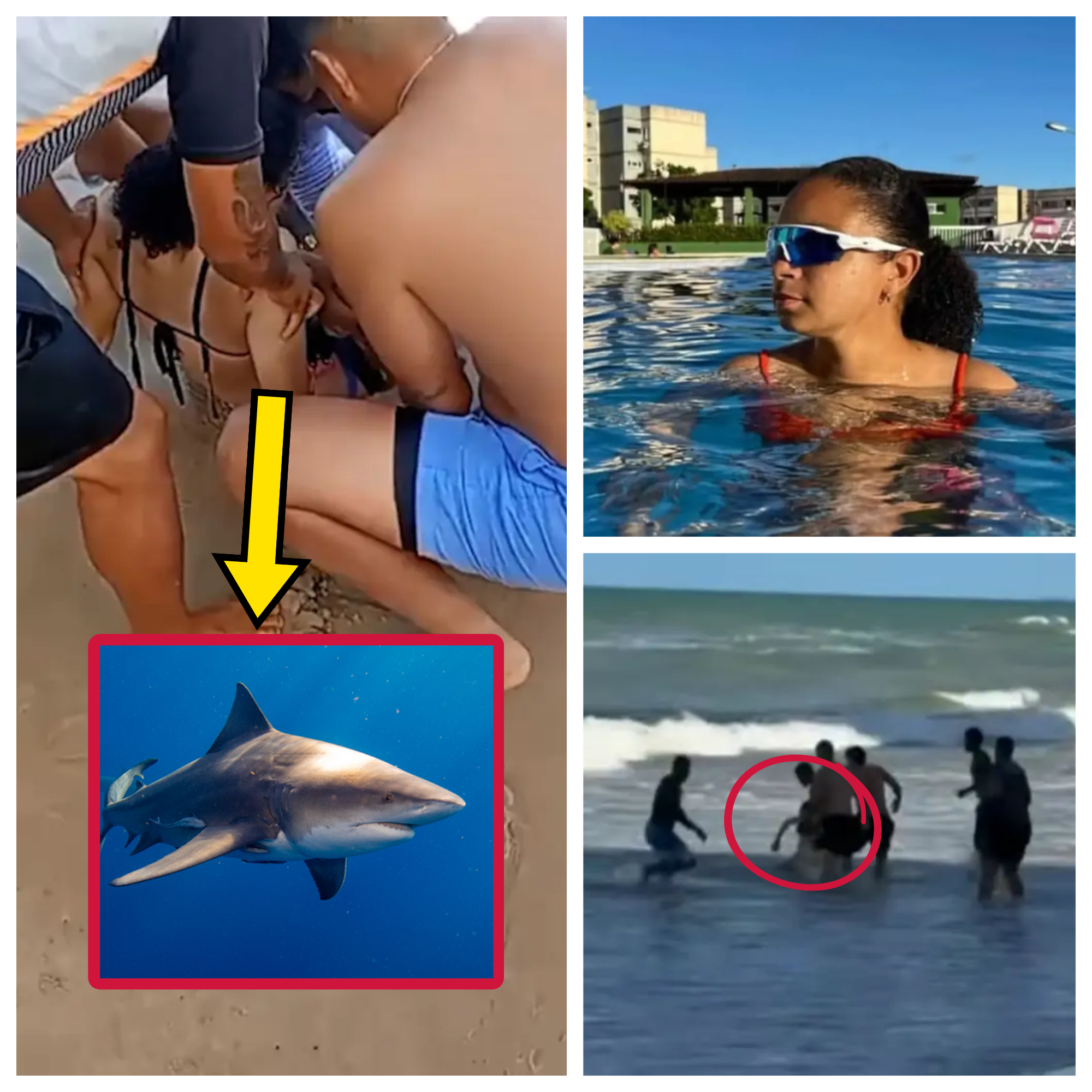
In a nightmare scenario that has shocked beachgoers across Brazil, 19-year-old Marcela Vitoria de Lima Santos was brutally attacked by a tiger shark, losing part of her leg in a horrifying incident that occurred just one day after an 11-year-old boy suffered a similar mauling at a beach only a few miles away. The shocking footage of Marcela being dragged from the water by lifeguards and bystanders has gone viral, sparking widespread fear and urgent questions about ocean safety in the region.
The attack on Marcela happened at a popular beach in Pernambuco state. Witnesses described the moment the massive tiger shark suddenly struck while she was swimming in relatively shallow water. The predator clamped down on her leg with immense force, shaking violently before releasing her. Bystanders and a quick-thinking lifeguard rushed to pull her to shore as blood turned the water red. Emergency responders provided immediate first aid, but doctors later confirmed that her lower leg had to be amputated due to the severity of the injuries.
Just 24 hours earlier, an 11-year-old boy was attacked at a nearby beach in the same coastal area. He sustained serious injuries to his arm and torso but survived after being rushed to hospital. The back-to-back nature of these attacks has terrified local residents and tourists alike, with many wondering if environmental factors or changes in marine behavior are drawing more aggressive sharks closer to shore.
Video footage from Marcela’s attack shows the chaotic rescue effort. Lifeguards and beachgoers can be seen desperately pulling her onto the sand while others apply pressure to the wound. Marcela, conscious but clearly in shock, was heard screaming in pain as she was carried away. The raw video has been viewed millions of times online, with viewers expressing both horror and admiration for the young woman’s fighting spirit.
Local authorities have issued warnings and temporarily closed several beaches in the region. Marine biologists suggest that warmer waters and possible changes in prey patterns may be contributing to increased shark activity near popular swimming areas. Tiger sharks, known as one of the most aggressive species, are particularly dangerous because they often inhabit shallow coastal waters and have a broad diet that sometimes includes humans.
Marcela’s family has spoken briefly with media, describing her as a vibrant, athletic young woman who loved the ocean. Friends say she was an active swimmer and had no idea of the danger lurking beneath the waves. She is currently recovering in hospital, surrounded by loved ones, and is said to be showing remarkable strength despite the life-changing injury.
The 11-year-old boy from the previous day’s attack is also recovering, though both incidents have left the community on edge. Parents are keeping children away from the water, and many tourists have cut their vacations short. Local fishermen and surf instructors report seeing more shark sightings in recent weeks, adding to the growing concern.
This double tragedy highlights the unpredictable risks of ocean activities even in areas previously considered safe. Experts recommend swimming in groups, avoiding murky water, and heeding beach warning flags. Some are calling for increased drone surveillance and shark detection systems along the coast to prevent future attacks.
Marcela’s story has drawn international attention, with people worldwide sending messages of support and prayers for her recovery. Her courage in the face of such trauma has inspired many, turning her into a symbol of resilience. Medical teams are optimistic about her physical rehabilitation, though the psychological impact will likely take much longer to heal.
As investigations continue into what may have triggered the sudden spike in shark activity, authorities urge the public to remain vigilant. The ocean remains a powerful and wild environment that demands respect. For Marcela and the young boy, their lives have been forever changed by two terrifying encounters just miles and hours apart.
The back-to-back attacks serve as a sobering reminder that nature can strike without warning. While beach culture is deeply embedded in Brazilian life, these incidents may force a reevaluation of safety measures and public awareness campaigns. For now, the focus remains on supporting the victims and their families through this difficult time.
Marcela Vitoria de Lima Santos showed incredible strength as she was pulled from the water. Her fight for survival, captured in that shocking video, will not be forgotten. As she begins the long road to recovery, the entire community stands with her, hoping for brighter days ahead despite the scars left by the sea.