The Video That Shattered a Self-Defense Narrative: Inside the Karmelo Anthony Case.
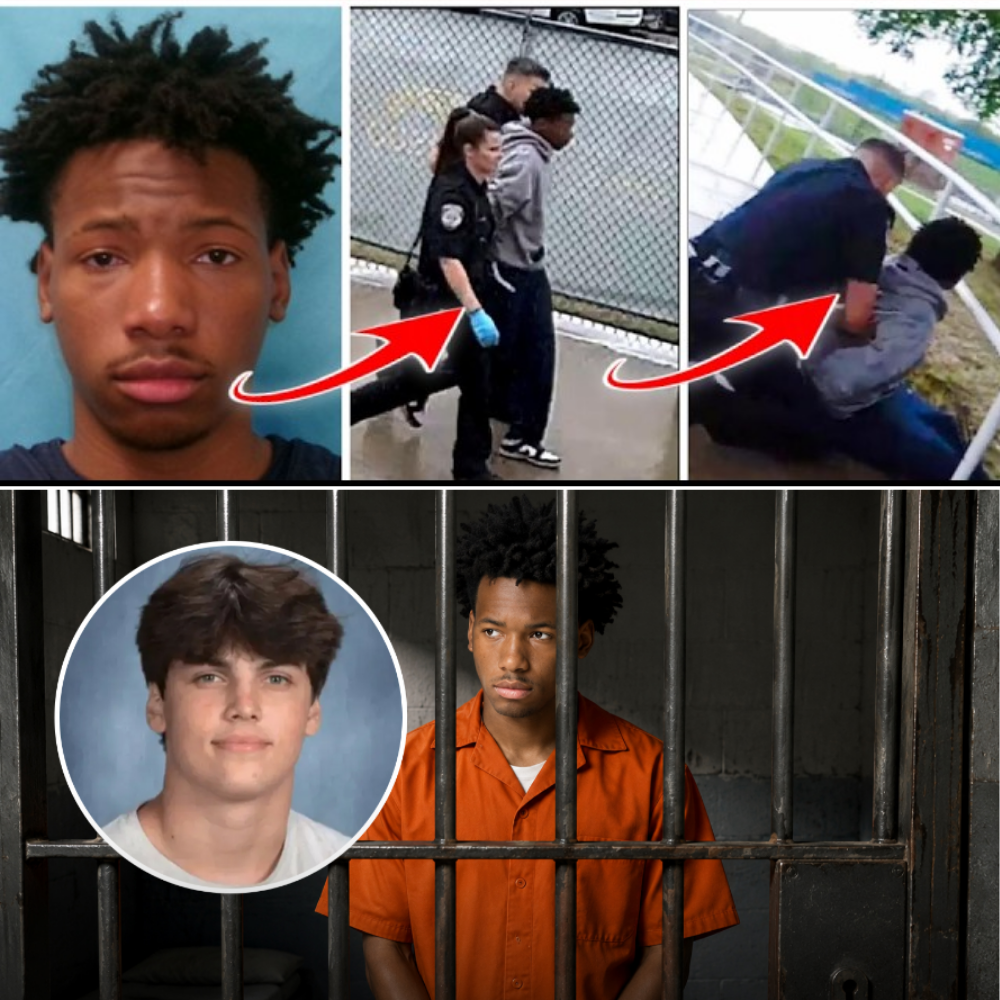
The release of courtroom footage from the Karmelo Anthony trial has ignited fresh debate over a tragic incident that ended one young life and altered another forever. What was sold online as a clear-cut case of a teenager defending himself against a group assault now appears far more complex under closer scrutiny. This isn’t just about one stabbing at a Frisco ISD track meet—it’s a window into how quickly narratives form, spread, and sometimes distort reality in the age of instant outrage.
Karmelo Anthony was convicted of murder and sentenced to 35 years for the death of Austin Metcalf. Before the public video emerged, a wave of influencers and advocates pushed a powerful story: Anthony was surrounded, pushed, and jumped by multiple people, including Metcalf’s brother and friends, leaving him no option but to act in self-defense. Clips circulated claiming the footage showed aggression from the other side and a desperate defensive response. Some even questioned why such supposedly exonerating evidence wasn’t highlighted more aggressively in court.
Yet when the actual video from the trial became available, the picture shifted. The footage, described in analyses as grainy and captured from a tent area, shows a confrontation that unfolds quickly. There is a push, movement among a group, and the fatal stabbing moment. However, claims of a full-on “jumping” or clear multi-person assault don’t align as neatly as previously asserted. Supporters on Anthony’s side began adjusting their descriptions once release became imminent—acknowledging the video’s limitations in clarity while earlier public statements had painted it as definitive proof.
This discrepancy raises uncomfortable questions about truth versus advocacy. In high-profile cases involving youth, race, or violence, there’s often pressure to frame events in ways that fit broader social narratives. Here, the rush to portray Anthony as a victim of mob aggression before evidence was public may have stemmed from genuine belief, but it also highlights confirmation bias. People saw what they wanted or expected to see, amplified by algorithms that reward emotionally charged takes. As someone who values evidence over emotion, I find this pattern troubling—it erodes trust in public discourse and justice systems alike.
Delving deeper, the case underscores flaws in how we consume and react to tragedy. Track meets are meant to be celebrations of athleticism and community, yet this one turned deadly over what appears to have escalated from words or a minor dispute. Eyewitness accounts varied, and the video’s release allows ordinary people to judge for themselves rather than relying on filtered summaries. Nate The Lawyer’s breakdown, for instance, contrasts pre-release claims with the footage: where some described Austin Metcalf as the clear aggressor initiating a pile-on, the visual evidence suggests a chaotic but not necessarily one-sided assault.
From a legal standpoint, self-defense requires reasonable fear of imminent harm and proportional response. A knife introduced into a fistfight changes everything, especially resulting in death. The 35-year sentence reflects the gravity of that choice. Critics of the verdict argue context was ignored, but the conviction suggests the jury weighed the full evidence—including the video—and found it didn’t meet self-defense thresholds.
Insight on Media and Narrative Control One of the most striking elements is how language evolved. Early commentary used terms like “jumped” and “surrounded by five,” evoking images of a brutal beating. Later statements from those close to the case admitted the video didn’t clearly depict faces or detailed actions, only general movement. This isn’t uncommon in polarized times—advocates protect “their side” instinctively. But it does a disservice to victims, families, and society. True justice demands we confront facts, not convenient stories. My personal view: rushing to judgment online often prioritizes clicks and identity over humanity. Both young men deserved better than becoming pawns in outrage cycles.
The broader implications touch on youth violence, parental responsibility, and school safety. Incidents like this remind us that conflicts among teens can escalate fatally in seconds, especially with weapons involved. Prevention requires earlier intervention—conflict resolution education, mental health support, and communities that discourage tribal defense of bad actions regardless of background.
Adding Layers: Why This Matters Beyond One Case Reflecting personally, these stories expose how social media distorts empathy. We mourn Metcalf’s lost potential while debating Anthony’s fate, but rarely pause to consider root causes: impulsivity in adolescence, easy access to knives, and a culture where “defending honor” trumps de-escalation. Data from similar cases shows video evidence increasingly pivotal in trials, yet public perception lags because of selective sharing. Here, the release democratizes judgment, forcing re-evaluation. It’s a small victory for transparency in an era of misinformation.
Critics might argue the system failed Anthony, pointing to socioeconomic factors or perceived biases. That’s worth examining—sentencing disparities and contextual understanding matter. However, excusing lethal force without ironclad justification risks normalizing violence. Balance is key: accountability with compassion for youthful mistakes, but murder isn’t a mistake.
In the end, this video doesn’t “exonerate” or “condemn” in absolute terms for everyone; it complicates the simple narrative. It challenges us to demand better from influencers, media, and ourselves—seek primary sources, question hype, and prioritize truth. Austin Metcalf’s family grieves a son; Karmelo Anthony faces decades behind bars. Their stories deserve nuance, not soundbites. As society grapples with youth crime and digital amplification, cases like this urge reform in how we teach responsibility and consume information.
The footage serves as a cautionary tale: in the heat of conflict or commentary, clarity is rare, but evidence endures. Let’s learn from it—foster dialogue over division, facts over feelings. Only then can we reduce future tragedies.