The Perfume on the Tie: Why I Left My Tech-Founder Husband and Took the Company’s Secret Code With Me.
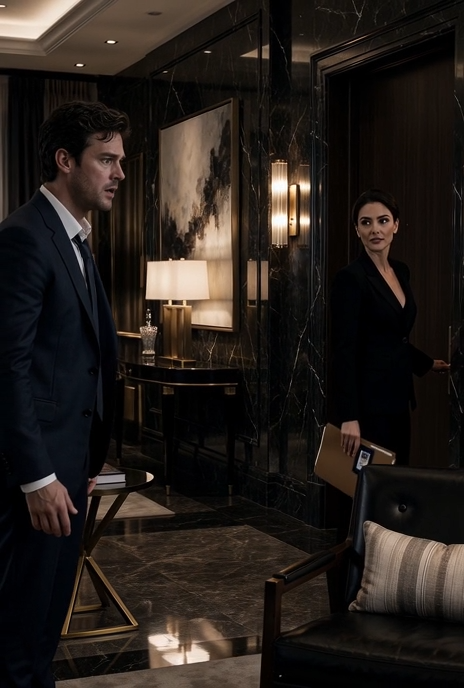
At 2:27 in the morning, my husband came home smelling faintly of someone else’s perfume, and I was sitting in the dark with a packed suitcase beside the door.
He smiled, loosened his tie, and said, “I told you not to wait up.”
I looked at the man I had loved for eleven years and answered quietly, “It seems Lauren is better at keeping you by her side than I am.”
Thane Vance stopped walking.
He had one hand on the knot of his silk tie and the other still wrapped around his keys. The soft clink of metal against his wedding band seemed unnaturally loud in the silence of our Back Bay condo.
For almost two hours, I had been sitting on the cream linen sofa beneath a single floor lamp, watching the surface of a mug of chamomile tea go cold. I had made three cups that night. The first at eleven-thirty, when Thane texted that a product meeting was running long. The second at twelve-forty-five, when he stopped responding. The third at one-fifty-two, when I already knew he was not coming home from an office.
Outside, late-September wind moved through the trees along Commonwealth Avenue. The windows held pale reflections of the room: the walnut coffee table, the bookshelves I had arranged, the lilies I bought every Sunday, and the photographs from eleven years of a life I had believed belonged equally to both of us.
Thane closed the door behind him.
“Calla.” My name came out too slowly.
I looked at him. At thirty-six, he was still the kind of man strangers assumed had always been successful. Tall, dark hair, expensive white shirt with the sleeves rolled to his elbows, and the easy confidence of a founder whose face had recently appeared in business magazines beside phrases like disruptive platform and Series B momentum.
He had built VanceGrid, a Boston software company that helped commercial buildings manage energy use. I had helped him name it. I had written the first investor deck. I had edited the website at three in the morning while he slept with the flu. Years later, people called him a visionary. No one ever asked who had made the coffee.
“What did you say?” he asked.
I stood up. My knees felt strangely light.
“Lauren Rowe.”
His face changed. Not dramatically—the smallest things usually tell the truth first. His mouth opened. His shoulders went rigid. Then the instinct to manage the situation took over.
“Calla, I don’t know what you think—”
“I know.”
“Know what?”
“That’s always been your favorite move,” I said, walking slowly toward the foyer. “Make me name everything so you can argue with the wording.”
My suitcase stood beside the console table. Graphite-gray hard shell. Twenty-eight inches. Packed three days earlier.
Thane saw it. For the first time that night, real, unfiltered fear entered his face.
“Where are you going?”
“Somewhere else.”
“Calla.” He stepped forward.
“Stop.”
I looked at him. And he did. That surprised us both. For eleven years, I had been the softer one. The peacemaker. The person who said, Maybe he didn’t mean it that way. The person who remembered birthdays, scheduled dental appointments, replaced printer toner, bought his mother’s groceries when her arthritis acted up, made dinner reservations, watered the plants, and kept the invisible machinery of a life from grinding loudly enough for anyone to notice.
Part I: The Cost of Being Invisible
“You can’t just walk out over a suspicion,” Thane said, his voice dropping into that smooth, rational pitch he used with nervous board members. “Lauren is just a senior marketing strategist. She helped coordinate our latest product launch. If you’re smelling perfume, it’s probably from the client gala last night.”
“The gala was three nights ago, Thane,” I said, resting my hand on the handle of my suitcase. “And Lauren isn’t just a strategist. She’s the woman you’ve been renting a luxury penthouse suite for in the Seaport district under a shell LLC named V-Holdings. She’s also the person you promised to make Chief Marketing Officer the moment you forced me out of my equity stake.”
The color drained entirely from his face. The smooth founder mask shattered, leaving behind a cornered, panicked stranger.
“How… how could you know about that?”
“Because for eleven years, I’ve managed every corporate filing, tax return, and bank account we’ve ever touched,” I said calmly. “You thought because I handled the domestic side of our life, I didn’t know how to read a balance sheet. You forgot that before I met you, I was a corporate forensic accountant.”
Thane stared at me, his mouth moving silently. He had spent three years building an empire, completely forgetting that I was the one who poured the concrete.
Six months earlier, when VanceGrid closed its Series B funding round of eighteen million dollars, Thane had convinced me to sign over my founding shares into a unified family trust “for tax simplicity.” I had trusted him. I had believed in our partnership. But last week, while looking for his passport, I found the trust documents locked in his home office safe.
My name had been quietly scrubbed from every corporate asset. Not just removed—forged. Just like the property deeds, just like the intellectual property assignments. Thane and Lauren had engineered a quiet corporate coup, intending to divorce me with nothing once the company went public next year.
“You’re going to ruin everything over a personal grudge?” Thane hissed, his voice finally losing its polished veneer, turning sharp and ugly. “If you blow this up before the IPO, you’ll destroy the company! You’ll destroy me!”
“No, Thane,” I said, unzipping the front pocket of my suitcase and pulling out a thick manila folder. “I’m not going to destroy the company. I’m just taking back what’s mine.”
Inside the folder were two things: certified copies of the forensic audit proving his embezzlement and corporate fraud, and the master decryption keys for VanceGrid’s proprietary core software code—keys that only I possessed, because I was the one who originally architected the database architecture back in our garage apartment.
Without those keys, VanceGrid’s software was nothing more than an expensive, locked vault of digital ash.
Part II: The Final Exit
Thane lunged forward, his hands darting out to grab the folder. “Give me that! You have no idea what kind of people are invested in this company—you’re playing with fire, Calla!”
Before his fingers could touch the paper, my phone chimed on the console table. I picked it up, hit speakerphone, and placed it right between us.
“Is everything secured, Marcus?” I asked into the quiet room.
Marcus, my attorney and former senior partner at Boston’s top tech-litigation firm, answered instantly: “All corporate accounts are frozen, Calla. The intellectual property injunction has been filed with the federal district court, and the SEC has received the complete packet regarding the unregistered shell company transfers. VanceGrid is legally locked down.”
Thane froze mid-stride, his hands hovering in the air. He looked at me as if he were seeing a ghost—or worse, a predator he had completely underestimated.
“You… you actually did it,” he whispered, his knees buckling slightly against the edge of the walnut coffee table.
“You built a company on the assumption that I would always be there to clean up your messes, absorb your lies, and stay quiet,” I said, picking up my graphite-gray suitcase and sliding the manila folder securely inside. “You forgot that the person who holds the keys to the kingdom can also lock the doors.”
I walked past him toward the front door, my heels clicking sharply against the hardwood floor.
“Calla, please—wait! We can talk about a settlement, we can split the shares—” Thane’s voice cracked, dropping into desperate, pathetic pleading as he turned around.
I paused with my hand on the doorknob, looking back at him one last time under the warm glow of the hallway light.
“Tell Lauren she’s welcome to the penthouse,” I said softly. “Because you won’t be able to afford the rent by morning.”
I pulled the door open, stepped out into the cool Boston night, and let it click shut behind me—locking away eleven years of ghosts, and walking straight into a future that was entirely my own.