Anatomy of a Broken Verdict: The Inside Story of the Holdout Who Derailed the Lindsay Clancy Trial.
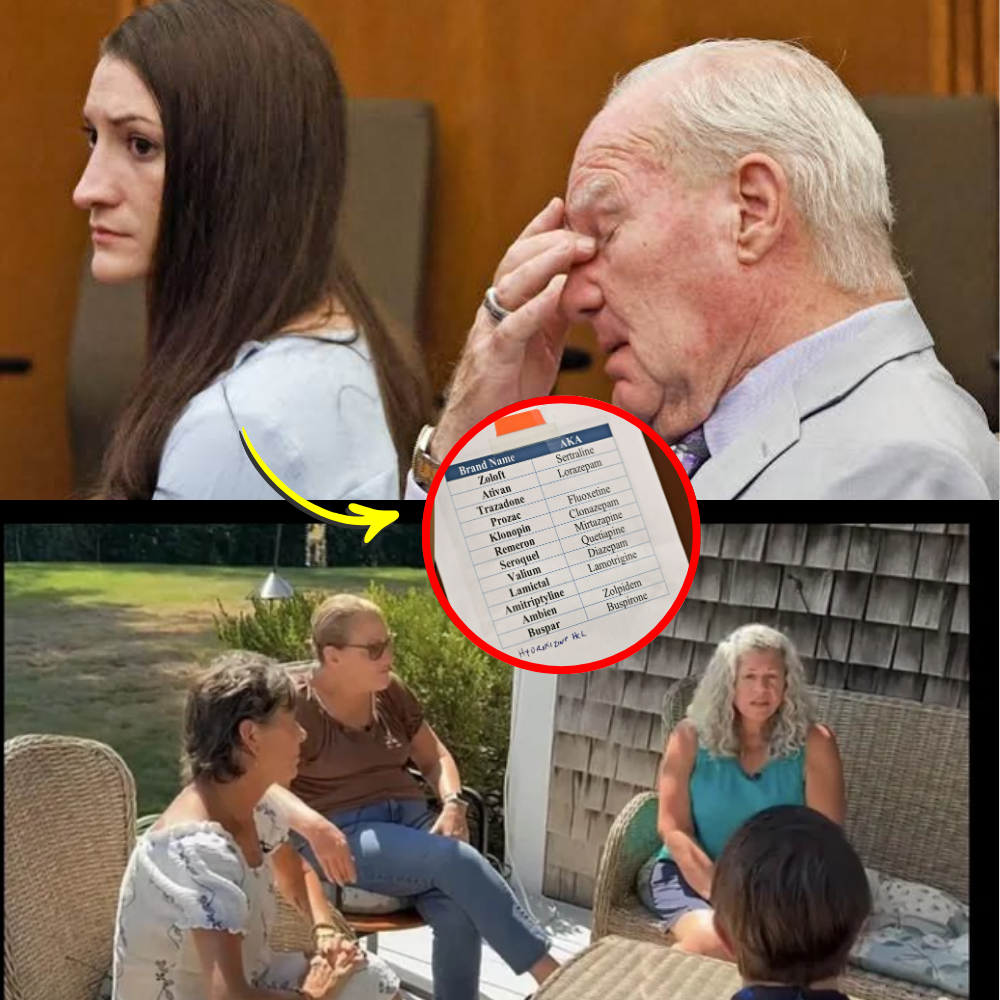
The legal system rests on a delicate architecture of definitions, instructions, and collective faith in human reason. Yet, behind the closed doors of a Massachusetts jury room, that architecture buckled under the weight of a single, stubborn contradiction. Weeks of agonizing testimony, dozens of expert witnesses, and endless hours of tense deliberation culminated not in a definitive verdict, but in a fractured mistrial. Now, as the dust settles and shockwaves reverberate across the public sphere, the jurors themselves are breaking their silence to reveal what truly happened when twelve strangers tried to decide the fate of Lindsay Clancy.
A Nation Divided, a Jury Cornered
The facts of the case have haunted the public consciousness since that grim January day in 2023 when Clancy, a former labor and delivery nurse, strangled her three young children—Cora, Dawson, and Callan—in their Duxbury home before attempting to take her own life. She never denied the physical act. Instead, the trial hinged on a profound and deeply polarizing question of criminal responsibility: Was Clancy a mother suffering from a catastrophic psychotic break driven by severe postpartum psychosis, or was she a calculated killer who knew exactly what she was doing?
For five grueling weeks, prosecutors painted a picture of premeditation, highlighting how Clancy allegedly sent her husband out on errands just moments before the tragedy. Meanwhile, the defense laid bare a harrowing narrative of a crumbling mind, overmedicated and under-supported by a failing healthcare system that missed the flashing warning signs of severe mental illness. When the case finally went to the jury, expectations were high that a panel of 12 citizens would meticulously parse the evidence and find consensus. Instead, they walked into a labyrinth of emotion, legal technicalities, and deep psychological distress.
The Moment the Room Thought It Was Over
According to jury foreperson Roni Carlson and fellow juror Paula Devlin, who recently spoke out in exclusive media interviews, the breaking point came after days of intense deadlock. The panel had bickered, walked the room in frustration, and reviewed medical evidence repeatedly. But then, a breakthrough seemed to materialize.
Carlson recalled the exact second she thought the agonizing stalemate had finally broken. The lone male holdout who had resisted the majority consensus suddenly conceded a critical legal threshold.
“He admitted he had reasonable doubt and I started filling out the forms. I was so excited,” Carlson shared.
Having spent hours navigating the emotional and logical hurdles of the case, the retired teacher had all three acquittal forms laid out before her, ready to sign her name to a verdict of not guilty by reason of insanity. Eleven members of the jury were unified, believing the threshold of reasonable doubt mandated an acquittal under the court’s instructions.
The Bombshell Reversal
That excitement, however, lasted only a fraction of a second. Just as the paperwork was being completed, the holdout abruptly shifted ground, appending a condition that effectively detonated the room’s consensus.
“But I’m still not going to say that she’s not guilty by reason of insanity,” the juror reportedly stated.
To the rest of the panel, the statement was a logical impossibility and a direct violation of the legal framework they had sworn to uphold. If a juror explicitly acknowledges reasonable doubt regarding a defendant’s sanity and criminal responsibility, standard judicial instructions require an acquittal. By refusing to take that final step despite admitting his doubts, the holdout created an unbridgeable chasm.
Frustration inside the deliberation room quickly boiled over into open hostility. Jurors described the atmosphere as suffocating. Paula Devlin did not mince words when describing the holdout, labeling him “very arrogant” and asserting that he flatly refused to genuinely engage with the arguments, evidence, or medical explanations brought forward by fellow panelists—including nurses who attempted to unpack complex toxicology and medication reports.
The Fallout and an Uncertain Future
Judge William Sullivan ultimately declared a mistrial after the jury confirmed they were entirely unable to reach a unanimous verdict. For the defense, the outcome was a devastating stolen opportunity. Defense attorney Kevin Reddington did not hesitate to voice his outrage, declaring that the jury had been “robbed by one man, for whatever his agenda was”.
The public reaction has been equally visceral, dividing communities down ideological and empathetic lines. Some argue that the holdout stood firm against what they viewed as an unpalatable escape from accountability for the deaths of three innocent children. Others, aligned with the 11 jurors who voted to acquit, maintain that emotion hijacked logic, and that a single stubborn voice thwarted justice for a woman proven to have been trapped in the nightmare of postpartum psychosis.
As Lindsay Clancy remains held in a psychiatric facility awaiting a crucial status hearing, the legal apparatus hangs in limbo. Prosecutors have yet to officially announce whether they will subject the community, the families, and Clancy herself to the immense trauma of a full retrial. What remains crystal clear, however, is that the curtain has only just been pulled back on one of the most polarizing deliberations in modern legal history—leaving a fractured public to wonder if true justice can ever be universally defined when human emotion clashes with the letter of the law.