THE LAST-SECOND DECISION: Did the Amazon Pilots Try to Abort the Landing?
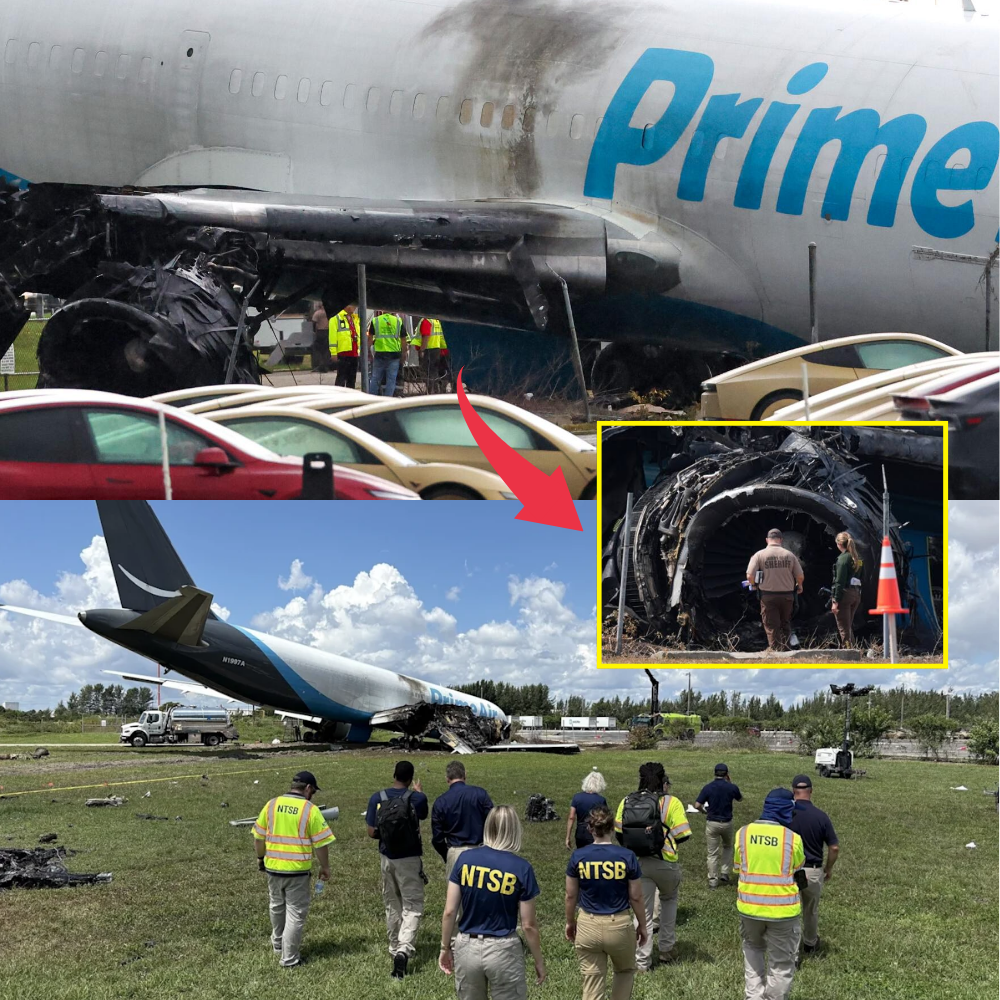
The chilling silence of a cockpit recorder often tells a story of sudden tragedy, but the latest data recovered from a recent high-profile Amazon Prime Air cargo jet accident reveals something far more agonizing: a desperate, last-minute gamble that hung in the balance between life and death. As federal investigators piece together the final moments of the flight, aviation circles are reeling from a sequence of events that highlights the thin line between a managed emergency and catastrophic disaster.
Preliminary data released by the National Transportation Safety Board (NTSB) paints a harrowing picture of the aircraft’s final roll down the tarmac. According to investigators examining the flight data recorder (FDR), the heavy cargo aircraft touched down on the runway at a scorching ground speed of approximately 158 knots (roughly 181 mph). Under standard operating conditions, touching down at this velocity—coupled with runway constraints—demands immediate, aggressive deceleration measures. Initially, the crew initiated braking procedures. However, what happened next has sparked an intense debate among aviation safety experts worldwide.
Instead of maintaining steady braking to bring the massive jet to a halt, the flight data reveals a sudden and dramatic shift in strategy. The aircraft’s throttles were pushed forward, spooling up to values typically consistent with a go-around thrust. For a few critical seconds, the pilots appeared to reconsider their landing entirely, weighing the terrifying prospect of running out of tarmac against the dangerous alternative of forcing a heavy, high-speed jet back into the air. Was it a moment of panic, a miscalculated assessment of remaining runway length, or a desperate reflex against an impending overrun?
The ambiguity didn’t last long, though the consequences were absolute. Almost as quickly as the throttles were advanced, reality set in. The engines were yanked back to idle, and wheel brakes were aggressively re-applied. Yet, this fatal hesitation consumed precious seconds—seconds that the aircraft simply did not have. Investigators noted a striking absence of deployed speed brakes or thrust reversers in the recorded data sequence during these critical phases, leaving the heavy jet with severely compromised stopping power as it hurtled toward the end of the pavement.
As the NTSB continues its deep dive into crew backgrounds, weather conditions, and cockpit voice recordings, the aviation community is left grappling with haunting questions. The split-second choice to toy with a go-around after already kissing the runway serves as a stark reminder of the immense pressures faced by modern cargo flight crews. In the high-stakes environment of commercial aviation, a single moment of indecision can ripple into tragedy, leaving investigators and the public searching for answers in the wreckage of what might have been.