The Mystery Boat “Azura” and the Dinghy Test That Shattered Brian Hooker’s Story: Lynette Hooker Disappearance Breakthrough.
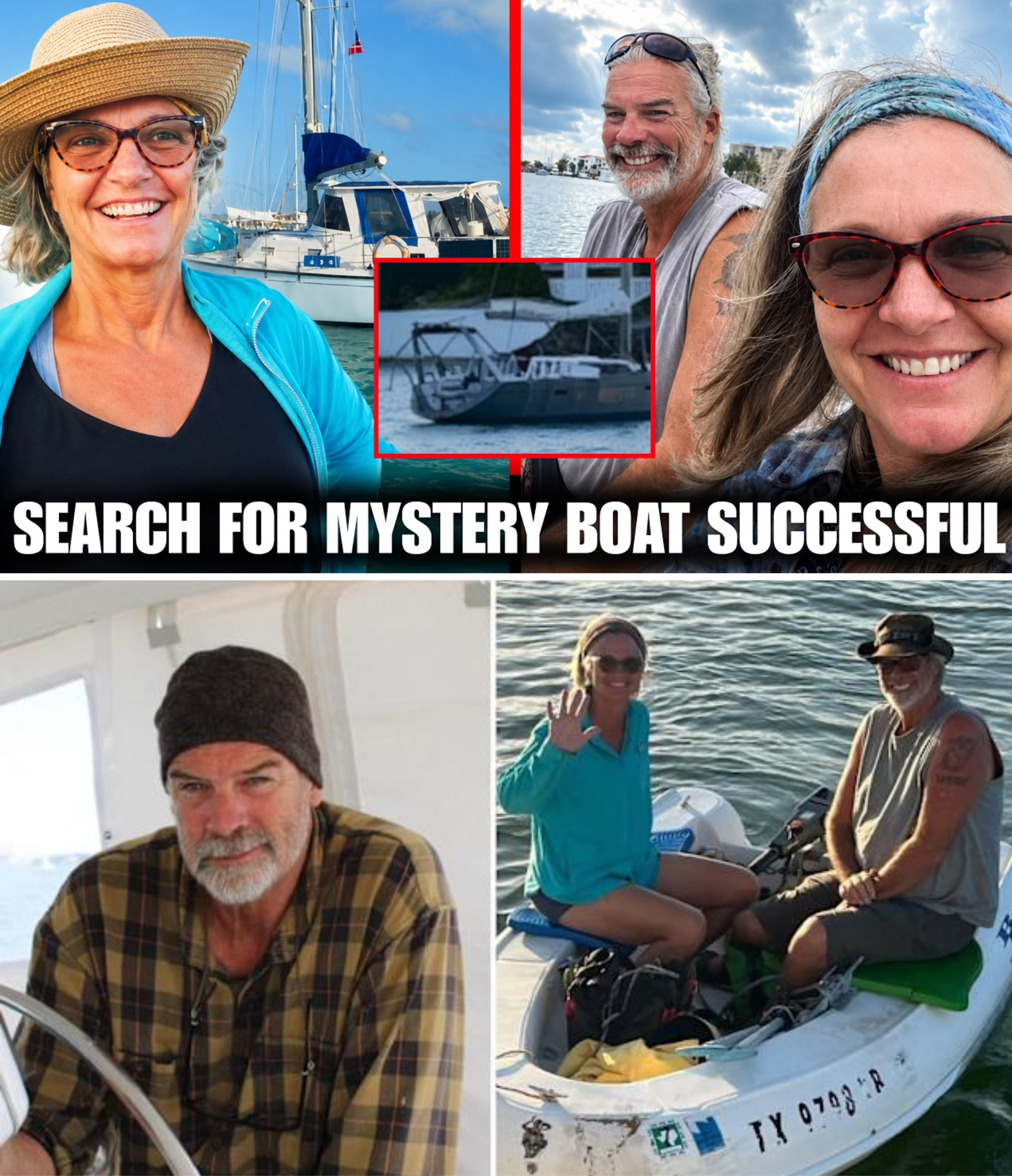
On April 4, 2026, in the protected waters of Aunt Pat’s Bay near Elbow Cay in the Bahamas, Lynette Hooker disappeared without a trace from the sailboat she shared with her husband Brian. What began as a missing person case has rapidly evolved into one of the most scrutinized maritime mysteries in recent years, fueled by new evidence, public appeals from the U.S. Coast Guard Investigative Service (CGIS), and independent experiments that challenge the official account.
Lynette, an experienced sailor and mother, was last seen on the vessel “Soulmate” during one of the busiest boating weekends of the season. Brian Hooker reported that he woke up to find her missing and claimed he attempted to search for her using their rigid-hulled dinghy but was unable to navigate back effectively due to wind and current conditions. However, recent developments have cast significant doubt on key elements of that narrative.
In a major breakthrough reported in the last 24-48 hours, the mysterious sailboat anchored mere feet from Soulmate has been identified as “Azura.” The U.S. Coast Guard had previously released a grainy photo and publicly appealed for information about this vessel, stating that its occupants “may have information relevant to the CGIS investigation.” This is not routine language — it signals that federal investigators believe anyone aboard Azura could hold critical eyewitness details about the night Lynette vanished.
The identification of Azura came through enhanced imagery and community efforts within the tight-knit sailing world. Sailors often track vessels via AIS systems, share anchorages, and maintain connections across the Caribbean and East Coast. Investigators are now urgently seeking the crew of Azura to answer pressing questions: What did they observe between the two boats that night? Did they hear or see anything unusual? Why has there been no public statement from them yet?
Compounding the pressure on Brian Hooker’s account is a real-world experiment conducted by Blaine Stevenson, a friend of Lynette and fellow sailor. In conditions matching those reported on April 4 — approximately 20-knot winds — Stevenson took a similar rigid-hulled dinghy and used a single paddle to demonstrate maneuverability. The footage shows him successfully navigating and returning to a boat, directly contradicting Brian’s claim that the conditions made it impossible for him to reach or search for Lynette effectively.
Additional inconsistencies are emerging. Reports of a flare sighting that does not align with the timeline, an eleven-hour gap before Brian raised a formal alarm, and the fact that Aunt Pat’s Bay was crowded with boats on a holiday weekend yet no one apparently came to assist have raised further questions. The anchorage is known for its calm, protected waters, making the lack of immediate response even more puzzling.
Brian Hooker has not been charged with any crime and has consistently maintained his innocence, stating publicly that he never harmed Lynette and wants only to find her. His legal team has denied any wrongdoing. CGIS and Bahamian authorities continue to investigate, treating the case as active and open. Tips can be submitted anonymously through the Coast Guard’s app.
The sailing community has rallied in support of Lynette, sharing information and calling for answers. She is remembered as a passionate sailor who loved the ocean and her family. The case has drawn parallels to other high-profile boating disappearances, highlighting the vulnerabilities even experienced mariners face — and the importance of transparency in investigations.
As of now, Lynette remains missing. The identification of Azura and the dinghy demonstration represent significant steps forward, but many questions remain unanswered. What really happened in those calm Bahamas waters on April 4? Did the crew of Azura witness something that could break the case open? And why does Brian Hooker’s version of events appear increasingly difficult to reconcile with the physical evidence and independent tests?
The public appeal from the Coast Guard underscores the seriousness of the situation. In a world where sailors look out for one another, the silence from certain quarters is deafening. Lynette’s family and friends deserve the truth, whether this was a tragic accident, an overlooked emergency, or something far more sinister.
This evolving case serves as a stark reminder of how quickly a dream sailing adventure can turn into a nightmare — and how modern technology, community networks, and persistent investigation can shine light on even the most mysterious maritime vanishings. The next 24-48 hours could bring even more revelations as authorities pursue leads related to Azura.