The Day Before the Massacre: Neighbor’s Haunting Encounter with Cain Clark Outside His Home.
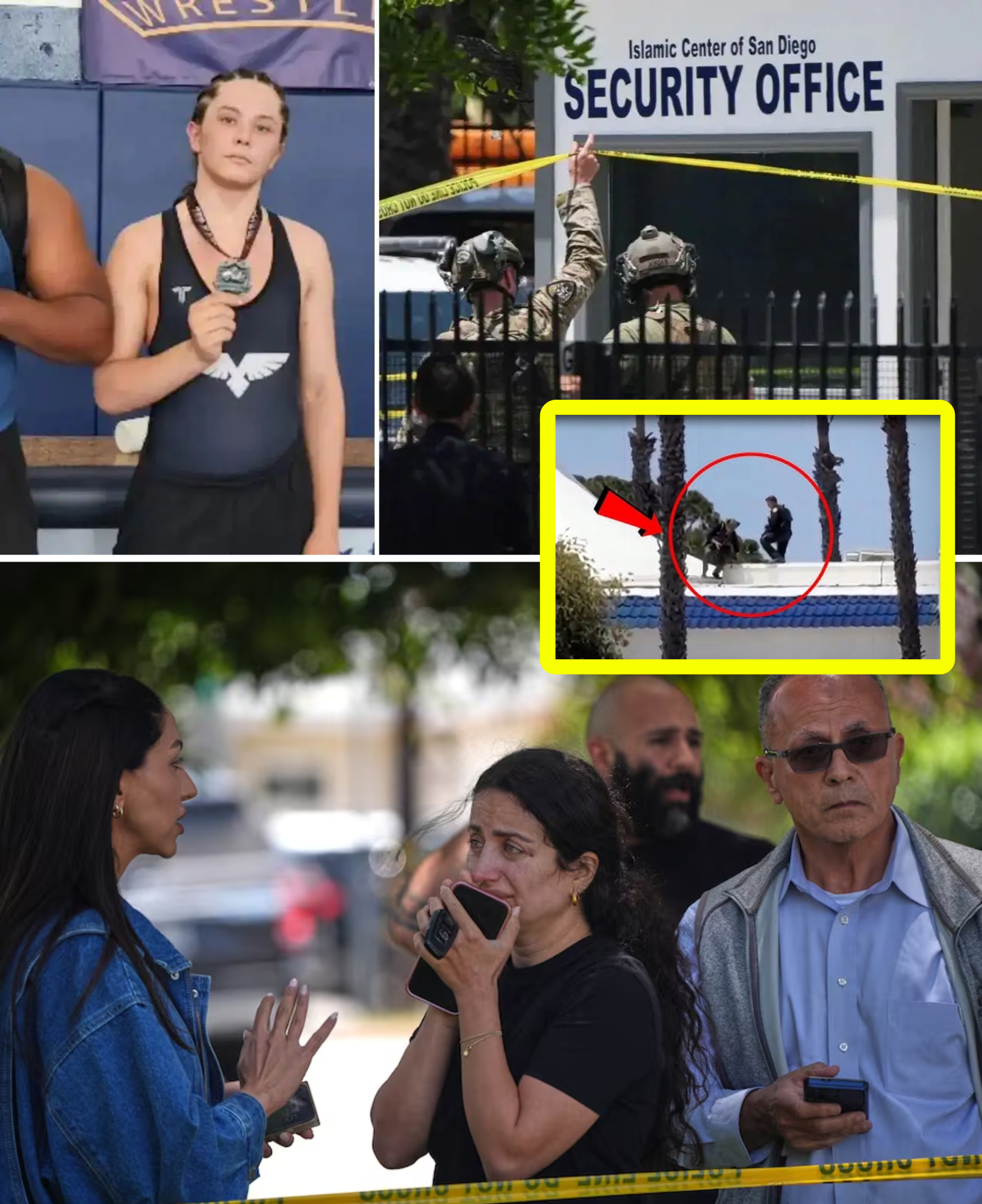
In the quiet Clairemont neighborhood of San Diego, life seemed ordinary on Sunday, May 18, 2026. Jennifer Du, a 30-year-old resident living directly across the street from 17-year-old Cain Clark, had no idea she was witnessing one of the final calm moments before horror unfolded. The very next day, Clark and 18-year-old Caleb Vazquez would carry out a deadly attack at the Islamic Center of San Diego, killing three men before turning the guns on themselves in what authorities are investigating as a hate crime fueled by neo-Nazi and accelerationist ideology.
Du described the encounter as deeply unsettling in hindsight. “It’s been unreal. I saw him literally the day before,” she told reporters. “He just stood there. I didn’t know if he was watching me or something, but he just got food delivery and went back in.” Clark reportedly lingered outside his family home, staring in a way that left Du uneasy, though at the time she dismissed it as nothing unusual. That ordinary Sunday afternoon delivery would be one of the last times neighbors saw the teenager alive and free.
The following Monday, May 19, Clark and Vazquez — who allegedly met online and bonded over extremist writings — approached the Islamic Center during prayers. Dressed in camouflage with tactical gear, including a plate carrier bearing a Sonnenrad neo-Nazi symbol and patches linked to militant accelerationist groups, they opened fire. Three men were killed: security guard Amin Abdullah, who heroically drew the attackers away from a school full of children inside the center, along with worshippers Mansour Kaziha and Nadir Awad. Their quick actions prevented a far greater tragedy.
After the shooting, the two teenagers drove a short distance away, where Clark allegedly shot Vazquez before taking his own life. A disturbing video later surfaced on a gore site allegedly showing the entire sequence. Authorities recovered anti-Islamic writings, a manifesto filled with hatred toward Muslims, Black people, and Jewish people, and other evidence during searches of homes linked to the suspects.
Neighbors who had known Clark his entire life expressed total shock. Longtime residents Marne and Ted Celaya described the Clark family as good people who had lived there for over 20 years. “He’s helped me bring in my groceries,” Marne said, struggling to reconcile the helpful teenager they watched grow up with the killer who carried out the attack. Clark was a former wrestler at Madison High School, attending virtually and on track to graduate. He had no public disciplinary record.
The neighbor’s account adds a chilling human layer to the timeline. Just hours before the rampage, Clark’s mother had reportedly called police concerned about her son being suicidal and missing with weapons. Yet on Sunday, to Jennifer Du, he appeared calm — almost too calm — standing silently with his food delivery. That brief, wordless stare now haunts her and the wider community.
The Islamic Center of San Diego, the largest mosque in the county, became a scene of both tragedy and heroism. Imam Taha Hassane praised the victims’ sacrifice, noting that their actions saved countless children who were attending school on the premises. The attack occurred on the first day of Dhul Hijjah, a sacred period in the Islamic calendar, deepening the pain for the Muslim community.
Investigators from the San Diego Police Department, FBI, and other agencies continue to piece together how two teenagers radicalized online escalated to domestic terrorism. Writings recovered show broad hatred and calls for violence. The case has sparked renewed national conversations about online extremism, access to weapons, and warning signs in troubled youth.
For Jennifer Du and other neighbors, the horror feels personal. A boy they saw almost daily — the one who waved and helped with groceries — became the face of a hate-fueled massacre. “It’s unbelievable,” one neighbor said, echoing the sentiment across Clairemont. The ordinary suburban street now carries the weight of what almost no one saw coming.
As funerals begin and the community mourns the three victims who died protecting others, the neighbor’s simple recollection stands as a stark reminder: sometimes the warning signs are quiet — a lingering stare, a food delivery on an otherwise normal day. In the aftermath of the San Diego mosque shooting, that haunting image of Cain Clark standing silently outside his home may be one of the last glimpses into the mind of a teenager who chose hate over humanity.
The investigation remains active, with more details expected as forensics and digital evidence are analyzed. For now, San Diego — and the nation — grapples with how a wrestler, a son, and a neighbor became a killer in less than 24 hours.