“He Intentionally Swam Away”: Veteran Maldivian Diver Accuses Local Guide of Abandoning Italian Group in Shark Cave Tragedy.
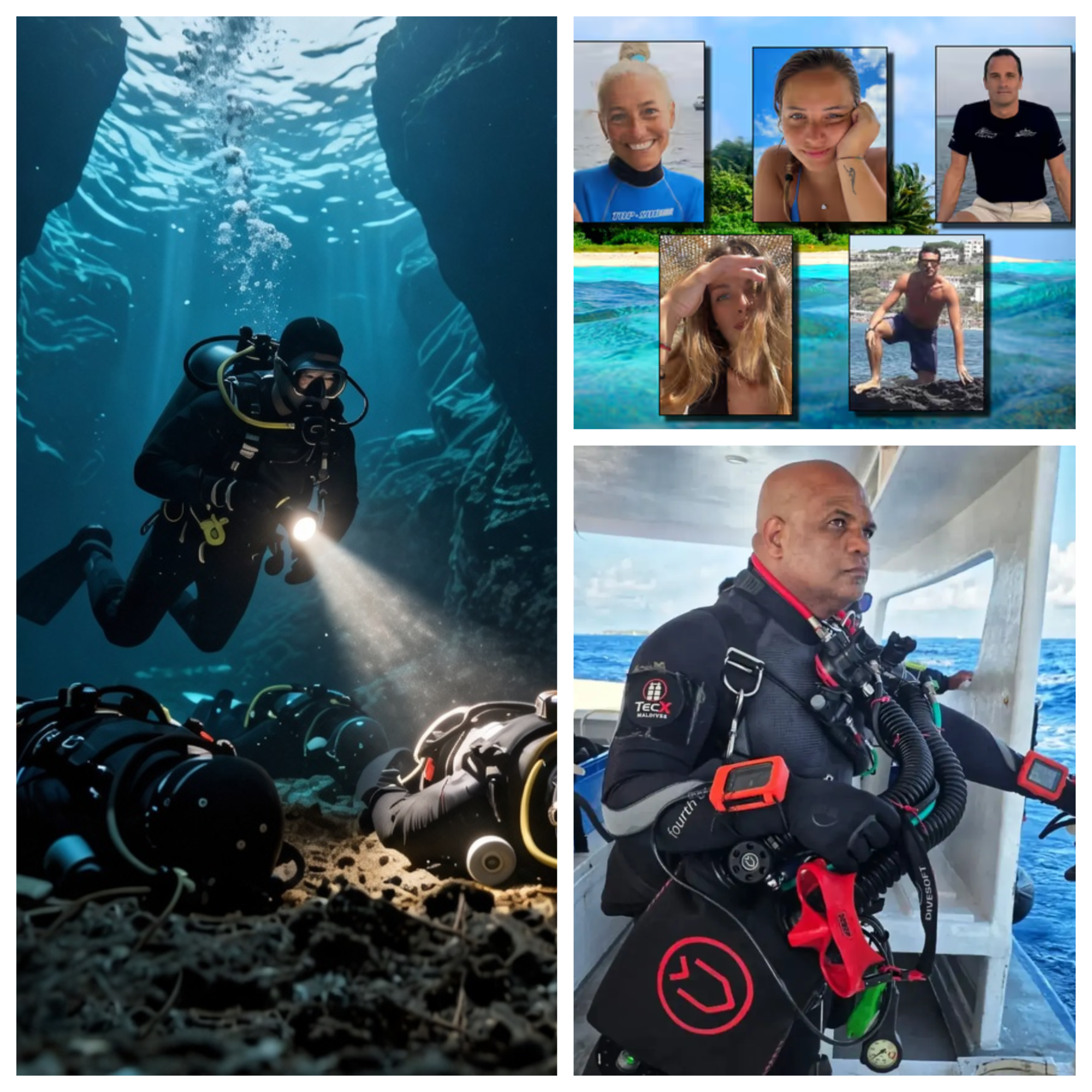
A explosive new accusation has rocked the investigation into the Maldives’ worst diving disaster. Shafraz Naeem, a highly experienced Maldivian diver and former advisor to the National Defence Force with over 50 dives in the exact cave system, has publicly blamed local instructor Gianluca Benedetti for allegedly “intentionally swimming away” from the Italian research group. According to Naeem, the guide may have fled the dangerous situation before his own air ran out, leaving the tourists to face the powerful currents and narrow passages alone.
The tragedy unfolded on May 14, 2026, in Thinwana Kandu — known locally as Shark Cave — in Vaavu Atoll. The five Italian victims — marine ecology professor Monica Montefalcone (52), her daughter Giorgia Sommacal (20), researchers Muriel Oddenino (31) and Federico Gualtieri (31), and instructor Benedetti (44) — entered the cave system for what was described as coral research. Using only recreational scuba equipment, they descended to depths of 50-60 meters (approximately 160-197 feet), far exceeding Maldives’ recreational limit of 30 meters. All five perished, with bodies later found clustered in the third and deepest chamber. A Maldivian military diver also died during the recovery operation, bringing the total death toll to six.
Naeem, who has extensive technical cave diving experience and knows the Alimatha/Thinwana Kandu complex intimately, did not hold back in interviews with Italian and international media. He claimed the guide, who was familiar with the site, appeared to have separated from the group deliberately. “Perhaps he swam away on purpose before running out of air,” Naeem suggested, raising the possibility that Benedetti recognized the extreme danger — strong internal currents, silt-outs reducing visibility to zero, and the overhead environment with no easy exit — and chose to save himself. Benedetti’s body was the first recovered, found nearer the entrance with an empty tank, while the others were located much deeper.
The veteran diver has been vocal about multiple rule violations. He stated that the group lacked proper government authorization for cave penetration, used inappropriate gas mixes for such depths, and ignored basic safety protocols required for technical cave diving. “Everyone knows the rules were broken,” Naeem asserted. He emphasized that even experienced divers face life-threatening challenges in this environment, where a single unexpected surge (Venturi effect) can pull people deeper into pitch-black tunnels. Naeem himself always used specialized equipment, backup systems, and proper gas mixes on his own dives in the same caves.
This accusation adds fuel to the ongoing joint investigation by Italian prosecutors and Maldivian authorities. Focus is now on dive planning, equipment suitability, permit compliance, and the exact roles and actions of each member — particularly Benedetti as the local guide and boat captain. Questions remain about why the group ventured so deep into the overhead sections when their research permit reportedly covered open-water coral study rather than cave exploration. Dive computers, potential GoPro footage from Monica Montefalcone, and forensic analysis of tanks and bodies will be crucial in determining timelines and decision-making.
The tragedy has devastated families and sparked global outrage. Carlo Sommacal, Monica’s husband and Giorgia’s father, previously expressed disbelief, insisting “something must have happened down there” given the women’s expertise. Federico Colombo, Giorgia’s fiancé, read a moving love letter at the memorial service emphasizing the need to “hurry to love” because life ends without warning. The loss of an entire research team from the University of Genoa has left the scientific community in mourning.
Naeem’s claims highlight deeper issues in Maldives diving tourism. While the country promotes itself as a paradise for scuba enthusiasts, high-risk sites like Shark Cave demand strict oversight. Recreational divers, even highly qualified ones, should never attempt technical cave penetration without specialized training, redundant gas supplies, continuous guidelines, and emergency protocols. Naeem stressed that one miscalculation or environmental change at depth can turn an adventure into catastrophe within seconds.
Maldivian officials have confirmed an investigation into whether depth limits were exceeded and permits were properly followed. They maintain that thousands of safe dives occur annually but acknowledge this incident as a rare and preventable tragedy if rules were indeed ignored. The government has promised a full review of procedures for scientific and adventure dives.
As repatriation of the bodies continues and the investigation intensifies, Shafraz Naeem’s accusations have shifted the narrative from simple accident to potential negligence or worse. Whether the guide panicked, made a fatal error in judgment, or intentionally distanced himself may never be known with absolute certainty — but the veteran’s insider perspective has forced authorities to examine every possibility.
The Shark Cave remains a silent witness to the events of that fateful day. Powerful currents still flow through its narrow passages, a haunting reminder of nature’s unforgiving power. For the families left behind, answers cannot bring back their loved ones, but they may provide some measure of justice and prevent future deaths. As the diving community mourns and calls for stricter regulations grow louder, one veteran’s blunt testimony stands out: rules exist for a reason, and breaking them in places like Thinwana Kandu can have deadly consequences.