Last-Second Decision That Turned One Student Into the Only Survivor of Maldives’ Deadliest Cave Dive.
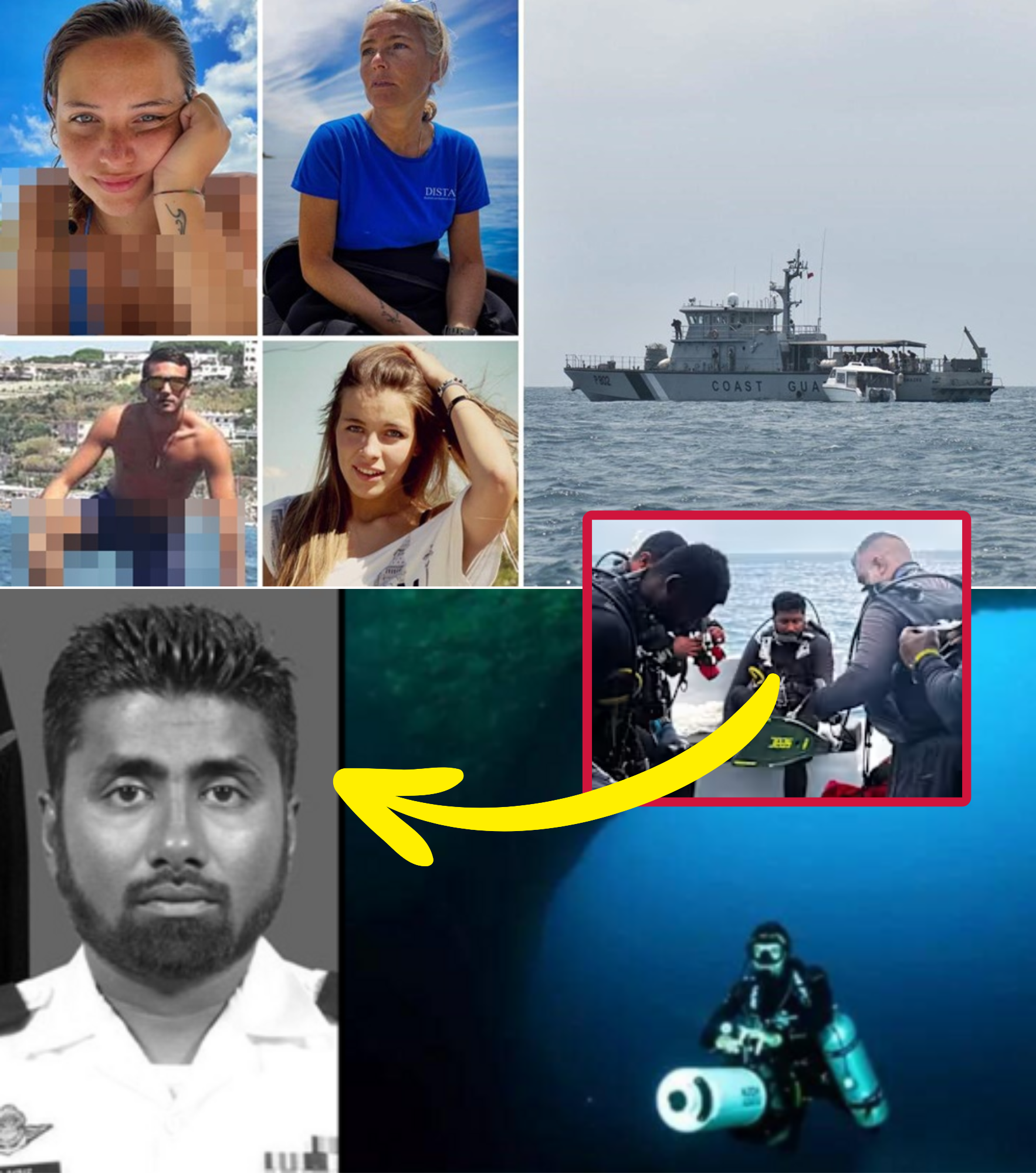
A last-minute change of heart saved a young Italian university student from joining five fellow divers who vanished forever inside a treacherous underwater cave system in the Maldives on May 14, 2026. While the group descended to depths of 50-60 meters near Alimatha Island in Vaavu Atoll, the unnamed woman from the University of Genoa stayed aboard the luxury liveaboard yacht Duke of York — and became the sole direct survivor of what authorities call the worst single diving incident in the island nation’s history.
The tragedy unfolded on a bright Thursday morning. The six Italians, part of a larger group of researchers and enthusiasts traveling on the 36-meter Duke of York, set out to explore a challenging cave known locally as part of the Devana Kandu channel. The site features dramatic drop-offs, narrow passages, and sections referred to as the “Shark Cave.” Most of the victims were experienced divers connected to the University of Genoa, including marine biologist and associate professor Monica Montefalcone, 52, her 20-year-old daughter Giorgia Sommacal, researcher Muriel Oddenino, recent graduate Federico Gualtieri, 31, and local diving instructor and boat operations manager Gianluca Benedetti.
According to multiple reports, the young female student had prepared her equipment and was fully ready to enter the water with her companions. At the final moment, however, she hesitated and chose to remain on deck. That decision separated her from the fate that awaited the others. She is now described by investigators as the “only direct survivor of that day” and a crucial witness who can help reconstruct the final moments before the group disappeared.
When the divers failed to resurface at the scheduled time, alarm spread quickly. The Maldives National Defence Force launched a major search operation. One body, believed to be that of Gianluca Benedetti, was recovered near the cave entrance at around 60 meters. Rough seas and tight passages complicated efforts, but an international team of Finnish cave diving specialists eventually located the remaining four bodies deeper inside the cave system. Tragically, a Maldivian military diver, Sergeant Mohamed Mahudhee, also lost his life to decompression sickness while assisting in the recovery.
Experts point to several possible contributing factors in this type of deep cave dive. At 50-60 meters on standard recreational air or Nitrox mixes, divers face elevated risks of nitrogen narcosis (which can impair judgment), oxygen toxicity, disorientation in low-visibility silt-outs, and complex navigation in overhead environments with no direct path to the surface. Unlike open-water diving, cave penetration demands specialized technical training, gas management, and equipment that the group reportedly did not fully utilize. The Maldives typically restricts deeper dives beyond 30 meters without special permissions and technical setups like trimix — protocols that appear to have been overlooked or not properly authorized here.
The Duke of York, operated in connection with Italian tour company Albatros Top Boat, has come under intense scrutiny. The company has stated they were unaware of any plans to exceed recreational diving limits and would never have approved a cave penetration at that depth. In response, Maldivian authorities indefinitely suspended the vessel’s operating license pending a full joint investigation with Italian officials. Approximately 20 other Italian passengers aboard the yacht were unharmed and have received psychological support through the Italian Embassy.
Monica Montefalcone’s husband, Carlo Sommacal, expressed the family’s devastation, noting that “something must have happened down there” in the cave. Montefalcone herself had survived the devastating 2004 Indian Ocean tsunami while diving off Kenya, making her death all the more heartbreaking. The victims were not only passionate divers but also dedicated scientists studying marine ecosystems and climate impacts. Their loss has sent shockwaves through Italy’s academic and diving communities.
This incident shines a harsh light on the fine line between adventure and catastrophe in technical diving. The Maldives attracts global tourists with its pristine reefs and thrilling sites, yet cave diving remains one of the most hazardous disciplines in scuba. Overhead environments eliminate the safety of a direct ascent, and even minor errors in gas planning or situational awareness can prove fatal. Many in the diving world are now calling for stricter enforcement of depth and training requirements, better risk assessments for liveaboard operations, and mandatory cave-diving certifications for any overhead penetration.
For the young survivor, the weight of that split-second choice will likely linger for years. She had every intention of joining her friends and colleagues on what should have been an unforgettable scientific and exploratory dive. Instead, an unexplained hesitation kept her on the sunlit deck while the ocean claimed five lives below. Her testimony will be vital as authorities piece together the sequence of events — from equipment checks to the exact conditions inside the cave.
As the Duke of York eventually returned to Malé under suspended operations, families mourned, investigators dug deeper, and the global diving community reflected. Paradise waters that promise wonder can turn unforgiving in moments when preparation meets the unpredictable forces of depth, current, and confined spaces. The story of the sole survivor serves as both a tribute to those lost and a powerful cautionary tale: sometimes the bravest decision is knowing when not to dive.
The turquoise beauty of Vaavu Atoll will continue to draw explorers, but for those who knew the victims and for the young woman forever changed by her choice to stay behind, the ocean now carries echoes of lives cut short and one remarkable escape that defies easy explanation.