SS Symbol and Carved Hate Messages: Police Uncover Neo-Nazi Links in San Diego Mosque Teen Shooting.
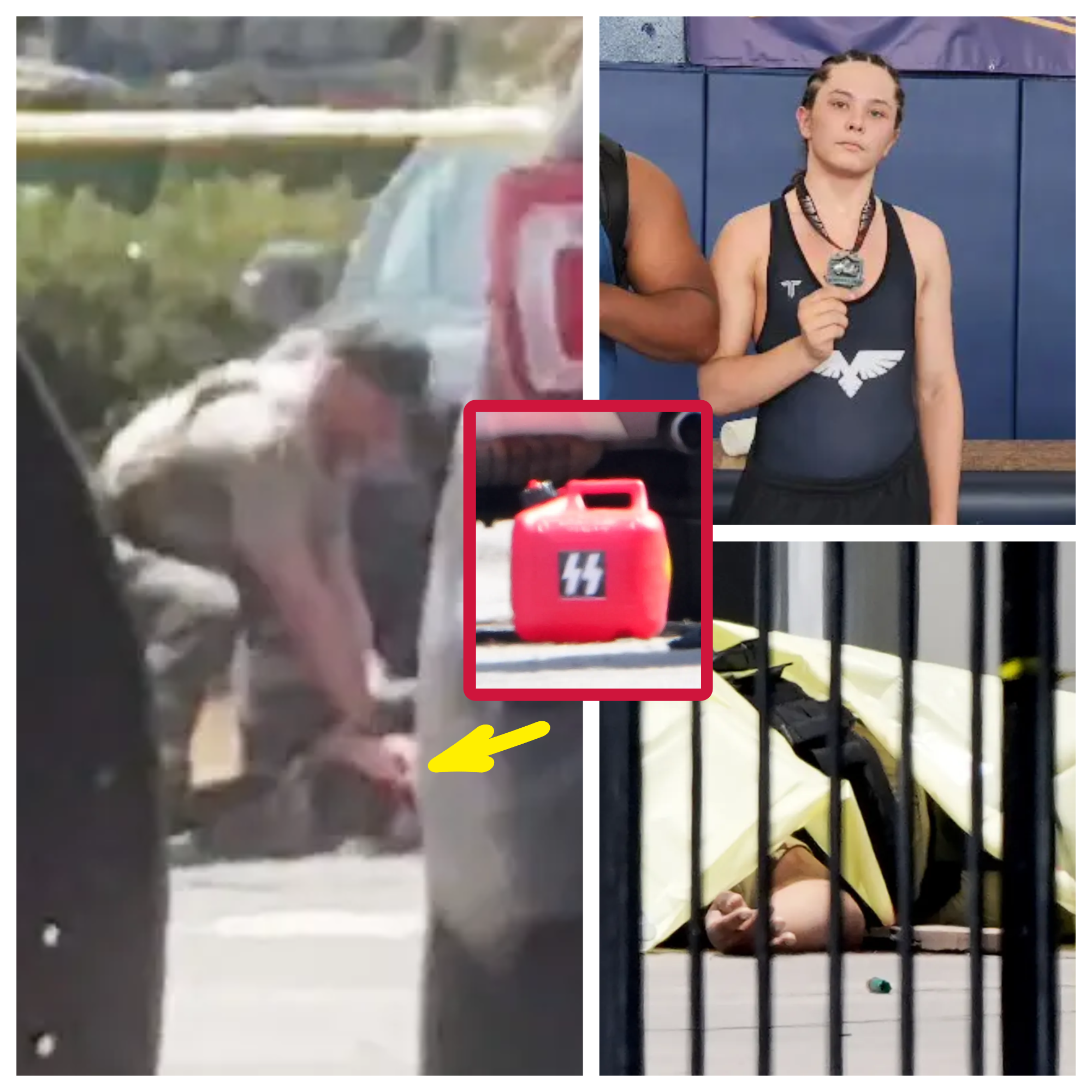
San Diego police released disturbing new evidence Tuesday in the May 18, 2026 shooting at the Islamic Center of San Diego, confirming that extremist messages were engraved on the firearms used in the attack and that a gas can found next to one of the teenage suspects’ bodies bore a clear SS symbol — the infamous insignia of the Nazi Schutzstaffel.
The updates came after forensic analysis of the scene and the suspects’ vehicle, intensifying the investigation as a domestic hate crime with possible neo-Nazi or white supremacist influences. Three men were killed outside the mosque, including longtime security guard Amin Abdullah, who heroically shielded worshippers. A fourth person survived being shot at. The two suspects — 17-year-old Cain Clark and 18-year-old Caleb Velasquez — died from self-inflicted gunshot wounds in a stolen BMW just blocks away.
Police Chief Scott Wahl confirmed that anti-Muslim slurs and phrases promoting racial violence were physically etched into the weapons. The gas can with the SS symbol was discovered near Clark’s body inside the vehicle, alongside ammunition and other items. Authorities are now examining whether the symbol indicates deeper affiliation with neo-Nazi ideology or was part of a broader radicalization process.
Earlier that morning, Clark’s mother made multiple urgent calls to police. She reported her son missing, suicidal, armed with stolen family firearms, and traveling with another teen in camouflage clothing in her white BMW. Officers were actively searching when the shooting occurred around 11:43 a.m. during the first day of the sacred Islamic month of Dhul Hijjah. One suspect also left a suicide note at home referencing “racial pride,” which investigators say aligns with the engraved messages and the SS symbol.
Cain Clark, a former standout wrestler at Madison High School who had switched to virtual learning, was described by acquaintances as someone whose sudden turn shocked everyone who knew him. Caleb Velasquez had a lower public profile. Both teens were dressed in camouflage, matching the mother’s description. The rapid timeline — from the mother’s warnings to the attack in under two hours — has sparked intense scrutiny over response protocols when mental health crises intersect with potential extremist violence.
The Islamic Center of San Diego, the largest mosque in the county and home to an active school, was in the midst of normal activities when gunfire erupted outside. Staff evacuated children and adults in orderly single-file lines under police escort. Chief Wahl praised the security guard’s actions as “truly heroic,” stating they almost certainly prevented a far deadlier outcome inside the building where hundreds, including children, were present.
Community reaction has been one of profound grief mixed with anger and resolve. Vigils drew hundreds within hours, with Muslim leaders, interfaith groups, and elected officials uniting to condemn hate. The mosque has temporarily closed for safety and mourning but vowed to reopen stronger. Federal authorities, including the FBI’s domestic terrorism unit, are now deeply involved, examining the suspects’ online activity, school records, and possible exposure to white supremacist content.
This case has reignited urgent national conversations about several critical issues: secure firearm storage in homes with at-risk teens, the effectiveness of red-flag laws for minors, the rapid radicalization of young people through online echo chambers, and better coordination between families, mental health services, and law enforcement. California’s strict gun laws make the ease with which the weapons were taken from a family home particularly alarming.
The three victims are being remembered as pillars of the community. Amin Abdullah, a father of eight, had protected the mosque for years. Another victim was a staff member at the attached Islamic school. Their families face unimaginable loss, while the wider Muslim community grapples with fear and sorrow. President and local leaders issued statements offering full support and condemning the attack in the strongest terms.
As the investigation continues, police are urging anyone with information about the suspects’ recent behavior, online associations, or communications to come forward. Increased patrols around houses of worship have been implemented across the region, and schools near the mosque remain on heightened alert.
The discovery of the SS symbol and engraved hate messages marks a dark escalation in an already horrific case. It transforms the narrative from a possible isolated incident of teen despair into clear evidence of ideological motivation. Mental health experts note that the combination of suicidal ideation with neo-Nazi or white supremacist symbols is an especially dangerous red flag that requires immediate intervention.
The Islamic Center has asked for privacy for the victims’ families while inviting the broader community to join in healing. Messages of solidarity have poured in from across the United States and around the world, highlighting San Diego’s long-standing reputation for diversity and inclusion even in the face of hatred.
This tragedy serves as a painful wake-up call for every community. Families must feel safe seeking help for troubled teens. Schools and online platforms need stronger tools to detect radicalization. Law enforcement requires clearer, faster protocols when warning signs like a mother’s desperate calls combine with extremist indicators. And society as a whole must confront the roots of hate before they claim more innocent lives.
As San Diego mourns three senseless deaths, the heroism of the security guard and the unity shown in the aftermath offer glimmers of hope. The mother’s urgent warnings, the engraved messages, and the SS symbol on that gas can will now drive a deeper investigation — one that authorities hope will prevent future attacks and bring real change to how we protect places of worship and at-risk youth.
The names Cain Clark and Caleb Velasquez will forever be linked to this day of sorrow. Their actions ended three lives and wounded an entire community. Yet the strength, compassion, and resolve displayed since the shooting remind us that light can still overcome darkness.