Trapped in the Shark Cave: How a Scientific Dive in Maldives Turned into the Deadliest Disaster in the Island Nation’s History.
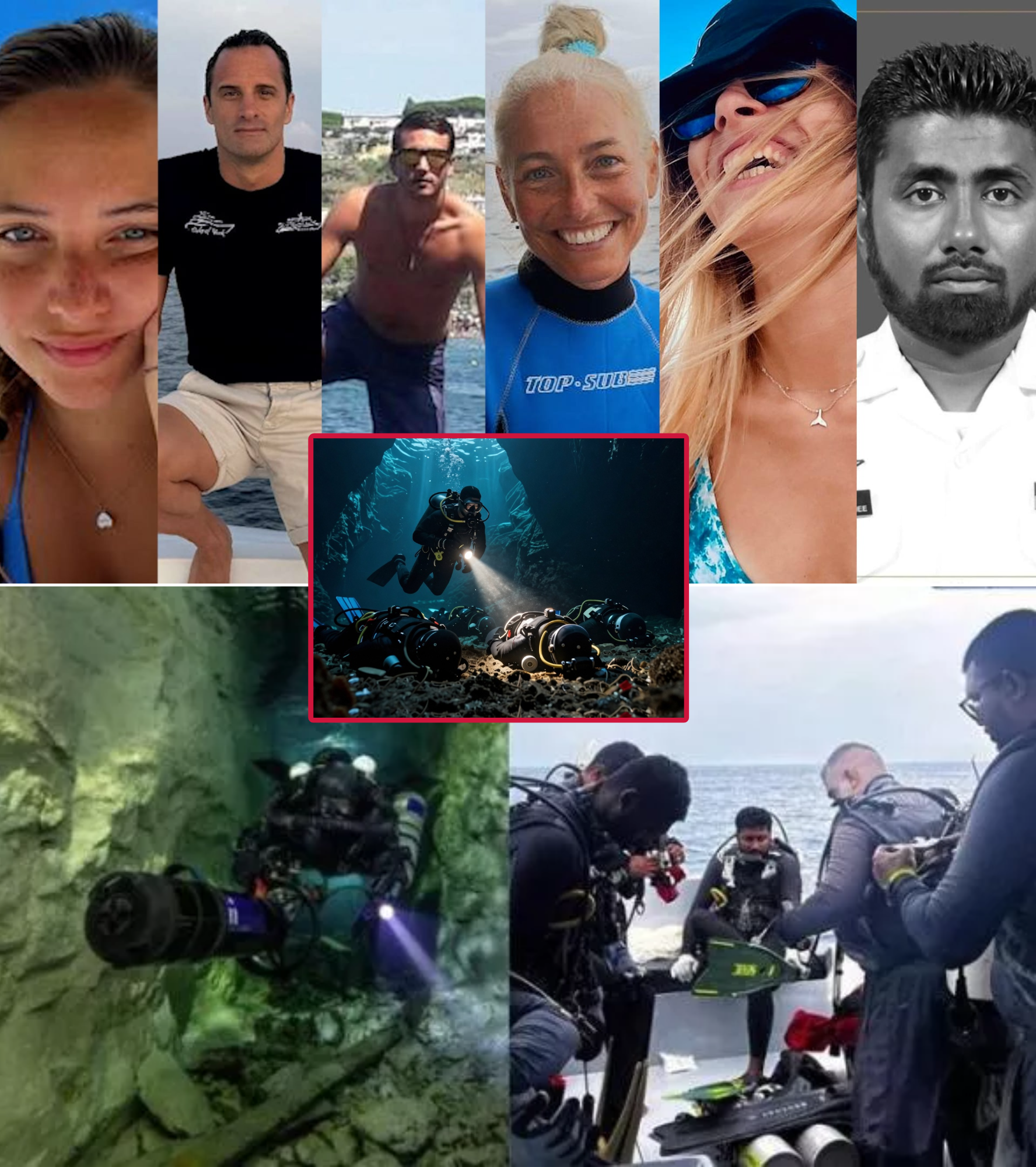
The turquoise waters of Vaavu Atoll in the Maldives are usually a diver’s paradise — vibrant coral walls, swirling schools of fish, and the occasional graceful reef shark. But on May 14, 2026, one of the world’s most beautiful dive sites became the stage for the deadliest single diving incident in the country’s history. Six lives were lost inside the notorious Thinwana Kandu cave system, known locally as “Shark Cave,” after a research expedition went catastrophically wrong.
The victims included five Italian nationals: University of Genoa associate professor Monica Montefalcone, her 20-year-old daughter Giorgia Sommacal, fellow researchers Muriel Oddenino and Federico Gualtieri, and experienced diving instructor Gianluca Benedetti. The sixth victim was Maldivian rescue diver Sgt. Major Mohamed Mahudhee, 43, who died from severe decompression sickness during the high-risk recovery operation. His sacrifice has been honored nationwide as the ultimate act of heroism.
The group had permits for scientific research on coral ecosystems and entered the cave system using standard recreational scuba equipment rather than the specialized technical gear required for deep cave penetration. They pushed into the third and deepest chamber, approximately 50-60 metres (164-197 feet) down, navigating narrow restrictions, powerful currents, and near-zero visibility zones. At some point, the team became disoriented or trapped — a situation that can escalate rapidly in overhead environments where there is no direct access to the surface.
The first body, that of instructor Gianluca Benedetti, was located near the cave entrance on the initial search day. The remaining four were only recovered on May 18 after an elite team of Finnish technical cave divers joined Maldivian rescuers. The final four bodies were found clustered deep inside the most restricted section of the third chamber. The operation was extremely dangerous, requiring multiple decompression stops and specialized equipment. During one of these dives, Sgt. Major Mahudhee suffered a severe case of decompression illness (the bends) after surfacing. He was rushed to a hyperbaric chamber but could not be saved.
Thinwana Kandu is famous among advanced divers for its dramatic shark population and stunning geological formations. However, its inner passages are technically demanding, with silt that can instantly destroy visibility, strong tidal currents, and complex navigation. Experts believe the team may have underestimated the risks, venturing too far with inadequate gas planning and no redundant safety systems typically used in true cave diving.
The tragedy has sent shockwaves through the global diving community and Maldives’ tourism industry. The Maldives, with over 1,000 coral islands and some of the world’s best dive sites, relies heavily on safe, responsible diving. This incident — the worst in the nation’s recorded diving history — has prompted an urgent government review of permit processes, safety standards, and training requirements for technical and cave diving.
Monica Montefalcone was a respected marine ecologist passionate about coral conservation. Her daughter Giorgia, a biomedical engineering student, had joined the trip as a special mother-daughter adventure. The loss of both has devastated their family and the University of Genoa. The other victims were dedicated scientists whose work aimed to protect the very reefs they were exploring.
Sgt. Major Mohamed Mahudhee’s death has touched the entire Maldivian nation. A veteran member of the Maldives National Defense Force’s rescue team, he volunteered for the most dangerous search dives to help return the bodies to their families. President Dr. Mohamed Muizzu led tributes, calling him a true national hero who “gave his life so others could find closure.”
The bodies have now been recovered and are being prepared for repatriation to Italy. Italian and Maldivian authorities have launched a joint investigation focusing on dive planning, equipment used, weather conditions, and whether the scientific permit allowed such deep cave penetration. A yellow weather warning for small boats was in effect that day, which may have complicated surface support.
This disaster highlights the critical differences between recreational and technical cave diving. Cave diving is one of the most hazardous underwater activities, requiring hundreds of hours of specialized training, redundant gas systems, guideline protocols, and meticulous planning. Many experts are calling for stricter international standards and better education for scientists and researchers who conduct underwater work.
As the Maldives mourns its fallen rescuer and Italy grieves five of its citizens, the “Shark Cave” tragedy stands as a solemn reminder of the ocean’s unforgiving nature. What began as a quest for scientific discovery ended in a dark underwater labyrinth. The six souls lost — five passionate explorers and one brave local hero — will be remembered not only for how they died, but for the courage they showed in pursuing knowledge and in trying to bring loved ones home.
The Islamic Center has asked for privacy for the victims’ families while inviting the broader community to join in healing. Messages of solidarity continue pouring in from across America and the world, reinforcing San Diego’s identity as a city of diversity and inclusion even in its darkest hour.
This horrific event serves as a painful wake-up call for every parent, school, and community. Families must feel safe seeking help for troubled teens. Online platforms need far stronger safeguards against radicalization. Law enforcement requires clearer, faster protocols when a mother’s desperate warnings combine with extremist red flags. And society must confront the roots of hate before they claim more innocent lives.
As San Diego mourns three innocent lives senselessly taken, the heroism of the security guard and the remarkable unity shown in the aftermath provide glimmers of hope amid the sorrow. The mother’s urgent calls, the SS symbol on that gas can, and the hate carved into the guns will now fuel a deeper investigation — one authorities hope will prevent future attacks and drive real systemic change.
The names Cain Clark and Caleb Velasquez will forever be linked to this day of sorrow. Their actions ended three lives and wounded an entire community. Yet the courage, compassion, and resilience displayed since the shooting remind us that light and love can still overcome even the darkest hate.