Prince William Unveils a Stunning $670 Million Plan to Sell Part of His Royal Estate — But the Real Reason Behind the Move Is Raising Eyebrows
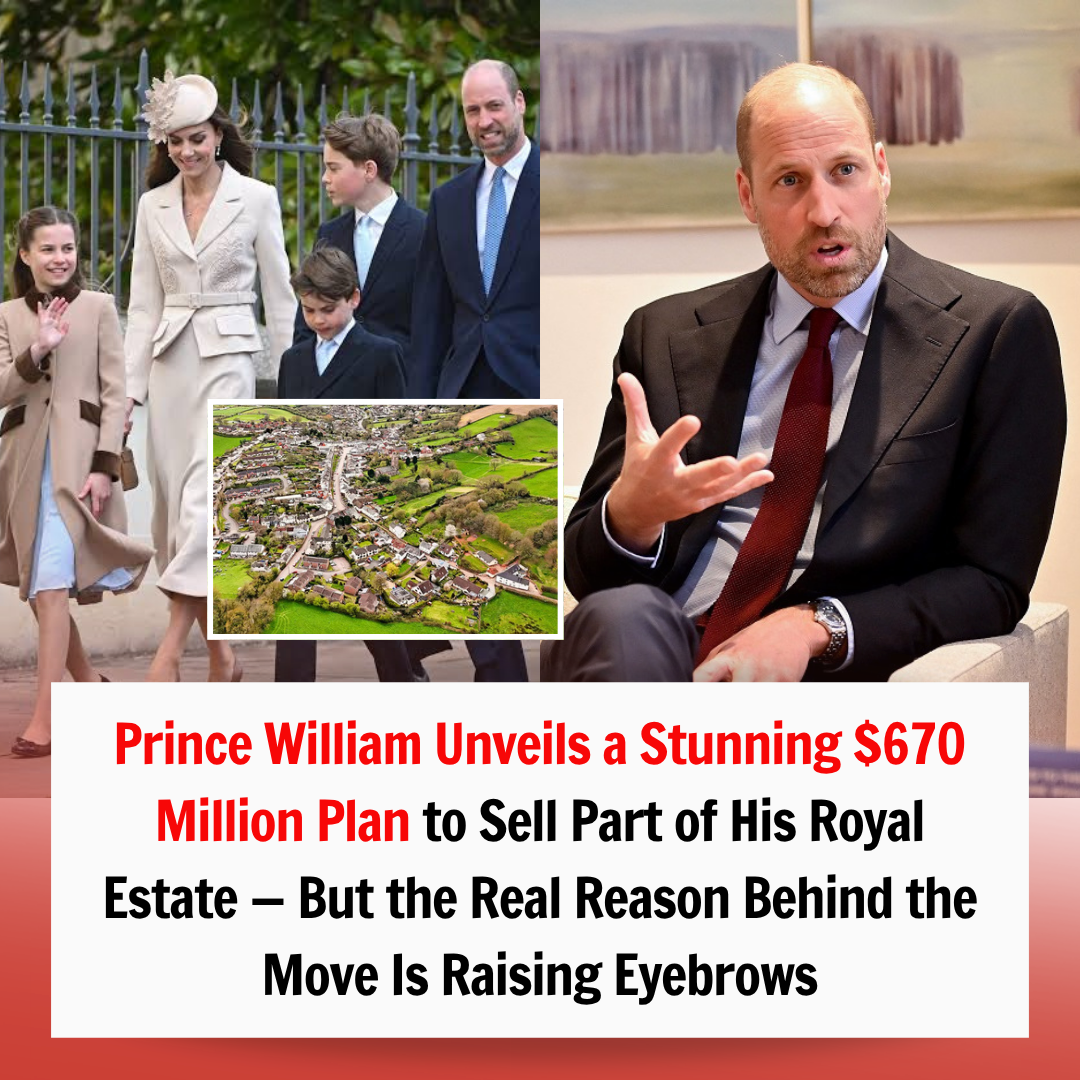
Prince William is embarking on one of the most significant changes to the way the royal family’s historic property holdings are managed, with plans to sell approximately 20% of the Duchy of Cornwall’s property portfolio over the next decade.
The planned disposals are expected to generate around £500 million ($670 million), but this is not being presented as a move to personally cash in on the Prince of Wales’ enormous property empire. Instead, the money is intended to be reinvested in housing, local communities, renewable energy and environmental projects.
The Duchy of Cornwall is a centuries-old estate created in 1337 to provide an income for the heir to the British throne. William inherited control of it when his father, King Charles III, became monarch in 2022. The estate encompasses more than 130,000 acres across England and includes agricultural land, residential properties, commercial holdings and development sites.
Under the new strategy, the Duchy intends to concentrate more heavily on five geographic “heartlands”: Cornwall, the Isles of Scilly, Dartmoor, Bath and surrounding areas, and Kennington in London. Rather than maintaining a sprawling collection of properties across numerous locations, the strategy is designed to consolidate holdings and direct investment toward areas where the estate believes it can have the greatest long-term impact.

Housing is expected to be one of the biggest beneficiaries. Previous reporting on the plan indicated that hundreds of millions of dollars could be directed toward new homes, including affordable housing, while additional investment will support local economies and employment. Environmental projects will also receive substantial funding, including nature restoration, renewable energy and efforts to move the estate toward net-zero operations.
The strategy represents an important philosophical shift for William. The Duchy has traditionally been viewed primarily as an enormous source of income for the Prince of Wales. Its latest plans instead emphasize its role as an institution with social and environmental responsibilities.
Financially, the estate remains highly significant to William and his family. For the financial year ending March 31, 2026, the Duchy reported a £21.6 million distributable surplus, slightly below the previous year’s £22.9 million. The Duchy says the reduction reflects deliberate investment in building its capacity to pursue its expanded long-term mission.
:max_bytes(150000):strip_icc()/GettyImages-2240279105-b4e504165eac4d5e9750bd405c875422.jpg)
There is also an important distinction surrounding the proposed sales. William does not simply own the Duchy as a personal property portfolio that he can liquidate whenever he wishes. The estate is governed by its own legal and administrative framework, with oversight designed to protect its long-term value. Major transactions can require government approval.
That makes the proposed sale particularly noteworthy. Instead of simply reducing the size of a royal fortune, William is effectively attempting to reshape one of the monarchy’s oldest financial institutions.
The outcome could become an important test of the Prince of Wales’ approach to modern royal stewardship: whether an ancient landholding institution can generate substantial income while simultaneously addressing housing pressures, environmental concerns and the needs of communities living on its land.
For William, the £670 million plan therefore represents far more than a property sale. It could signal a new direction for the Duchy of Cornwall — one in which land is treated not merely as an asset to be held, but as a resource to be actively transformed for long-term social, environmental and financial goals.