The Plane Ride That Became Kyle Busch’s Final Goodbye: Keselowski’s Heart-Wrenching Last Memory.
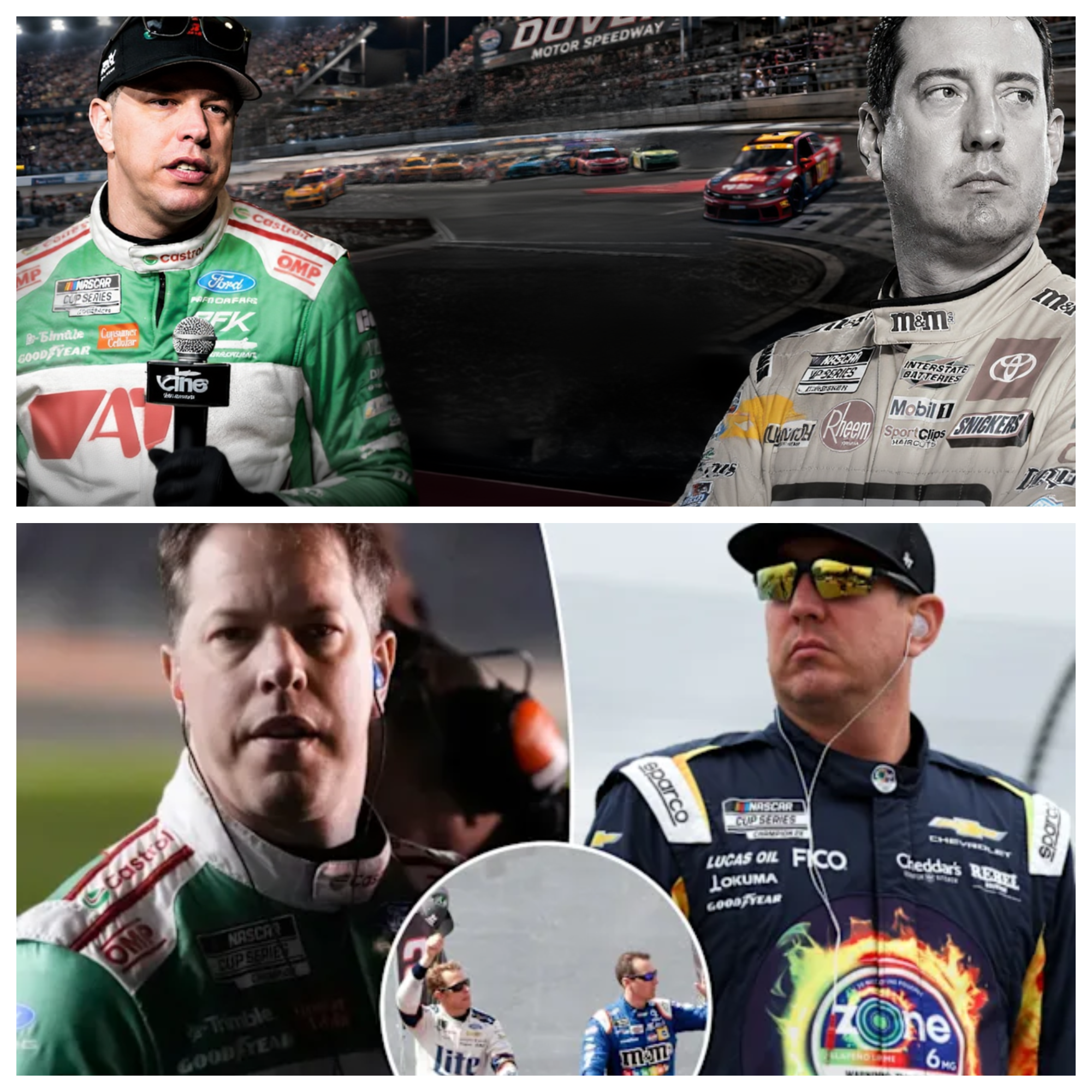
Brad Keselowski, one of NASCAR’s most respected champions, shared a deeply personal final memory of his longtime rival Kyle Busch that has resonated across the racing world. Just days before Busch’s sudden death on May 21, 2026, at age 41, the two drivers found themselves on the same flight to Dover. Keselowski was sitting one row ahead when Busch boarded, sat down, and quickly fell asleep. Something felt off to Keselowski, but in the moment, it didn’t seem serious enough to mention. That ordinary encounter turned out to be the last time he would see Busch outside of a race car.
The revelation came during an emotional interview four days after Busch’s passing from complications of severe bacterial pneumonia that rapidly progressed into sepsis. Keselowski described the weight of realizing the closure he had always imagined — a future Hall of Fame moment where old rivalries could be laid to rest with laughter and mutual respect — would never happen. Their intense on-track battles had defined much of both men’s careers, turning every race into something more personal than points on a scoreboard.
The Keselowski-Busch rivalry stands as one of the most authentic and sustained hostile relationships in modern NASCAR history. Spanning nearly two decades, it featured real on-track incidents, genuine grievances, and a level of competitive fire that elevated both drivers. Keselowski admitted that beating Busch on a strong day felt more disappointing than it should, while finishing ahead of him on an off day brought disproportionate satisfaction. This rivalry recalibrated his entire sense of achievement, making the presence of one specific opponent more meaningful than raw results.
Busch, known as “Rowdy,” had just won what became his final race in the Truck Series at Dover. He showed no public signs of serious illness during that weekend, displaying the same tenacity that earned him 234 national series victories, including 63 in the Cup Series, and two championships in 2015 and 2019. Yet on the flight, the subtle signs were there: quieter than usual, falling asleep almost immediately. Keselowski noticed but dismissed it, assuming there would be more time — more races, more opportunities to reconcile when their competitive days were behind them.
That assumption shattered when Busch collapsed on May 20 while testing in a Chevrolet simulator in Concord, North Carolina. He was rushed to a hospital in Charlotte, where he passed away the next day. The medical cause was confirmed as severe pneumonia leading to sepsis, disseminated intravascular coagulation, and hemorrhagic shock. Even elite athletes are vulnerable when infections overwhelm the body’s defenses, especially under the physical and travel demands of professional racing.
Keselowski’s tribute stood out amid the outpouring of grief during the Coca-Cola 600 weekend at Charlotte Motor Speedway. While other drivers offered heartfelt statements, his account carried unique weight because of their shared history. He spoke openly about imagining a future ceremony where the hatchet would be buried, only to confront the permanent silence left by sudden loss. The interview captured a universal human experience: the last ordinary interaction with someone you never expected to lose so soon.
NASCAR honored Busch with a moment of silence on Lap 8 during the race, temporarily retiring the No. 8 car from standings. Daniel Suárez, who won the rain-shortened event, dedicated his victory to Busch, crediting him for early career support. Tributes flooded in from across the garage, highlighting Busch’s polarizing intensity on the track and his generosity off it, including funding IVF treatments for multiple families.
The plane story has struck a chord far beyond hardcore NASCAR fans. It humanizes the cost of legendary rivalries — the psychological toll, the constant mental tracking of one another, and the abrupt end without resolution. Keselowski described how the rivalry reordered his value system, making victories against Busch feel more significant and defeats more painful. This level of sustained competitive intensity is rare and emotionally expensive, demanding enormous energy over years.
For Keselowski, a Cup Series champion himself, the loss forced reflection on what rivalries truly mean. They push drivers to greater heights but also create bonds that outlast the battles. The missed opportunity for reconciliation in retirement adds another layer of tragedy. Many in the NASCAR community have shared similar stories of last encounters that only gained meaning in hindsight — a quiet reminder to reach out, to say what needs saying, before it’s too late.
Busch’s death has also renewed focus on health awareness in high-stress sports. Symptoms like fatigue, subtle changes in demeanor, or persistent cough can be easy to dismiss, especially among competitors accustomed to pushing through discomfort. Medical experts continue to stress the importance of early intervention for respiratory issues, as sepsis can escalate rapidly even in otherwise healthy individuals.
As the sport mourns, Keselowski’s plane memory serves as a poignant final chapter in a legendary rivalry. It captures not just the end of a driver’s career, but the unfinished story between two fierce competitors. Fans who followed their battles for years feel the weight of this unresolved ending, turning the tribute into one of the most talked-about reflections of the entire weekend.
Kyle Busch leaves behind an unmatched legacy of determination, record-breaking success, and a complex persona that made him one of NASCAR’s most compelling figures. His wife Samantha, son Brexton, and daughter Lennix remain in the thoughts of the racing community. Through stories like Keselowski’s, his impact continues to be felt — reminding everyone that even the toughest rivalries deserve space for humanity, and that every ordinary moment could be the last.
In the end, the plane to Dover carried more than just two drivers. It carried the final unspoken words of a rivalry that helped define an era, now forever frozen in time.