Horror in Paradise: The Chilling Map Showing Three Murdered Women With Matching Tattoos in Puerto Vallarta.
Puerto Vallarta has always symbolized escape — turquoise waters, romantic sunsets, and lively streets filled with music and margaritas. For countless American and Canadian tourists, it represents the perfect Mexican getaway. Yet in late May 2026, this idyllic resort town transformed into a place of dread after the discovery of three women’s bodies in just 11 days. The cases share disturbing similarities: victims in their early to mid-30s, found partially undressed in isolated areas, and bearing multiple tattoos that have ignited fears of a single predator operating in the shadows of one of Mexico’s most visited destinations.
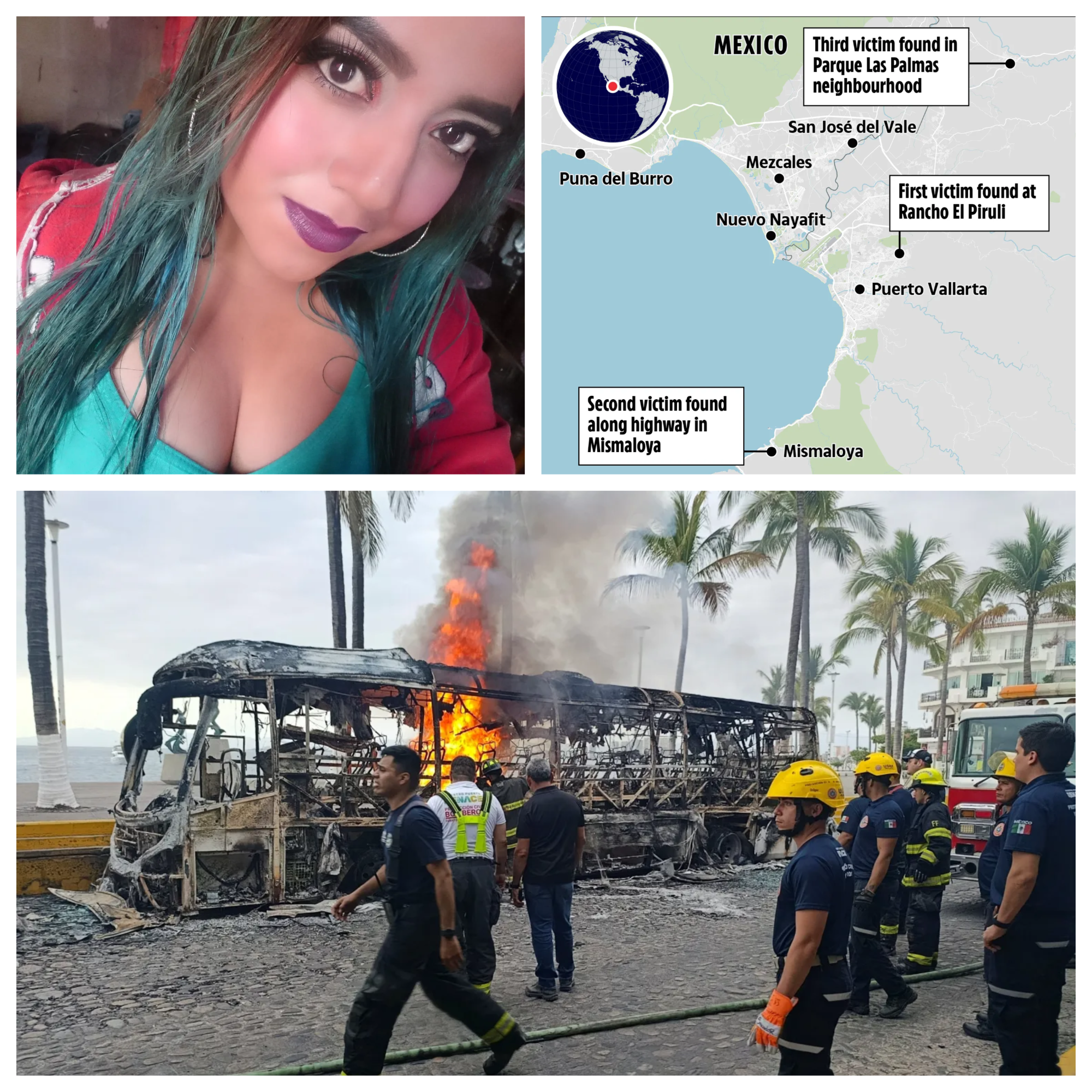
The first grim discovery came on May 10 near Rancho El Pirulí, a scenic viewpoint in the Chimborazo area popular with hikers seeking panoramic views. Days later, the second body was located at a roadside stop along the highway to Mismaloya — a zone known for its jungle tours and secluded beaches. The third victim was found around May 21-22 on a dirt road near Parque Las Palmas. Each location sits just far enough from the bustling tourist core to allow a killer to act with reduced risk of immediate detection, yet close enough to the vacation hotspots that the news has sent shockwaves through the travel community.
What has elevated these cases from tragic coincidences to suspected serial killings is the consistent profile of the victims and the presence of distinctive tattoos. Reports indicate all three women had multiple tattoos. The most recent body featured particularly memorable ink: a skull, a woman with horns (possibly covering her mouth in a silencing gesture), and a woman’s name on the forearm, plus additional designs on the neck, hand, and arm. These markings are now crucial for identification, as official names have not yet been released for all victims. One unconfirmed theory links the latest victim to 22-year-old Elizabeth Martínez, who went missing in April from the State of México, based on matching tattoo descriptions.
Authorities in Jalisco state are investigating the deaths as potential homicides and femicides, reviewing surveillance footage, evidence, and possible connections. While they have stopped short of officially declaring a serial killer investigation, the rapid timeline and shared characteristics have sparked widespread alarm. Protests have erupted in Puerto Vallarta and surrounding areas, with women’s groups demanding urgent action amid Mexico’s ongoing struggle with gender-based violence.
A chilling map now circulating widely online plots the three discovery sites like points on a sinister triangle encircling the tourist heart of Puerto Vallarta. The visualization has gone viral, turning abstract fear into something concrete and deeply unsettling. The dump sites suggest someone with local knowledge — perhaps familiar with hiking trails, back roads, and the rhythm of tourist traffic — who knows how to avoid the crowded Malecon and main beaches.
For a city that welcomes millions of visitors annually, the timing could not be worse. Puerto Vallarta relies heavily on international tourism, particularly from the U.S. and Canada. Hotels and tour operators are already fielding anxious inquiries, while some travelers have reportedly canceled reservations. The U.S. State Department maintains its general Mexico travel advisory, but no specific new warning has been issued solely for this situation. Still, safety discussions dominate travel forums, with advice focusing on avoiding solo outings to remote areas, using trusted transportation, and staying alert even in daylight.
The psychological impact runs deep. Tourists who came for relaxation now scan faces in crowds and avoid evening walks that once felt romantic. Locals express a mix of anger and fear — anger at the violence staining their home, fear that the story will damage livelihoods built around hospitality. Businesses near the discovery zones report quieter nights, and community safety initiatives have increased.
This case highlights broader challenges in the region. Mexico continues to battle high rates of femicide, with organized crime sometimes overlapping with opportunistic violence in tourist zones. Transient populations of visitors and seasonal workers can make it easier for predators to blend in and strike at vulnerable individuals. The tattoos add an intriguing — and disturbing — element. Were the victims targeted because of them, perhaps as part of a signature, or is it simply coincidence that three heavily inked women fell victim in quick succession?
As investigators dig deeper, questions multiply: Were the women killed locally or murdered elsewhere and transported? Is there a connection to cartel activity, or is this the work of an independent serial offender? And most pressingly, are more victims at risk before a breakthrough?
For now, Puerto Vallarta remains open and outwardly vibrant. The beaches are still stunning, the food delicious, and the sunsets unforgettable. Yet an undercurrent of unease lingers. The horror map serves as both a warning and a call for justice. Families of the victims, once they are identified, deserve answers. Women in the community and female travelers worldwide deserve to feel safe.
This tragedy forces a difficult conversation about balancing the joys of travel with the realities of risk in certain destinations. It reminds us that paradise is not immune to darkness, and vigilance should never take a vacation. As authorities race to connect the dots or rule out a single perpetrator, the eyes of the world remain fixed on Puerto Vallarta — hoping this nightmare ends before claiming another life in this beloved coastal gem.