He Demanded 25 Days With His First Love Before Our Wedding… So I Married Someone Else on the Day He Expected to Own Me.
Nolan Whitmore placed his engagement ring on the glass table twenty-five days before our wedding and asked me to keep wearing mine.
We sat in the conservatory at Hyacinth House, surrounded by four hundred white roses scheduled to bloom for the ceremony. Outside, workers measured the lawn for the reception pavilion. My planner waited with the final seating chart. Across from me, Daphne Cross rested one hand on Nolan’s shoulder. She had been his first love, his first business partner, and—according to him—the one person he had never been permitted to leave properly.
“Twenty-five days,” Nolan said. “That is all I am asking.”
I looked at the ring between us. “Twenty-five days for what?”
“Closure.”
Daphne wore a cream traveling suit and an expression of practiced sorrow. “My father’s estate includes the cabin where Nolan and I grew up. It has to be emptied before the sale. There are letters, photographs, things that belong to both of us.”
“So hire movers.”
Nolan’s mouth tightened. He was charming when people agreed with him and impressive when they did not. That combination had carried Whitmore Leisure from one struggling hotel to a national luxury brand. I had loved watching him enter hostile negotiations and leave with everyone believing his solution had been their idea. Now he used the same calm voice on me.
“Daphne needs me at Lake Aster. I need to understand whether the past still has power over me before I promise you the future.”
Outside, a worker unrolled the ivory aisle runner across the lawn.
“You want to spend the twenty-five days before our wedding with your first love to decide whether you still love her?”
He didn’t say that. Daphne replied for him.
“Then you can answer.”
Nolan leaned forward. “I love you, but I will not begin a marriage with a ghost between us.”
I watched him speak about himself as though he were presenting a difficult client. “Are you asking to postpone the wedding?”
“No. Keep everything in place. The venue, dinner, guests, flowers. I will return the morning of the ceremony with an answer.”
The arrogance was so complete that I almost missed the other detail. He did not say he would return to marry me. He said he would return with an answer.
“And I am expected to wait here while you decide?”
“You are expected to trust the man you agreed to marry.”
Daphne’s hand remained on his shoulder. On her wrist was the golden onyx watch I had given Nolan when Whitmore Leisure opened its hundredth property. The clasp was sized for a smaller wrist.
I took out my phone and photographed the ring on the table, Daphne’s hand, and the watch.
Nolan frowned. “Why are you doing that?”
“Remembering the beginning accurately.”
He picked up the ring and pushed it toward me. “This is not an ending.”
I left it where it was. “Send the twenty-five-day request in writing. Include whether the engagement is exclusive, who is paying for the trip, and whether you expect access to the wedding accounts while you are away.”
Daphne gave a soft laugh. “This is a relationship, not a deposition.”
“Then the answers should be easy.”
Nolan stood. “I am leaving in an hour. Do not turn one honest request into a war.”
“Did you use the joint travel account?”
His pause was less than a second. “The cabin trip concerns property that will become relevant to Whitmore Leisure.”
I opened the banking application. The wedding account held two hundred twelve dollars. The previous afternoon, four hundred eighty thousand dollars had been transferred to Cross Aster Development, a company I did not recognize. A second transfer of ninety thousand had paid a twenty-five-night reservation at the private Lake Aster lodge. The account required two approvals for transfers above fifty thousand. The authorization screen displayed my digital signature.
I had never seen either payment.
“You forged approval for the trip.”
Nolan’s face changed from persuasive to cold. “The wedding account contains contributions from both families.”
“The double-signature rule does not disappear because you dislike it.”
“Peter in finance processed a business reimbursement. It will be restored after the lake transaction.”
“What transaction?”
Daphne moved her hand from his shoulder. “That is confidential.”
I saved the transfer confirmations, authentication history, and account balance. I sent the files to an encrypted folder before Nolan could disable access.
“The wedding remains scheduled,” I said. “But you no longer have authority to spend from its account.”
He stared at me. “What does that mean?”
“Exactly what it says.”
I walked out of the conservatory and asked the planner to continue measuring the lawn. Behind me, Nolan called, “I will come back in twenty-five days.”
I did not promise to be waiting for him.
At 11:14 that morning he sent the written message I requested. He described the trip as an emotional and commercial retreat. He and Daphne would share the lake cabin because separate accommodation would defeat the purpose of confronting their history. He expected the engagement to remain exclusive on my side and asked me not to date, alter the wedding, or speak publicly until he returned. He did not promise the same exclusivity for himself. He also insisted that the wedding accounts and Hyacinth House operations continue under the authority already granted to him.
I sent a written answer. I did not consent to the transfers, shared accommodation, continued financial authority, or one-sided exclusivity. Preserve all communications and records. Further communication should be in writing.
Nolan answered: “This reaction proves why we need time apart.”
At noon I watched his car leave Hyacinth House. Daphne sat in the passenger seat. Their luggage filled the back. A second vehicle carried an assistant, a videographer, and boxes marked Whitmore Archive. The supposed private search for closure had a production crew. I photographed both license plates and the timestamp on the estate gate log.
Then I called Naomi Reyes, the lawyer who had protected the Bennett family trust since my mother died. She arrived before sunset with a laptop, two legal pads, and no comforting lies.
“Do you want to end the engagement?” she asked.
I looked through the library windows at workers building the wedding pavilion. “I want to understand what he thinks I own.”
We began with the bank records. The second approval attributed to me came from Nolan’s office device at 2:03 a.m. Its certificate had been copied from the contract I signed with the wedding caterer.
Cross Aster Development was incorporated nine months earlier. Daphne owned fifty-one percent. The remaining forty-nine belonged to a trust administered by Nolan’s chief financial officer. Its stated purpose was to acquire and redevelop heritage hospitality properties, including a parcel identified only as HB1.
Hyacinth House occupied parcel HB1.
The room narrowed around the screen. Hyacinth House was more than a wedding venue. My grandmother had transformed the abandoned riverside estate into a hotel and arts foundation. I inherited sixty-two percent through the Bennett Heritage Trust. Employees owned eighteen percent. Outside investors held the rest. Nolan had proposed beneath the conservatory ceiling. Six months later he suggested merging Hyacinth House with Whitmore Leisure after the wedding. I had declined. I wanted the marriage and the companies kept separate. He had smiled, kissed me, and said he respected the boundary.
Naomi searched the state filings. “Cross Aster has an option to purchase HB1 for thirty-eight million. Hyacinth is worth at least one hundred twenty. The seller listed on the option is Bennett Marital Holdings.”
“That entity does not exist.”
“It will on your wedding day if this document takes effect.”
She opened a prenuptial addendum filed with the county recorder. It transferred my voting proxy and development authority to a marital holding company upon marriage. Nolan would manage it for ten years. Daphne’s Cross Aster held the purchase option. My signature appeared on the final page. The notary claimed I signed it during a menu tasting twelve days earlier.
At that time I had been in the Hyacinth kitchen with thirty staff members, three chefs, the planner, and a photographer documenting the tasting for the foundation’s newsletter. I had never left the room. The signature was forged.
The full scheme was elegant and ugly. Nolan would marry me, trigger the marital holding company, exercise the undervalued option through Cross Aster, and transfer control of Hyacinth House out of the trust before anyone could stop it. The twenty-five days at the lake were not about closure. They were about timing—keeping me occupied and cooperative while the final papers locked into place.
I did not scream. I did not cry. I simply asked Naomi what legal steps remained open before the wedding date.
She listed them calmly. Freeze the wedding accounts. Notify the trust beneficiaries and employee shareholders. File challenges to the forged addendum and the option agreement. Secure temporary injunctions preventing any transfer of Hyacinth House assets. Document every communication.
We worked through the night.
By the third day the accounts were frozen. By the seventh the forged documents were under formal challenge. By the fourteenth the employee shareholders had received full disclosure and voted to support the injunctions. By the twentieth Nolan’s production crew at Lake Aster had begun posting carefully framed videos of “heritage restoration” that never mentioned the option agreement or the marital holding company.
On the twenty-fourth day Nolan sent a message: “I am returning tomorrow with clarity. Do not change anything.”
I replied once: “The wedding remains scheduled. The groom does not.”
At dawn on the twenty-fifth day the lawn at Hyacinth House was ready. Four hundred white roses bloomed on schedule. The pavilion stood complete. Guests began to arrive under the belief that they were attending the marriage of Claire Bennett and Nolan Whitmore.
Nolan’s car reached the gate at 9:40 a.m. Daphne was not with him. He stepped out alone, smiling the smile that had once made hostile rooms rearrange themselves around him. He walked toward the conservatory where I waited with Naomi and the foundation’s board chair.
“I chose you,” he said, as if the previous twenty-five days had been a temporary inconvenience. “The past is finished. We can proceed.”
I looked at him the way I had looked at the forged signature.
“The past is finished,” I agreed. “So is the engagement.”
His smile faltered. “Claire—”
“The ceremony will still take place this afternoon. The guest list remains the same. The flowers, the dinner, the music—all of it stays. Only the groom changes.”
He stared. “What are you talking about?”
“I am marrying Elias Thorne at three o’clock. He has been the foundation’s operations director for nine years. He knows every employee by name. He knows the value of this house is not measured in an option agreement. And he asked me last week whether I would consider a partnership that did not require me to surrender control of anything I already owned.”
Nolan’s face drained of color. “You cannot do this.”
“I can. The venue is mine. The contracts are mine. The trust remains intact. The forged addendum has been challenged and suspended. Cross Aster’s option is under injunction. You may stay for the reception if you wish, or you may leave. Either way, the day no longer belongs to you.”
He tried the old voice one last time—the one that turned every demand into a reasonable request. “We can still fix this. Quietly.”
“There is nothing left to fix,” I said. “Only something left to protect.”
I walked past him into the sunlight. The planner met me on the terrace with the revised programs. Guests were already taking their seats. Elias waited near the conservatory doors in a simple dark suit, steady and unhurried. He had never asked me to wait twenty-five days for an answer. He had simply asked whether I was free to choose.
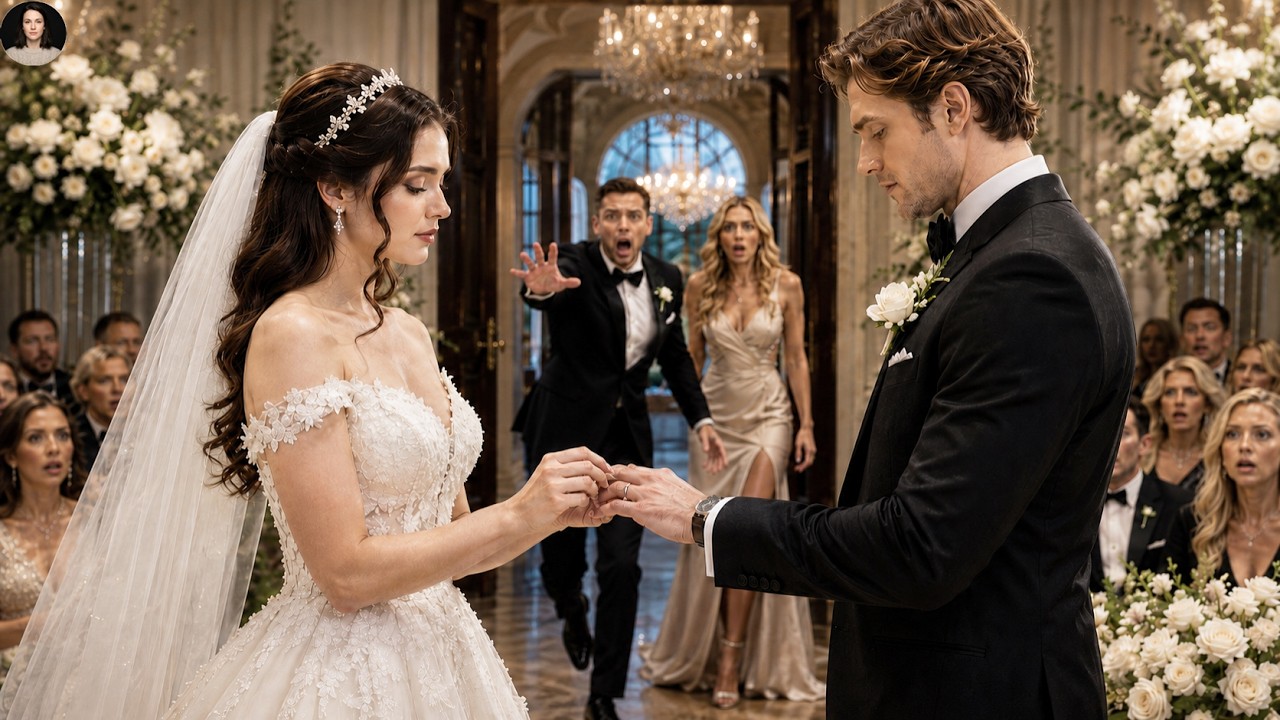
At three o’clock the string quartet began. I walked the ivory aisle under the white roses that had been ordered for a different future. Elias met me at the front. The vows we spoke were short and precise. No one mentioned the man who had expected to own the day, the house, and the woman standing in it.
When the ceremony ended, Nolan was no longer on the property. Daphne’s production crew never arrived. The reception continued under the pavilion exactly as planned—except the toasts spoke of partnership instead of possession, and the first dance belonged to two people who had never required a twenty-five-day test to know the difference.
That night, after the last guest left, I stood alone in the conservatory. The ring Nolan had left on the table twenty-five days earlier still sat where he had placed it. I did not put it back on. I did not throw it away. I simply left it there as evidence of a request that had finally received its answer.
Some men ask for time to decide whether they can love you.
Others never need the question.
On the day Nolan expected to claim both a wife and a property, I gave him neither. The roses bloomed on schedule. The house remained exactly where it belonged. And the woman who had been told to wait twenty-five days for someone else’s clarity walked into a future that required no permission at all.