Chilling Witness Claim Rocks Brazil Rope-Jump Tragedy: Instructor Allegedly Removed GoPro from Maria Eduarda’s Body After Fatal Unroped Plunge.
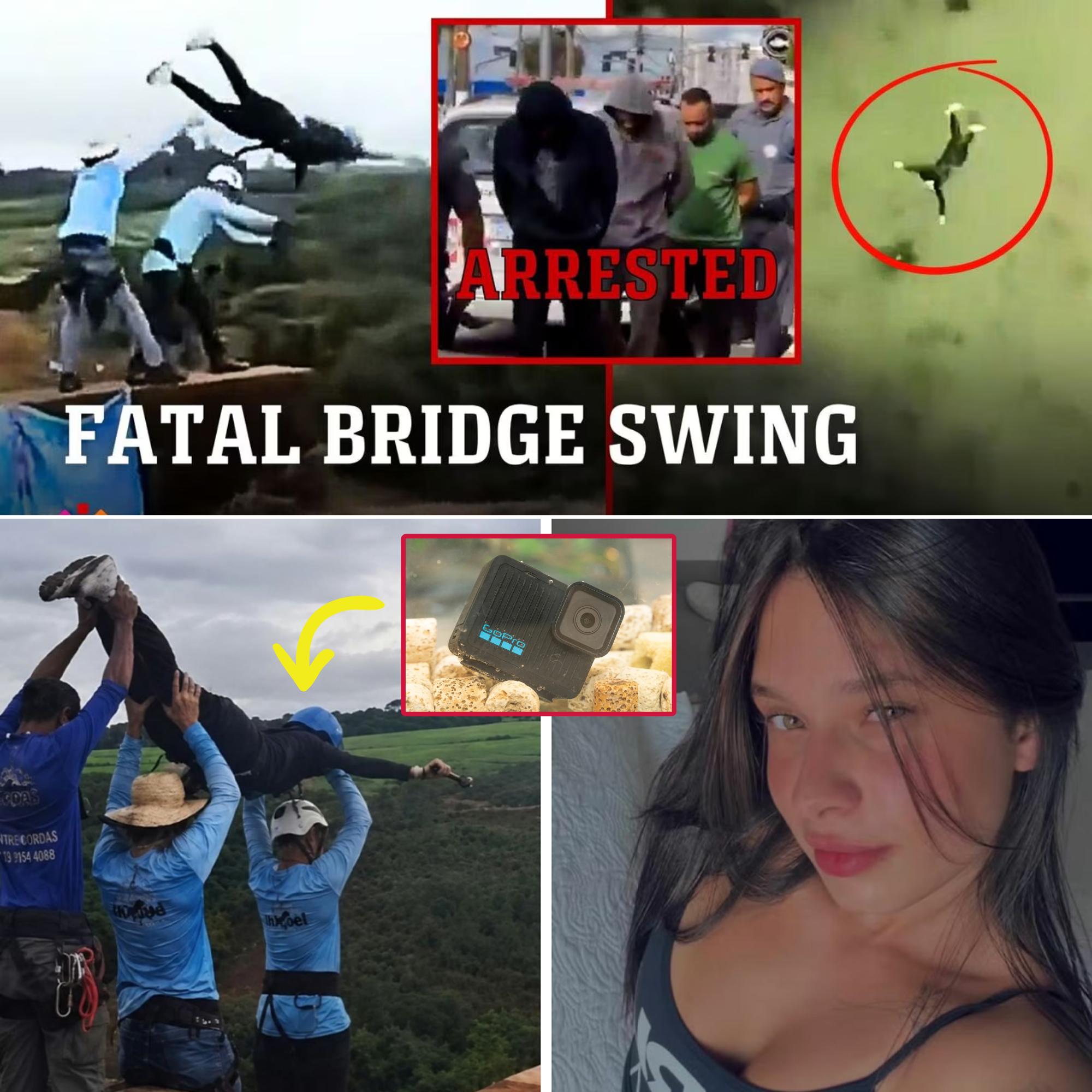
The abandoned Skeleton Bridge in Limeira, Brazil, became the site of a preventable nightmare on June 13 when 21-year-old Maria Eduarda Rodrigues de Freitas was thrown off the edge without a safety rope, falling 130 feet to her death. The physical education student had enthusiastically paid extra for a GoPro camera to record her jump, but a witness now alleges that one of the instructors was seen removing the device from around her neck as she lay on the ground below.
Maria Eduarda, a vibrant young woman from Jandira, São Paulo, joined the rope-jumping activity organized by local operators at the notorious Ponte do Esqueleto. Video recorded before the fatal moment shows her being carried to the platform by staff, arms outstretched dramatically, before being launched into the void. Onlookers reportedly yelled warnings about the missing rope, yet the jump proceeded. She struck the rocky ground with devastating force, suffering injuries incompatible with life.
Rafael Goulard, who was next in line to jump, offered a disturbing eyewitness description. He recalled seeing an employee detach the GoPro handle from the victim’s neck after her body hit the floor. Goulard noted the staff’s disoriented state immediately afterward, along with hurried efforts to gather equipment, load items into a vehicle, and even change clothes. His testimony has intensified scrutiny on the operation’s handling of the aftermath.
Three instructors — Luis Felipe Feliciano Egoroff, Vitor de Freitas Gonçalves, and Maicon Fernandes Cintra — face homicide charges stemming from gross negligence. They have admitted the safety rope was never attached but claimed memory failure regarding who was responsible for the critical equipment check. Police are actively probing whether the GoPro removal was an attempt to destroy or conceal evidence, as the camera visible in pre-jump footage remains missing.
The activity, run by companies such as Entre Cordas and Ih Voei, operated without proper licensing at the unregulated bridge site. Six individuals linked to the event were initially detained. The incident has triggered public fury, with Maria Eduarda’s grieving family calling for justice and the complete demolition of the dangerous structure to stop future deaths.
This heartbreaking case exposes deep flaws in adventure sports oversight in Brazil. Standard protocols demand repeated safety verifications, redundant systems, and licensed professionals. Here, basic safeguards collapsed entirely, turning an advertised thrill into tragedy. Past videos of one instructor making light of body disposal have further damaged credibility and fueled suspicions of a pattern of recklessness.
Friends remember Maria Eduarda as an energetic recent graduate passionate about physical education and life’s adventures. She approached the jump with excitement, never imagining it would end so catastrophically. An off-duty nurse present described her weak pulse when help arrived, underscoring how close rescue might have been if the fall had been survivable.
The Skeleton Bridge’s grim reputation and lack of regulation have long worried locals. This latest fatality amplifies demands for stricter national standards in extreme tourism, including mandatory licensing, regular inspections, and emergency protocols. Authorities continue analyzing multiple videos and statements as the investigation deepens.
The alleged handling of the GoPro has become a symbol of possible cover-up attempts or shocking indifference. Whether driven by panic over equipment costs or a desire to erase proof, it has compounded the family’s anguish and public distrust. Prosecutors are weighing if the actions reflect mere negligence or something more calculated.
As legal proceedings advance, Maria Eduarda’s story is sparking nationwide debate on accountability in adventure activities. Thrill-seekers are being urged to verify operator credentials, safety records, and licensing before participating in high-risk experiences. Her death highlights how quickly excitement can turn deadly when corners are cut.
Community tributes celebrate her bright spirit and dedication to fitness. The loss ripples through her university, hometown, and social circles, reminding everyone of life’s fragility. Calls grow louder for systemic change so no other young person suffers a similar fate at unregulated sites.
Wilderness and bridge-based activities carry inherent risks, but proper preparation and oversight minimize them dramatically. Experts stress the need for multiple independent checks, clear communication, and immediate response plans. In this case, those elements were tragically absent.
The Wood family—no, the Freitas family—now faces a long road of mourning while seeking answers. Their advocacy may help drive reforms across Brazil’s adventure sector. Meanwhile, the Skeleton Bridge stands as a haunting reminder of what happens when safety is treated as optional.
This incident serves as a powerful warning for anyone drawn to extreme sports. Verify everything, trust your instincts, and never assume operators have done their job. Maria Eduarda Rodrigues de Freitas sought a memorable experience and instead became a symbol for necessary change in how Brazil regulates such activities.
Her short but vibrant life, ended in a moment of unimaginable horror, continues to inspire demands for justice and safer practices. As investigators piece together the full sequence, the focus remains on ensuring accountability and preventing repetition of such devastating oversights.