California Mother Discovers Son Mauled by Bear Inside Family Home: Shocking Security Footage Released.
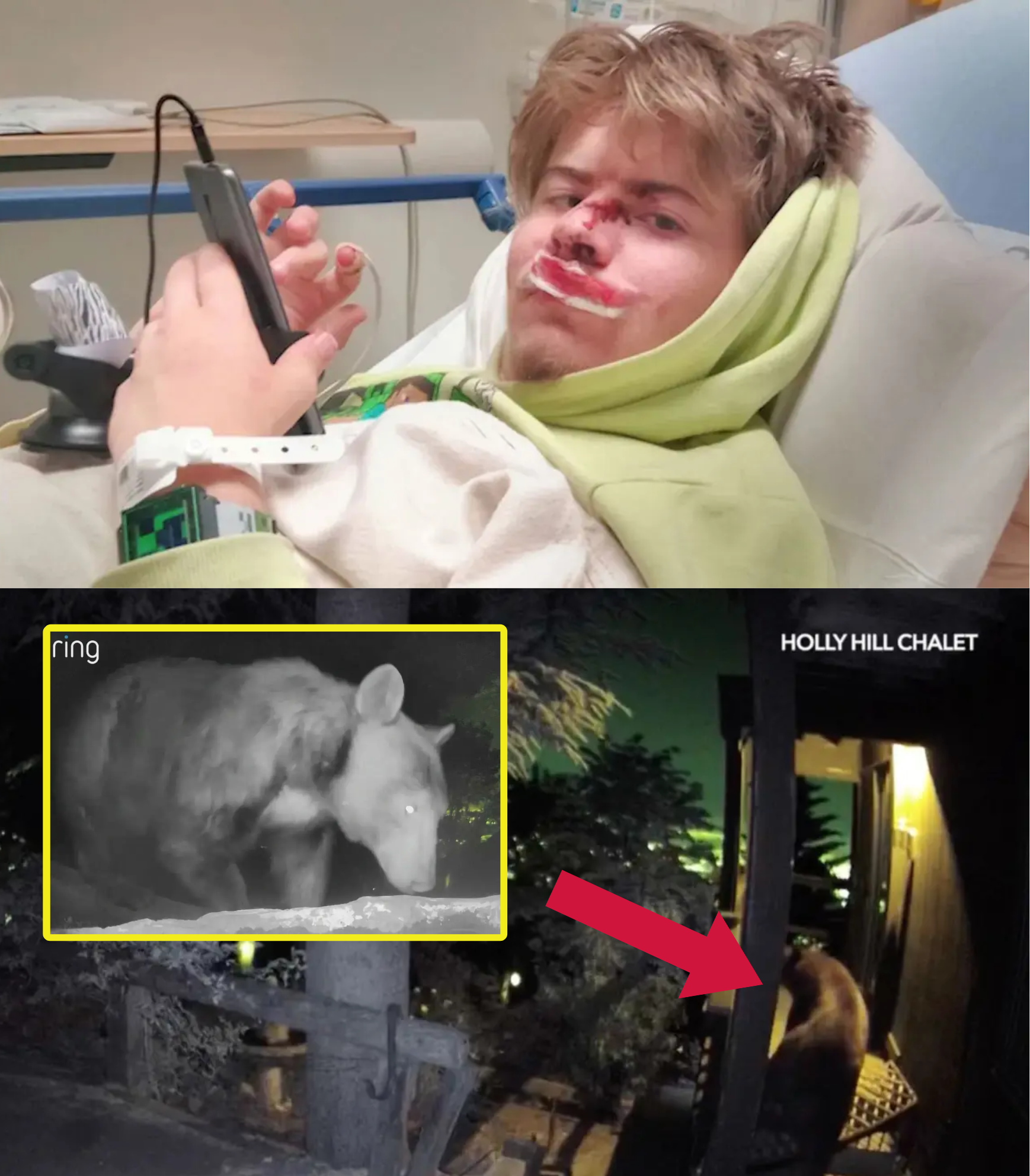
In a terrifying incident that highlights the increasing encounters between humans and wildlife in California’s mountain communities, 19-year-old Kevin Wood was severely injured by a black bear that reached into his bedroom through a window screen in Crestline, San Bernardino County. His mother, Darah Wood, discovered her bloodied son after hearing a commotion early Monday morning, turning a peaceful home into a scene of chaos and fear.
The attack occurred around 5:45 a.m. in the family’s residence on Oak Drive. Darah Wood, who was approaching her son’s room, initially thought the blood on Kevin’s face was from a nosebleed. However, the reality was far more horrifying. Kevin, who is autistic and non-verbal, emerged from his room with deep lacerations to his face, including a torn upper-right lip and nostril, along with scratches across his chest and stomach.
Security camera footage released by the family captures the bear sneaking near the home, providing chilling visual evidence of the intrusion. Darah believes the bear reached through the window screen door while Kevin was sleeping, swiping at him in a sudden and violent encounter. She quickly applied pressure to stop the bleeding and called emergency services. Paramedics transported Kevin to Loma Linda University Medical Center, where he received stitches and treatment for his injuries. He was released and is now recovering at home.
Crestline, a scenic mountain community in the San Bernardino National Forest, is no stranger to black bear activity. Residents frequently report bears rummaging through trash, bird feeders, and occasionally entering properties in search of food. This incident adds to a growing list of human-bear conflicts in the region, driven by habitat overlap and food availability, especially during warmer months when bears are more active.
California Department of Fish and Wildlife (CDFW) officers responded promptly. They collected DNA evidence from Kevin and the residence for laboratory analysis to confirm the bear’s involvement and aid in tracking the animal. Firefighters and wildlife officials searched the area but did not immediately locate the bear. Authorities are urging residents to secure homes, remove attractants like unsecured garbage, and remain vigilant.
Kevin’s family has expressed profound gratitude for the quick response of first responders and the community’s support. Darah Wood shared the emotional aftermath, noting the terror of seeing her son injured in their own home. As a non-verbal individual, Kevin’s ability to communicate the ordeal was limited, adding to the family’s distress as they pieced together the events.
This attack underscores broader challenges in California’s wildlife management. Black bears, once rare in Southern California, have expanded their range due to conservation efforts and abundant food sources in suburban-wildland interfaces. Experts recommend bear-proof containers, closing windows at night, and installing motion-sensor lights or stronger screens. Incidents like this serve as stark reminders that even residential areas in the mountains can become wildlife corridors.
Neighbors have reported similar sightings, with one capturing a black bear eating from a bird feeder nearby. Such encounters often escalate when bears lose their natural fear of humans, sometimes leading to more aggressive behavior. CDFW advises against approaching or feeding wildlife and encourages reporting sightings to help monitor populations.
Kevin’s recovery journey involves physical healing from the claw wounds and emotional support for the trauma. His family described him as resilient, and he has been resting comfortably since returning home. The incident has sparked conversations about safety measures for vulnerable residents, particularly those with disabilities who may not react quickly to threats.
Wildlife biologists note that most bear encounters are avoidable through proactive prevention. Simple steps like storing food indoors, cleaning grills, and using electric fencing around gardens can significantly reduce risks. In Crestline and similar communities, local initiatives focus on education to foster coexistence between humans and bears.
The release of the security footage has drawn widespread attention, serving both as evidence for the investigation and a cautionary visual for the public. It vividly illustrates how quickly a routine night can turn dangerous when wildlife ventures indoors. Darah Wood’s quick thinking in scaring the bear away and aiding her son likely prevented more severe consequences.
As the investigation continues, authorities hope DNA results will help identify if this bear has a history of problematic behavior. Euthanasia is considered only as a last resort for bears posing repeated threats to public safety. In the meantime, the Wood family is focusing on healing and raising awareness about bear safety.
This story resonates deeply in a state where urban expansion meets wild habitats. It prompts reflection on balancing development with conservation and the responsibilities of living near nature. For the Wood family, the priority remains Kevin’s full recovery and ensuring their home is fortified against future intrusions.
Communities across California are taking note, with many reviewing their own precautions after hearing of this home invasion. From reinforced screens to community watch programs for wildlife, small changes can make a big difference. Kevin Wood’s ordeal, while traumatic, highlights human resilience and the ongoing need for education on sharing spaces with California’s iconic black bears.
As Kevin continues to heal, supported by family and medical care, the incident stands as a powerful reminder: even in the safety of one’s home, nature can find a way in. Vigilance, preparation, and respect for wildlife remain key to preventing future tragedies in bear country.