Child-Sized Bootprint Discovered One Year After Lilly and Jack Sullivan Vanished from Nova Scotia Home – Fresh Hope in Heartbreaking Case.
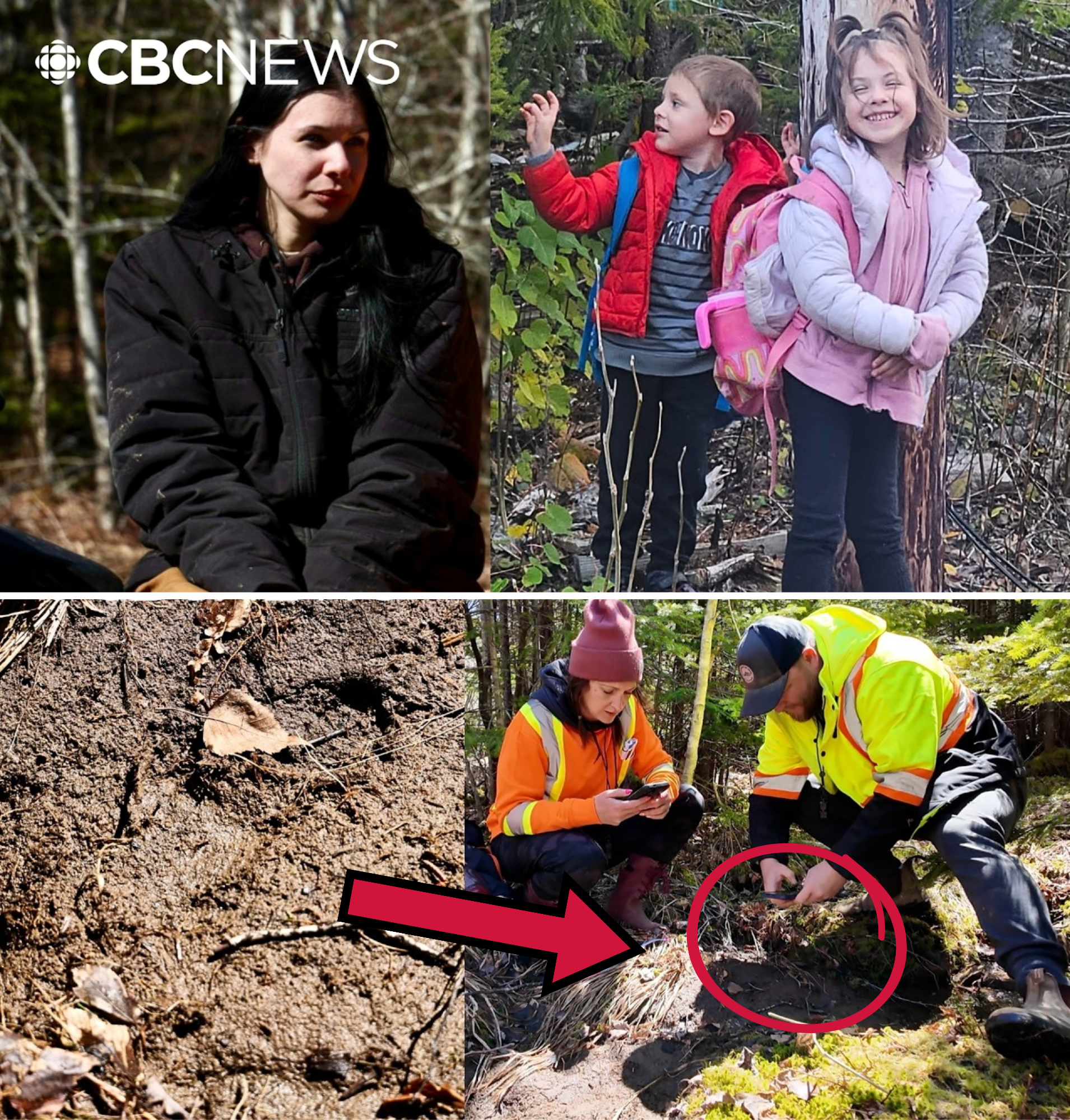
One year after six-year-old Lilly Sullivan and her four-year-old brother Jack disappeared from their family’s mobile home in Lansdowne Station, Nova Scotia, a new child-sized bootprint has been discovered during a volunteer search, injecting fresh urgency and cautious hope into one of Canada’s most puzzling missing children cases. The print, found on April 26, 2026, along a pipeline trail near the family home, has reignited efforts to find the siblings who vanished in broad daylight under circumstances that continue to baffle investigators.
The discovery came during a public search organized by the Ontario-based volunteer group Please Bring Me Home, led by Nick Oldrieve. Volunteers, family members, and concerned citizens combed trails and side paths that had not been fully cleared during initial searches. The bootprint — described as small, well-preserved, and located in an area consistent with possible movement from the family home — was immediately reported to the RCMP with coordinates. While it has not been definitively linked to Lilly or Jack, experts could not rule it out either.
The Sullivan siblings were last seen the evening of May 1, 2025, during a family errand captured on store surveillance. According to their mother Malehya Brooks-Murray and stepfather Daniel Martell, the children were put to bed that night. The next morning, the mother marked them absent from school due to illness. Between roughly 8:00 and 9:40 a.m., the parents say they were in their bedroom with the baby sister while hearing the older children moving around. Then the house went silent. A 911 call was made at 10:01 a.m. The children were gone.
Massive searches involving helicopters, dogs, drones, and hundreds of volunteers followed, yet no trace was found. The surrounding dense woods, steep banks, and waterways made the effort grueling. Now, one year later, the new bootprint — preserved possibly due to freezing conditions and tree cover — has volunteers and investigators returning to the area with renewed focus. A pink blanket reportedly found in distant locations is also undergoing DNA analysis, and Martell has voluntarily provided a blood sample.
The case remains highly unusual. Double disappearances of young children from inside a home in broad daylight are statistically rare. Experts note that children this age typically do not wander far, and the lack of immediate evidence has fueled ongoing questions about what happened that morning. The RCMP continues to treat the disappearance as suspicious, pursuing all avenues including misadventure, accident, or foul play.
Volunteer leader Nick Oldrieve emphasized the importance of persistent searching, especially in spring when conditions change and previously cleared areas can reveal new clues. His team has vetted participants carefully, particularly for this emotionally charged case where online speculation runs high. Several new volunteers have joined the group after recent searches, strengthening local capacity for ongoing efforts.
For the Sullivan family, every new development brings a mix of hope and renewed pain. Lilly was remembered as outgoing and loving pink, while Jack was quieter and fascinated by dinosaurs. Their mother has spoken publicly about the daily struggle of holding onto hope while putting one foot in front of the other. The broader Nova Scotia community has rallied repeatedly, with annual remembrance events and digital billboards keeping the children’s faces visible.
The case has highlighted systemic challenges in rural child protection and search operations. Questions persist about prior family oversight, response times, and inter-agency coordination. Many observers argue that the system designed to safeguard vulnerable children failed Lilly and Jack long before that fateful morning. Calls for reform in how at-risk families are monitored and how quickly large-scale searches are mobilized continue to grow.
A $150,000 reward offered by the Nova Scotia government stands for information leading to the children’s recovery or the resolution of the case. Cadaver dogs have been used in recent searches, and genetic genealogy techniques are being explored alongside traditional methods. The RCMP maintains focus on every element, refusing to let the investigation go cold.
As spring turns to summer 2026, volunteers vow to keep searching every couple of weeks. Oldrieve’s message is clear: they “fail forward,” closing gaps with every step even if no immediate discovery is made. The bootprint, whether it belongs to Lilly, Jack, or remains unconfirmed, serves as a powerful reminder that clues can surface long after hope seems to fade.
Lilly and Jack Sullivan deserved safety, laughter, and a childhood filled with wonder — not to become symbols in a national mystery. Their disappearance from what should have been the safest place — their own home — forces uncomfortable conversations about protection, responsibility, and the limits of systems meant to catch every child who falls through the cracks.
Until they are found or answers arrive, the small bootprint in the Nova Scotia woods stands as both evidence and a silent plea: keep looking, keep hoping, and never stop demanding better for the most vulnerable among us. The children are still out there in the hearts of those who refuse to forget.