NO GREEKS ALLOWED? Christopher Nolan’s Star-Studded ‘The Odyssey’ Ignites Furious Backlash Over Zero Greek Actors in Leading Roles — “A Greek Epic Without Greeks”
Christopher Nolan, the visionary director behind mind-bending blockbusters like Oppenheimer and Inception, is facing a growing cultural firestorm over his ambitious new epic The Odyssey — and the controversy is exploding long before the film even hits theaters in July 2026.
At the heart of the outrage: despite adapting one of the most iconic works of ancient Greek literature — Homer’s legendary tale of Odysseus’s perilous 10-year journey home after the Trojan War — Nolan’s all-star cast features no Greek or Greek-descent actors in any leading roles.
Matt Damon stars as Odysseus, the cunning king of Ithaca. Anne Hathaway plays his loyal wife Penelope. Tom Holland takes on the role of their son Telemachus. Zendaya is reportedly portraying the goddess Athena. Charlize Theron appears as the sorceress Circe. Robert Pattinson, Lupita Nyong’o, Mia Goth, Elliot Page, and others round out the high-profile ensemble.
The absence of authentic Mediterranean representation has sparked fierce criticism from Greek and broader Mediterranean media outlets, as well as passionate film fans and cultural commentators worldwide. “A Greek epic without Greeks,” one viral social media post declared, comparing it to “making a sushi movie without rice.” The sentiment has resonated widely, turning what should have been pure excitement for a Nolan blockbuster into a heated debate about cultural appropriation, historical authenticity, and Hollywood’s double standards on representation.
The backlash gained momentum in early 2025 when the full cast list emerged. Greek outlets and online voices quickly pointed out the glaring omission. While the production filmed in Greece and other locations, and drew on the rich mythology born in the Aegean, none of the principal characters — the heroes, gods, and central figures rooted in Hellenic heritage — are portrayed by actors who share that ethnic or cultural background.
Critics argue this isn’t just a minor casting oversight. Homer’s Odyssey is not generic fantasy — it is a foundational text of Western civilization, deeply embedded in Greek identity, language, and history. For many, seeing an entirely non-Greek A-list lineup headlining the story feels like erasure at best and disrespect at worst. “Imagine a major film about samurai legends with zero Japanese actors in lead roles,” one commenter noted. “Or an African folktale epic starring only Europeans. Would that fly?”
The conversation quickly expanded beyond the lack of Greek talent. Additional heat came from specific casting choices perceived as “race-swapping” or prioritizing Hollywood star power over visual and cultural fidelity. Rumors and reports about Lupita Nyong’o in a prominent divine role (with some outlets linking her to Helen of Troy or Athena) fueled accusations of historical inaccuracy in a story where ancient Mediterranean features would be expected. Costume and armor designs have also drawn fire from historians, who point out anachronisms and modern twists that stray far from Bronze Age Mycenaean reality.
Supporters of Nolan’s approach push back hard. They argue that The Odyssey is a myth, not a historical documentary. Myths evolve, adapt, and belong to the world, not any single modern ethnicity. Casting should prioritize acting talent, chemistry, and Nolan’s unique directorial vision rather than strict ethnic matching — especially since the original epic was composed thousands of years ago in a vastly different cultural context. “No living person today is ‘authentically’ Mycenaean,” one defender noted. “Civilizations rise and fall. Stories transcend borders.”
Others highlight the practical realities of big-budget filmmaking. Nolan commands massive studio resources and demands top-tier stars who can open films globally and justify the enormous IMAX production scale. Names like Damon, Holland, Hathaway, and Zendaya guarantee box-office muscle and international appeal. Inserting lesser-known Greek actors into lead roles, the argument goes, might limit the project’s reach — even if it satisfies cultural purists.
The debate has spilled across platforms with ferocious intensity. On X and Instagram, memes and hot takes proliferate: side-by-side comparisons of ancient Greek statues versus the cast, sarcastic “diversity wins” jabs, and passionate threads defending artistic freedom. Reddit forums dedicated to Nolan and film discourse are split, with some users decrying the backlash as veiled xenophobia or “historical accuracy” used as a dog whistle, while others insist it’s a legitimate call for better Mediterranean visibility in Hollywood.
Greek-American communities and Mediterranean voices have been particularly vocal, questioning why similar scrutiny doesn’t always apply when stories from other cultures are adapted. “Would we accept a major Chinese epic like Journey to the West with zero East Asian leads?” one post asked. The double-standard argument has gained traction, forcing broader conversations about whose stories get universal treatment versus those expected to remain “authentic.”
Nolan himself has remained characteristically tight-lipped, as is his style. The director is known for immersive, technically groundbreaking cinema shot on large-format film, and The Odyssey is reportedly being captured entirely with cutting-edge IMAX cameras — a first for a commercial narrative feature of this scale. Production has taken the team to Greece, Italy, Iceland, and even disputed territories like Western Sahara, adding layers of logistical and ethical debates.
Yet the casting controversy refuses to die down. It taps into larger tensions in contemporary filmmaking: the tension between globalization and cultural specificity, between commercial imperatives and respectful representation, between myth as universal human story and myth as cultural inheritance.
As the July 17, 2026 release date approaches, anticipation for Nolan’s epic remains sky-high. The film promises breathtaking visuals, complex nonlinear storytelling, and the emotional depth that defines his work. Many fans are willing to look past the casting noise, trusting that the final product will deliver the cinematic spectacle Nolan is famous for.
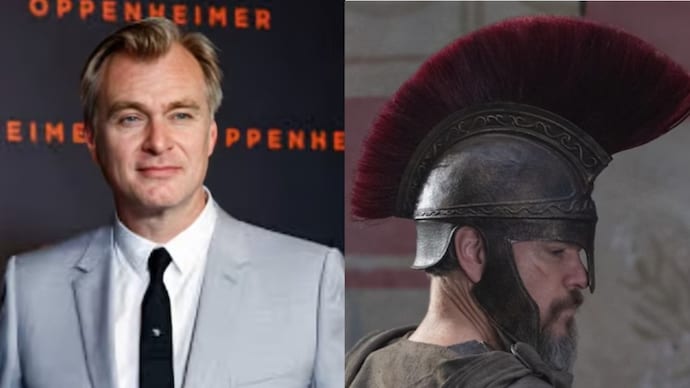
But for critics, the issue runs deeper than one movie. It’s about whether Hollywood truly values the living cultures behind the stories it borrows — or simply mines them for prestige and profit while sidelining the people whose ancestors first told those tales around ancient fires.
The absence of Greek actors in leading roles has become a lightning rod. It forces uncomfortable questions: In 2026, can a multi-million-dollar adaptation of Homer’s Odyssey claim to honor its source while featuring zero Greek talent at the center? Or is demanding ethnic alignment outdated in a globalized industry?
The answers are far from settled. Social media remains a battlefield of passionate opinions, with Greek outlets continuing to highlight the slight and calling for greater inclusion in future adaptations. Meanwhile, Nolan’s defenders rally around artistic liberty, arguing that talent knows no borders and that great stories belong to everyone.
One thing is certain: Christopher Nolan’s The Odyssey is already one of the most talked-about films of the decade — not just for its ambition or star power, but for the raw cultural nerve it has struck before a single frame has been screened for audiences.
Whether the finished film can transcend the pre-release uproar and deliver a masterpiece that silences the critics remains to be seen. Until then, the debate rages on: When Hollywood tells a Greek story, should Greeks be invited to the hero’s table — or is star power and directorial vision enough?
For now, the epic journey of Odysseus is mirroring its own myth: full of obstacles, controversy, and questions about homecoming and identity. Only time — and the box office — will reveal if Nolan’s bold voyage finds safe harbor or crashes against the rocks of cultural backlash.