America Has Its New Idol: Hannah Harper Crowned Winner of American Idol Season 24
After months of emotional performances, shocking eliminations, and millions of votes cast from living rooms across the country, the winner of American Idol Season 24 has finally been revealed—and fans are completely overwhelmed by the final result tonight.
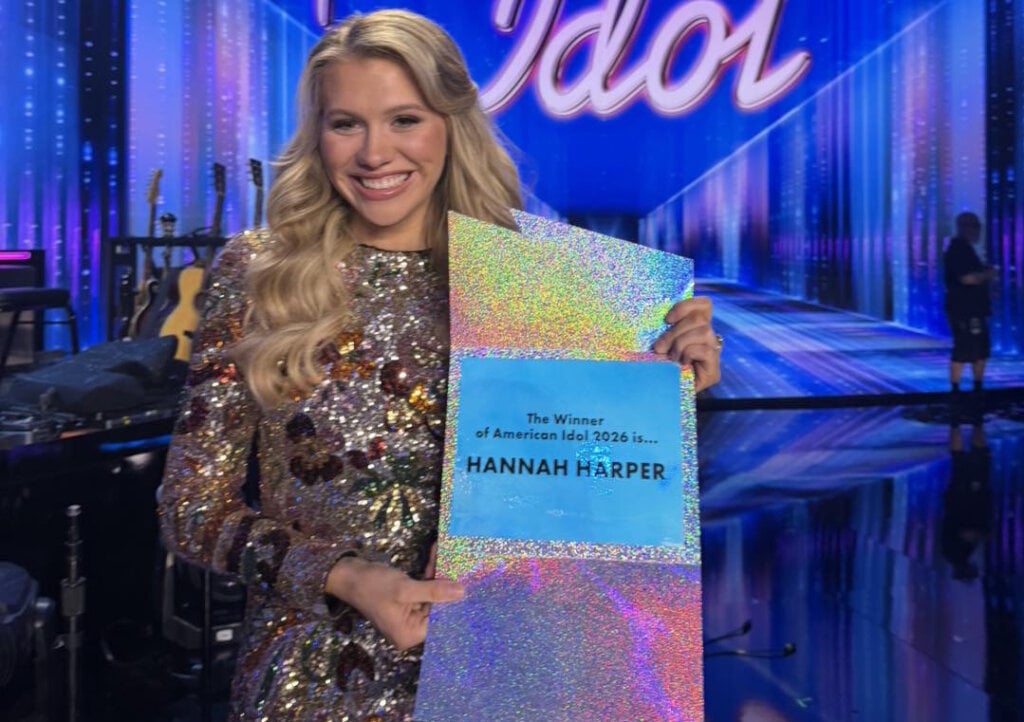
On May 11, 2026, in a three-hour live finale packed with star power, heartfelt tributes, and tears flowing freely on stage and at home, 26-year-old stay-at-home mom Hannah Harper from Willow Springs, Missouri, was crowned the newest American Idol. The announcement sent shockwaves through the audience inside the studio and across social media, where reactions ranged from ecstatic cheers to stunned disbelief. For a season defined by raw talent, unexpected twists, and deeply personal stories, Harper’s victory felt like both an underdog triumph and a full-circle moment for a singer whose journey began not in flashy arenas, but in small-town churches and family living rooms.
Harper stepped onto the Idol stage earlier this year as a quiet but determined contestant whose life looked nothing like the typical reality-TV hopeful. A devoted wife to her husband Devon and mother to three young boys, she had spent years balancing diapers, school runs, and the quiet ache of postpartum depression while nurturing a lifelong love for music. Her roots run deep in bluegrass gospel. From the age of nine, Harper toured coast to coast with her family band, The Harper Family, performing in churches every weekend. Raised in a conservative household in rural Missouri, her early influences were limited but powerful—Dolly Parton, Shania Twain, and the soaring harmonies of bluegrass and faith-based music. That foundation shaped everything about her sound: warm, authentic, storytelling-driven country with a gospel heart.
Her audition performance became an instant sensation. Harper sang an original song she wrote during one of her darkest postpartum moments, titled “String Cheese.” The tender, vulnerable track—accompanied by Devon on guitar—moved judge Carrie Underwood to tears and quickly racked up hundreds of thousands of views online. Underwood, herself a former Idol winner and now a judge alongside Luke Bryan and Lionel Richie, saw herself in Harper’s story. “You’re singing from a place that so many moms understand,” Underwood said after the performance. The golden ticket Harper earned that day launched a season-long rollercoaster that would test her resilience and ultimately lead her to the top.
Throughout the competition, Harper proved she was more than just a heartwarming backstory. She advanced steadily through Hollywood Week’s “Music City Takeover” in Nashville, survived the high-stakes ‘Ohana Round in Hawaii, and consistently delivered performances that blended her bluegrass roots with modern country and pop. From a heartfelt take on Fleetwood Mac’s “Landslide” that earned praise for its emotional depth in the Top 11, to a Jo Dee Messina-inspired “Heads Carolina, Tails California” that had fans singing along, Harper stayed true to herself. Judges repeatedly highlighted her authenticity. Lionel Richie called her voice “a beautiful garden you want to walk through,” while Luke Bryan admired how she poured her heart out week after week without chasing trends.
The season itself was packed with the drama Idol fans crave. Shocking eliminations thinned the field from dozens of hopefuls to a fiercely competitive Top 3. Remote auditions and new voting methods via the website, text, and social media kept the stakes high, while guest mentors like Alicia Keys, Jennifer Hudson, and Paula Abdul brought fresh energy. Themes ranged from Songs of Faith to Disney Night and a nostalgic Class of 2006 reunion featuring alumni and Dancing with the Stars pros. Millions of votes poured in each week, but the competition grew tighter as the live shows progressed. Harper remained consistently safe, often landing in the middle or upper half of the results, proving that her relatability resonated with voters who saw themselves—or their own mothers, sisters, or daughters—in her story.
By the time the finale arrived on May 11, the Top 3—Harper, worship leader Jordan McCullough from Murfreesboro, Tennessee, and music teacher Keyla Richardson from Pensacola, Florida—stood as three distinctly talented finalists. McCullough, a powerhouse vocalist with gospel roots and incredible range, had wowed audiences with passionate renditions of songs like “If I Ain’t Got You” and faith-driven originals. Many fans considered him the technical favorite, praising his emotional delivery and versatility. Richardson brought soulful, gospel-infused performances that earned standing ovations and heartfelt praise from the judges for her inspirational presence.
Mentored by Alicia Keys for the finale, the Top 3 delivered show-stopping sets. In the first round, a tribute to Keys’ catalog, Harper offered a fresh bluegrass spin on “No One,” dedicating it to her husband for his unwavering support. The judges were unanimous in their admiration. Richie applauded her for making the song completely her own, Underwood praised the tenderness, and Bryan noted how Harper stayed true to her identity even on a pop-R&B classic. McCullough delivered a fiery “If I Ain’t Got You,” while Richardson shone with “Un-Thinkable (I’m Ready).”
The hometown round brought even more emotion. Harper performed her original “Married Into This Town,” a love letter to her Missouri roots and family life. Underwood was visibly moved, wiping away tears as Harper sang directly to her loved ones watching from home. Richardson followed with Whitney Houston’s “I Love the Lord,” and McCullough closed the round with the powerful “Dear God.” After votes were tallied, Richardson was eliminated in third place, leaving Harper and McCullough to battle it out in the final round.
Both reprised songs that had defined their journeys—Harper returning to her viral audition track “String Cheese,” and McCullough revisiting an earlier standout. The tension was palpable. Then, after a commercial break filled with duets featuring guest stars like Lee Ann Womack (who earlier joined Harper for a moving “I Hope You Dance”), Brad Paisley, Mötley Crüe, and more, host Ryan Seacrest delivered the news: America had chosen Hannah Harper as the Season 24 winner.
The studio erupted. Harper, overcome with emotion, hugged her family and the other finalists as confetti rained down. She closed the night with a powerful, faith-filled performance of “At the Cross (Love Ran Red)” by Chris Tomlin—bringing the season full circle to her gospel beginnings.
The reaction online was immediate and intense. Hashtags like #HannahHarperIdol and #NewIdol trended within minutes. Many fans celebrated the win as a victory for everyday dreamers. “A mom of three just won American Idol—proof that it’s never too late and your story matters!” one viral post read. Supporters praised Harper’s authenticity, her bluegrass-country sound, and the way she represented small-town America and working parents chasing big dreams. Underwood later posted her congratulations, calling Harper “the real deal.”
Yet not everyone was on the same page. Some viewers felt McCullough’s vocal prowess and consistent showings throughout the season made him the stronger overall contender. Comments flooded in: “Jordan was robbed—he had the voice of the season,” and debates raged about whether Harper’s relatability and heartfelt originals edged out pure vocal talent. The divide only amplified the “overwhelmed” feeling the prompt described. For weeks, fans had poured their hearts (and votes) into the competition; a result this personal and polarizing left everyone buzzing.
Harper’s victory comes with more than just bragging rights. As the new American Idol, she earns a recording contract, the chance to release her first single immediately, and a platform that has launched stars like Kelly Clarkson, Carrie Underwood, and countless others into superstardom. Given her songwriting gifts—evident in tracks like “String Cheese” and “Married Into This Town”—expect original music that blends her bluegrass-gospel heritage with contemporary country storytelling. Industry insiders already whisper about potential collaborations with artists like Underwood or Lee Ann Womack, and a possible tour that brings her story back to the heartland stages where it all began.
For Harper herself, the win feels surreal. In post-finale interviews and social media posts, she spoke of gratitude to her family, her faith, and the voters who saw something special in her quiet strength. “This isn’t just my dream anymore,” she said through happy tears. “It’s for every mom who’s ever wondered if her voice still matters.”
Season 24 will be remembered as one of the most emotionally charged in recent memory. From remote auditions that broadened access to the competition, to the absence of the traditional summer tour in favor of digital engagement, the show evolved while staying true to its core: discovering raw talent and unforgettable stories. Shocking eliminations kept viewers on edge, million-vote tallies proved the power of audience democracy, and performances that ranged from tear-jerking ballads to roof-raising anthems reminded everyone why American Idol remains a cultural phenomenon after more than two decades.
As the confetti settled and the lights dimmed on the finale stage, one thing was clear: America didn’t just crown a singer. It embraced a mother, a wife, a daughter of the heartland, and a woman whose voice—shaped by faith, family, and hard-won resilience—now belongs to the nation. Hannah Harper is the new American Idol, and in a world hungry for genuine connection, her win feels like exactly what we needed.
Congratulations, Hannah. The road ahead is yours—and millions of fans can’t wait to hear where it leads next.