The Forgotten Bennet Sister Finally Gets Her Due: How The Other Bennet Sister Rewrites Mary’s Heartbreaking Story
For years, Pride & Prejudice fans focused on Elizabeth’s love story — while one Bennet sister was left fading into the background, almost forgotten. But now The Other Bennet Sister is exposing the truth behind Mary Bennet — the quiet, awkward sister no one ever truly paid attention to.
What looks like a simple overlooked character is actually a deeply emotional story of isolation, pressure, and silent heartbreak that was never shown before. And as Mary finally steps forward, her journey threatens to rewrite everything we thought we knew about the Bennet family.
Jane Austen’s Pride and Prejudice has captivated readers for over two centuries with its sparkling wit, social satire, and the unforgettable romance between Elizabeth Bennet and Mr. Darcy. Yet among the five Bennet sisters, one has long remained in the shadows: Mary. Bookish, plain, pedantic, and often the butt of gentle mockery, Mary delivers moral pronouncements, plays the pianoforte with more enthusiasm than skill, and struggles to find her place in a family that prizes beauty, charm, and liveliness above all else.
Now, Janice Hadlow’s 2020 novel The Other Bennet Sister, recently adapted into a critically acclaimed and wildly popular 10-part BBC television series (streaming on BritBox in the US), gives Mary her long-overdue spotlight. The story reimagines her life with compassion and depth, transforming her from a minor comic figure into a fully realized heroine on a poignant journey of self-discovery, resilience, and quiet triumph.
The Pain of Being the Plain One
The narrative begins by gently expanding on the events of Austen’s classic, but this time filtered through Mary’s eyes. From a young age, Mary senses she is different. While Jane and Elizabeth form a natural pair of beauties and confidantes, and Kitty and Lydia bond over youthful silliness, Mary stands apart. Her mother, Mrs. Bennet, makes no secret of her disappointment — constantly lamenting Mary’s plain features and lack of sparkle, blaming her husband’s side of the family for the “defect.” Mr. Bennet, lost in his library and ironic detachment, offers little comfort or guidance.
Mary internalizes these judgments deeply. Convinced that beauty is the only currency that matters for a woman in Regency society, she turns to the one area where she believes she can excel: intellectual and moral accomplishment. She devours books, practices the piano relentlessly, and adopts a serious, sententious demeanor in conversation, hoping to stand out through virtue and knowledge. Instead, her efforts often come across as pompous or awkward, further alienating her from society and even her own family.
The novel poignantly depicts the emotional toll of this isolation. Mary’s attempts to connect — including a humiliating attempt to impress Mr. Collins after Elizabeth rejects him — highlight her desperation for validation. The famous Netherfield ball scene, where Mary’s earnest but painful musical performance is cut short by her father’s public rebuke (at Elizabeth’s prompting), lands with fresh heartbreak when seen from her perspective. It is not mere social embarrassment; it is a devastating confirmation of her deepest fears: that she is unworthy of attention or affection.
Life After Longbourn: A Journey of Transformation
After the joyful marriages of Jane to Mr. Bingley and Elizabeth to Mr. Darcy, and following the death of Mr. Bennet, Mary’s situation becomes precarious. With Longbourn entailed away and her sisters settled in grand homes, she faces an uncertain future as the unmarried middle sister with limited prospects. This is where Hadlow’s story truly blossoms into something original and compelling.
Mary leaves the familiar confines of Hertfordshire and embarks on a series of stays and visits that challenge her self-perception. She spends time with the Gardiners in lively, bustling London, where the warmth and practicality of her aunt help her begin to see herself differently. Under gentle guidance, Mary experiments with fashion, conversation, and social ease — not to become someone else, but to allow her genuine qualities to shine through without the armor of pedantry.
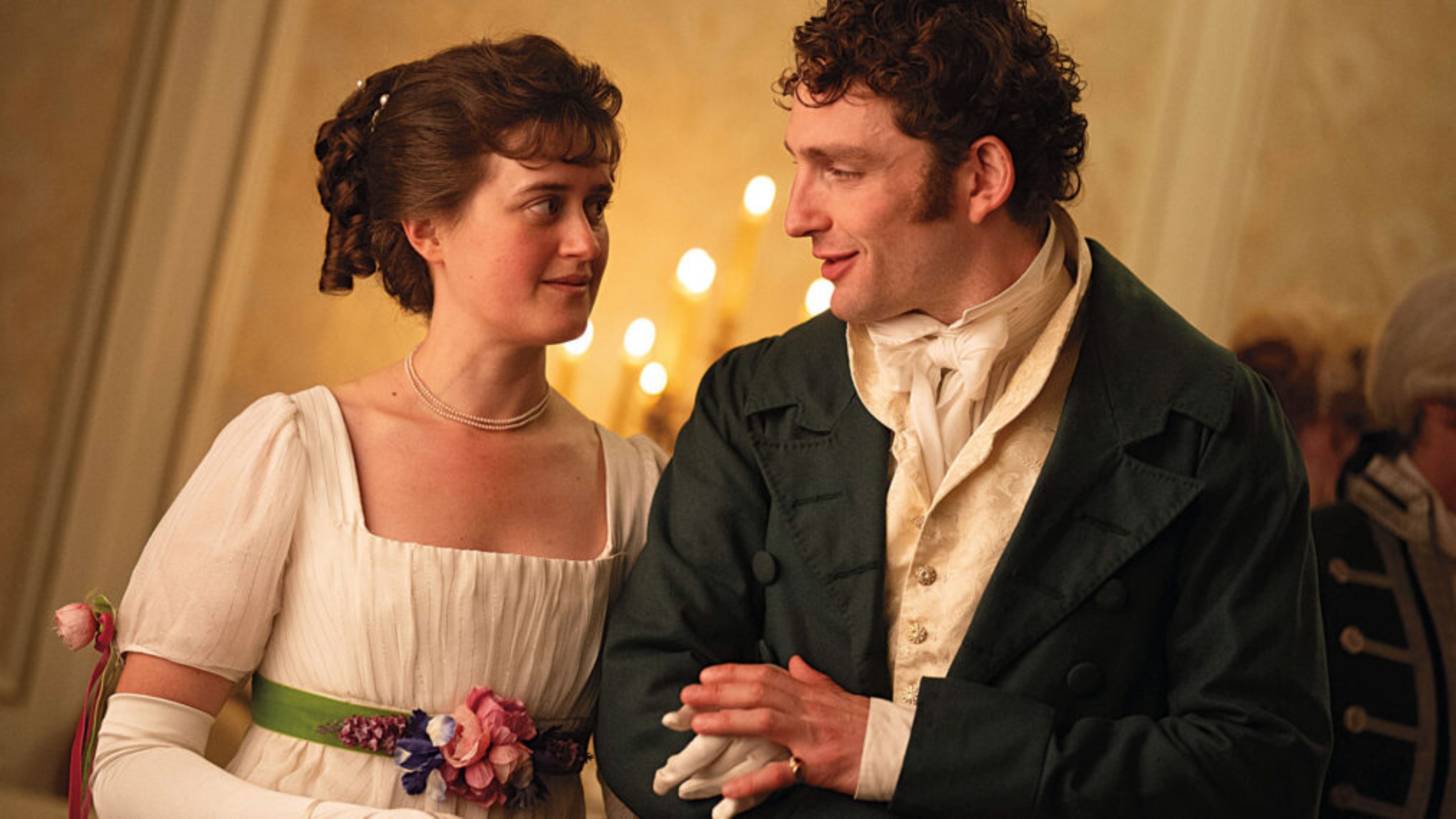
Her travels take her to Pemberley, where she observes the happiness of her sister Elizabeth while quietly grappling with her own feelings of envy and inadequacy. Visits to other relatives, including an awkward period with Charlotte and Mr. Collins at Hunsford, further illuminate the different paths available to women of her time. Through these experiences, Mary confronts painful truths about her upbringing and begins the slow, often difficult work of self-acceptance and self-kindness.
The transformation is never simplistic or purely external. Mary does not undergo a dramatic “glow-up” that erases her old self. Instead, she learns to value her intelligence, integrity, and quiet strengths while softening the rigid edges that once kept others at bay. She discovers joy in genuine connections, the beauty of the natural world (including an interest in geology), and the possibility that she might be loved for who she truly is.
Romance and Self-Worth
While romance plays a significant role in the latter part of the story, it is not the sole focus. Mary’s primary love story develops with Thomas Hayward, a thoughtful and kind lawyer. Their relationship builds gradually on mutual respect and intellectual compatibility rather than instant sparks. Yet before she can fully embrace this chance at happiness, Mary must navigate obstacles — including a charming but questionable suitor reminiscent of Wickham — and, most importantly, overcome her own lingering self-doubt.
The narrative echoes Austen’s themes but updates them with modern emotional resonance. In a society that still judges women harshly on appearance and marital status, Mary’s arc feels strikingly contemporary. Viewers and readers have embraced her as a relatable heroine for the 21st century: the introverted, bookish girl who feels invisible in a world that rewards extroversion and conventional beauty. Her struggles with family dynamics, imposter syndrome, and the pressure to “fix” herself speak powerfully to anyone who has ever felt like the odd one out.
A Fresh Perspective on the Bennet Family
By centering Mary, The Other Bennet Sister subtly reframes the entire Bennet household. Mrs. Bennet’s anxiety-driven favoritism appears more cruel than comical. Mr. Bennet’s neglect feels like quiet emotional abandonment. Even beloved Elizabeth’s occasional sharpness toward Mary gains new layers. The story does not villainize the family but humanizes them, showing how societal pressures and personal flaws ripple through relationships.
The BBC adaptation, starring Ella Bruccoleri as a wonderfully nuanced Mary, has amplified this impact. With strong supporting performances — including Richard E. Grant as Mr. Bennet and Ruth Jones as Mrs. Bennet — the series has become one of the biggest UK drama launches of recent years, drawing millions of viewers. Fans praise its balance of period elegance, emotional depth, and gentle humor, as well as its sensitive handling of themes like self-esteem, belonging, and female agency.
Many who revisit Pride and Prejudice after experiencing Mary’s story report seeing the original novel in a new light. The “forgotten” sister now feels essential — a reminder that every family has its quiet strugglers, and every overlooked voice deserves to be heard.
Why Mary’s Story Matters Now
In giving Mary Bennet a rich inner life, a path to growth, and ultimately happiness on her own terms, The Other Bennet Sister delivers more than fan service. It offers a heartfelt exploration of what it means to find worth beyond societal expectations. Mary’s journey from self-loathing to quiet confidence is profoundly moving because it is hard-won and believable. She does not need to become the prettiest or the wittiest to deserve love and respect — she simply needs to believe she is enough.
As the series continues to win hearts on both sides of the Atlantic, Mary Bennet has stepped out of the margins and into the spotlight she was always denied. Her story reminds us that the most rewarding happy endings are often those earned through introspection, courage, and the slow blossoming of self-acceptance.
Whether you are a longtime Austen devotee or new to the world of the Bennets, The Other Bennet Sister invites you to look again — and this time, really see the sister who was there all along, waiting for her moment. In doing so, it doesn’t just expand Austen’s universe. It deepens our understanding of it, proving that even the plainest, quietest voices can carry the most resonant truths.