🚨💥 Klaus Mikaelson’s Shocking Debut: How One Episode Turned The Vampire Diaries Into A Global Phenomenon 15 Years Ago
Fifteen years ago today, a single episode of The Vampire Diaries forever altered the trajectory of one of television’s most addictive supernatural dramas. On April 21, 2011, in the Season 2 finale titled simply “Klaus,” audiences met the hybrid kingpin who would dominate Mystic Falls and redefine what a television villain could be. Joseph Morgan’s portrayal of Klaus Mikaelson didn’t just arrive as another big bad; he exploded onto the screen with a lethal cocktail of charm, cruelty, and centuries of calculated rage that made every previous threat feel small. What started as a short-term antagonist arc became the beating heart of an expanded universe, spawning a beloved spinoff, deepening the show’s mythology, and proving that the most dangerous monsters are the ones you can’t help but root for.
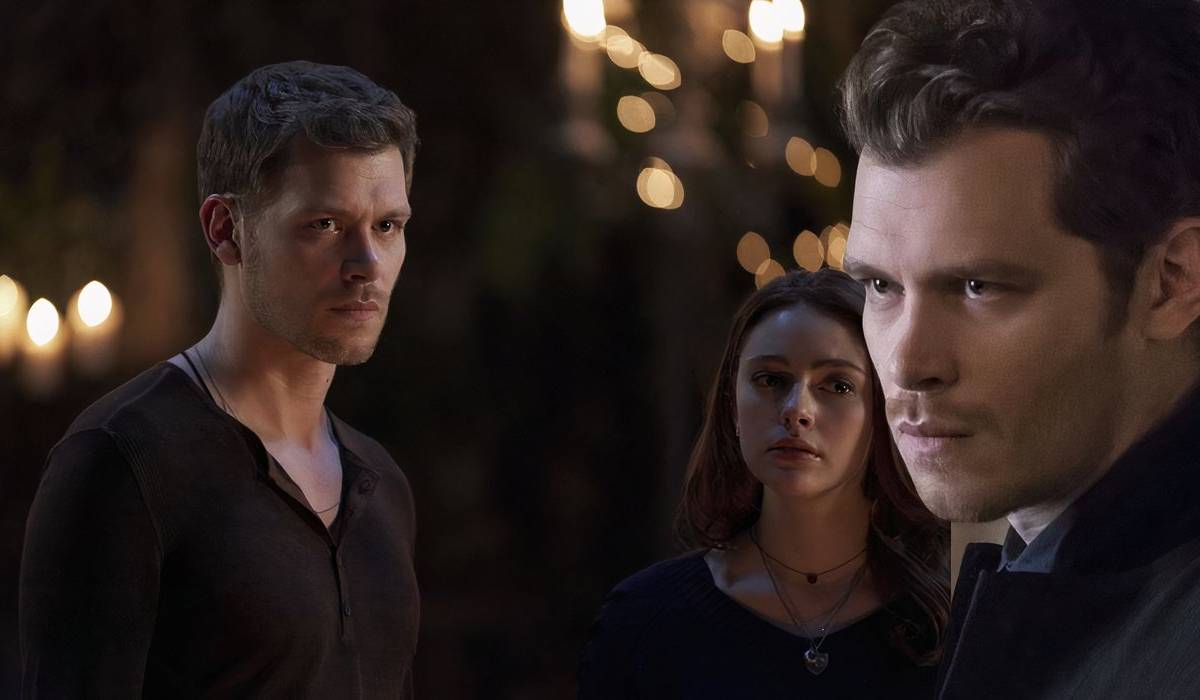
The episode itself was a masterclass in slow-burn tension. Viewers had been teased about Klaus for months—first mentioned in the chilling Season 2 episode “Rose,” where Elena Gilbert learned the terrifying truth about the Original vampires who created the entire bloodline. He had already possessed the body of Alaric Saltzman in “Know Thy Enemy,” giving audiences a taste of his sadistic wit through Matthew Davis’s performance. But nothing prepared fans for the real Klaus stepping out of the shadows in his own skin. Morgan, with his piercing blue eyes, British accent laced with menace, and that signature half-smirk, embodied a villain who felt ancient, unpredictable, and dangerously seductive. In that debut, Klaus wasn’t just hunting the doppelgänger to break his hybrid curse—he was toying with the entire town like a chess master who already knew every move.
From the moment he appeared, Klaus shattered the established rules of The Vampire Diaries. Before him, the series thrived on the steamy love triangle between Elena, Stefan Salvatore, and Damon Salvatore. Vampires were brooding romantics or feral threats, but they operated within a relatively contained world of high school drama mixed with immortal grudges. Klaus introduced scale. As the original vampire-werewolf hybrid, he carried the weight of a thousand-year blood feud. His family—the Mikaelsons—weren’t just elders; they were the first family, cursed by their own mother Esther to become the very monsters they hunted. This revelation didn’t just add lore; it rewrote the show’s DNA, turning Mystic Falls into a battleground for ancient prophecies, sacrificial rituals, and family betrayals that made the Salvatores’ sibling rivalry look like child’s play.
Elena, the show’s moral center, suddenly found herself at the epicenter of a curse that demanded her death. Stefan’s ripper past collided violently with Klaus’s manipulations, forcing the younger Salvatore to make impossible choices that tested his humanity. Damon, ever the chaotic anti-hero, met his match in a villain whose sarcasm and strategic mind mirrored his own but amplified to genocidal levels. The debut episode climaxed with Klaus compelling Stefan to turn off his emotions and feed on innocent victims, a gut-wrenching scene that permanently scarred the brothers’ relationship. Fans still quote Klaus’s chilling line to Stefan: “I’m going to make you suffer the way I have suffered.” It wasn’t empty boasting. Klaus delivered on every threat, turning the sleepy Virginia town into a war zone where no one was safe—not even the witches, werewolves, or the Bennett bloodline that had protected the supernatural balance for generations.
What made Klaus revolutionary wasn’t just his power level. It was the layers Joseph Morgan brought to the role. Morgan has spoken in interviews about how he initially signed on for a handful of episodes, expecting a quick exit. The writers planned to kill Klaus off by the end of Season 3, wrapping up the Original storyline neatly. But something magical happened on set and online. Morgan’s performance crackled with nuance—Klaus wasn’t a one-note monster snarling in the corner. He was witty, theatrical, and heartbreakingly lonely. Beneath the hybrid rage simmered a boy abandoned by his father, betrayed by his mother, and forced to dagger his own siblings for centuries to keep them “safe.” That vulnerability peeked through in subtle moments: the way his voice softened when speaking of his sister Rebekah, or the flicker of regret after compelling an entire room to forget his atrocities.
Fan response was immediate and ferocious. Social media in 2011—still riding the early Twitter wave—exploded with #KlausMikaelson trending for weeks. Tumblr became a shrine to Morgan’s cheekbones and the character’s tragic anti-hero potential. Viewers who tuned in for the Elena-Stefan-Damon drama suddenly found themselves obsessed with a villain who stole every scene. Ratings spiked. The network took notice. By the end of Season 3, the writers pivoted hard. Instead of dusting Klaus, they expanded his role into Seasons 4 and 5, weaving him deeper into the fabric of Mystic Falls while planting seeds for something bigger. That “something bigger” became The Originals, the 2013 spinoff that followed Klaus and his dysfunctional immortal family back to New Orleans.
The decision to give Klaus his own series stands as one of the smartest moves in The CW’s history. The Vampire Diaries had always been a teen soap with fangs, but The Originals matured the universe overnight. Set in the French Quarter, the show delved into werewolf politics, witch covens, and vampire hierarchies that felt lived-in and dangerous. Klaus evolved from pure antagonist to complicated protagonist. Fans watched him fight to protect his unborn daughter Hope—the miracle child born of his hybrid nature and Hayley Marshall’s werewolf lineage. That redemption arc, messy and imperfect, became television gold. Viewers who once cheered for his defeat now wept during moments like Klaus’s quiet confession to Hope: “I will always be here to protect you, little one.” By the time The Originals concluded in 2018 after five seasons, Klaus had transformed from the greatest villain in The Vampire Diaries into one of television’s most beloved anti-heroes.
This evolution didn’t happen in a vacuum. Klaus’s presence fundamentally changed how The Vampire Diaries told stories. Pre-Klaus, the show focused on weekly monster-of-the-week threats alongside the central romance. Post-Klaus, it became a sprawling saga of bloodlines, prophecies, and generational curses. The introduction of the Other Side, the cure for vampirism, and the Travelers—all tied back to Original family drama—kept the series fresh through its later seasons. Even after Elena’s departure in Season 6, the lingering shadow of Klaus’s actions drove plots involving the Gemini Coven, the Heretics, and the eventual return of the Mikaelsons in crossover events. His DNA is literally and figuratively woven into every corner of the franchise, including Legacies, the third spinoff centered on Hope Mikaelson navigating life at the Salvatore School.
Fifteen years later, it’s impossible to overstate Klaus’s cultural footprint. Joseph Morgan’s performance earned him a dedicated global fanbase that still floods conventions and social media with appreciation. In a genre crowded with sparkly vampires and brooding werewolves, Klaus stood apart because he felt real. He wasn’t reformed by love alone; he clawed toward redemption through fatherhood, guilt, and the slow realization that immortality without connection was its own curse. That depth resonated with viewers navigating their own complicated family dynamics, mental health struggles, and searches for belonging. Online discourse still rages about whether Klaus or Damon deserves the title of ultimate TVD anti-hero, but most agree: without Klaus, the show might have ended as a pleasant teen vampire romance. With him, it became an epic that launched an entire shared universe.
Look back at that debut episode now and the genius is unmistakable. The way director and executive producer Julie Plec framed Klaus’s entrance—emerging from the shadows with a casual swagger while Stefan lay broken at his feet—signaled a new era. The score swelled with ominous strings as Klaus delivered one of his most quoted threats: “I’m a little busy right now, but I’ll be sure to make time for you later.” It wasn’t just dialogue; it was a promise that the stakes had permanently risen. Mystic Falls would never be the same, and neither would the audience’s expectations for what a villain could achieve on television.
The ripple effects extended beyond the screen. The Vampire Diaries had already built a massive young adult following, but Klaus helped cement its legacy as prestige genre television. Critics who once dismissed the show as glossy CW fluff began praising its bold storytelling risks. Merchandise exploded—Klaus-themed apparel, hybrid hybrid coffee mugs, and “Always and Forever” family crests became staples at Hot Topic. Fan fiction archives swelled with thousands of stories exploring alternate timelines where Klaus’s curse broke differently or where his redemption came sooner. Even today, TikTok edits set to haunting covers of “The Night We Met” rack up millions of views, keeping new generations discovering the Mikaelson saga.
Yet the true measure of Klaus’s impact lies in how he forced the heroes to evolve. Stefan’s struggle with his ripper side became more poignant when contrasted against Klaus’s unapologetic embrace of darkness. Damon’s growth from selfish killer to reluctant protector gained weight because he had to outmaneuver someone even more cunning. Elena’s compassion was tested to its limits when she had to decide whether mercy could ever extend to a being who had slaughtered entire villages. These character journeys gained emotional heft precisely because Klaus existed as both mirror and monster. He didn’t just threaten their lives; he exposed their deepest flaws and forced them to confront what kind of people they wanted to become in an immortal world.
As we mark fifteen years since that fateful April night in 2011, it’s worth asking what the franchise would look like without Klaus. Would The Originals have ever been greenlit? Would Legacies have found its emotional core in Hope’s complicated legacy? Would fans still quote lines from a show that ended in 2017? The answers point to one inescapable truth: Klaus Mikaelson didn’t just debut—he detonated. He took a successful teen drama and transformed it into a mythic saga spanning centuries, continents, and generations. He proved that villains don’t need to stay villains forever, that family can be both salvation and damnation, and that the most terrifying power on screen is the quiet charisma of a man who has nothing left to lose.
Joseph Morgan has often reflected on the role that defined his career, noting how the fans’ passion gave him the creative freedom to explore Klaus’s vulnerabilities. In a 2021 interview, he recalled the moment the writers decided to keep the character alive: “It was the fans who saved him, really. Their love showed the studio there was more story to tell.” That gratitude flows both ways. Fans saved Klaus, and in return, Klaus gave fans a villain worth obsessing over for fifteen years and counting.
Today, with The Vampire Diaries available on streaming platforms and new viewers discovering the Mikaelson family every day, Klaus’s influence feels as potent as ever. His debut remains a masterclass in introducing a game-changing antagonist: tease him, build dread, then unleash him with unforgettable style. The franchise may have moved on, but Mystic Falls—and the hearts of millions of fans—still bear the hybrid’s indelible mark. Fifteen years later, one thing is crystal clear: the greatest villain didn’t just change The Vampire Diaries. He made it immortal.