😱 Barcelona Horror: Jimmy Gracey (CNN Producer’s Nephew) Vanishes After 3AM Club Exit With Stranger – Wallet in Sea, Body Discovered…
The international spotlight on a missing American college student intensified dramatically when CNN confirmed the young man at the center of the frantic search in Barcelona was none other than the nephew of its own senior producer David Gracey, transforming a routine spring break disappearance into a deeply personal crisis that gripped the network’s newsroom and millions of viewers worldwide.
James “Jimmy” Gracey, a 20-year-old junior honors accounting student at the University of Alabama, had traveled to Spain for what should have been a carefree reunion with fraternity brothers. Instead, his vanishing act outside the glittering Shôko nightclub in Barcelona’s Port Olímpic district early on March 17, 2026, unleashed a whirlwind of fear, frantic family pleas, and an unprecedented level of media scrutiny—all amplified because this wasn’t just any tourist lost abroad. This was family to one of CNN’s most respected behind-the-scenes talents. The revelation, dropped quietly but powerfully by the network itself on March 19, sent shockwaves through the very newsroom that was covering the story around the clock, turning professional reporting into something profoundly intimate.
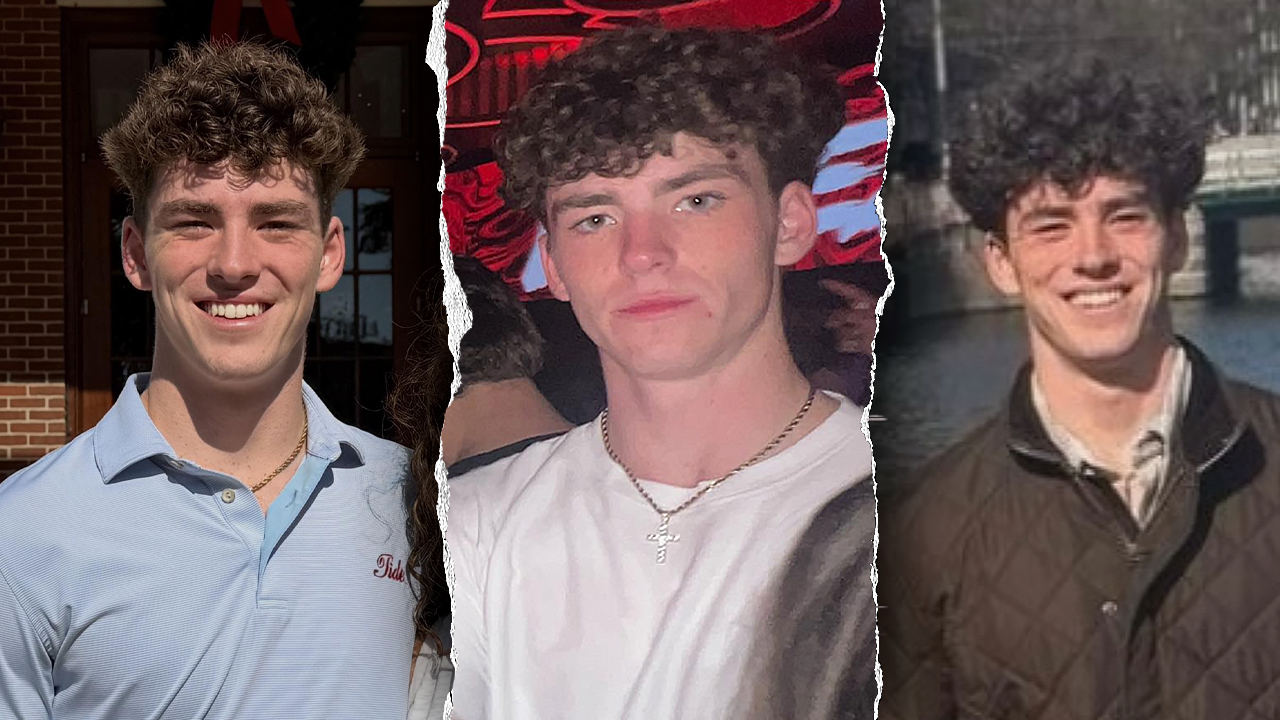
Jimmy grew up in the leafy Chicago suburb of Elmhurst, Illinois, the oldest of several siblings in a close-knit Catholic household. Described by his uncle David Gracey as a “responsible young man who helps his parents take care of his younger siblings,” Jimmy embodied quiet reliability and deep faith. At the University of Alabama, he thrived academically while serving as chaplain of the Theta Chi fraternity chapter. He closed every meeting with heartfelt prayers, mentored pledges through personal challenges, and organized philanthropy events that reflected his commitment to service. Fraternity brother Cavin McLay, who was with him in Spain, later told CNN affiliate WBMA that Jimmy’s disappearance was completely out of character. “That was the last time we’ve heard from him,” McLay said, his voice heavy with disbelief after the group had spent the evening at Shôko, a world-famous beachfront club pulsing with electronic beats and overlooking the Mediterranean.
The night had started like any other spring break adventure. Jimmy had flown into Barcelona on March 16 after a weekend in Amsterdam. The group of about ten friends, many studying abroad, rented an Airbnb on Ronda de Sant Pere, just a short walk from the vibrant waterfront. That Monday evening they headed to Shôko, drawn by its oceanfront terraces, string lights reflecting off the waves, and reputation as one of Europe’s hottest nightlife destinations. Dressed in a simple white T-shirt, dark jogger-style pants, and his signature gold chain with a rhinestone cross, Jimmy blended into the crowd of tourists and locals. Security cameras captured him outside the club around 3 a.m. on Tuesday. He had become separated from the group. That was the last confirmed sighting.
Panic set in quickly. Friends checked hospitals, retraced steps, and finally alerted the Mossos d’Esquadra, Barcelona’s Catalan police force. Jimmy’s mother, Therese Gracey, took to Facebook with an urgent plea, describing exactly what her son was wearing and noting the Airbnb location. She begged anyone who might have seen him to come forward. The family released a formal statement emphasizing Jimmy’s responsible nature and how out of character it was for him to go silent. Meanwhile, police recovered Jimmy’s phone—revealed to have been stolen earlier that night. The device offered a glimmer of hope as investigators analyzed location data.
Then came the next chilling clue. Chicago’s ABC7 reported that authorities had found Jimmy’s wallet floating in the sea near Somorrostro Beach, just steps from Shôko’s glowing terraces. The discovery narrowed the search to the water, prompting intensified maritime efforts with divers, boats, helicopters, and drones. The wallet’s appearance in the waves raised the stakes dramatically, shifting the case from possible theft to something far more ominous.
As the story exploded across global headlines, the personal connection to CNN became impossible to ignore. David Gracey, a senior producer who had worked closely with anchors like Wolf Blitzer for years, confirmed the family tie. In a statement that humanized the network’s coverage, David described his nephew as steady and family-oriented, the kind of young man who never left loved ones worrying. The Graceys’ pain was now CNN’s pain too. Frequent updates rolled across the network’s airwaves, blending professional journalism with raw emotion.
The most poignant television moment came when Jimmy’s aunt, Beth Marren O’Reilly, appeared live on CNN’s “The Situation Room with Wolf Blitzer.” Speaking for the family, she urged viewers to ignore “false information” swirling on social media and online outlets. “At this point, we’re only talking about the facts that we know,” she said firmly. “So I would just first caution anybody to believe anything they’re reading online.” O’Reilly painted a vivid picture of her nephew—about six feet tall, 175 pounds, with a distinctive “mop of curly hair,” still wearing the white T-shirt from that fateful night. She praised the Catalan police for being “very helpful,” noting that Jimmy’s father, Taras, had rushed to Barcelona and was working side-by-side with investigators. “They’re trying to track down how the phone was identified and found, and really just trying to help us look everywhere for Jimmy,” she added, her voice steady but clearly strained.
Blitzer, visibly moved, responded with a rare personal note. “And it’s so personal for so many of us here at CNN, who’ve worked with his uncle David Gracey for years. He was my producer, and our hearts go out to the whole family.” The anchor’s words underscored how the story had pierced the professional bubble of one of the world’s biggest news organizations. For once, the reporters weren’t just covering tragedy—they were living it.
While the family clung to hope, the search intensified. Police combed Barcelona’s nightlife districts, reviewed more surveillance footage, and interviewed anyone who might have glimpsed the American student with the easy smile and rhinestone cross necklace. Theories multiplied: opportunistic theft by local rings targeting intoxicated tourists, a wrong turn near the water, or something darker involving the unidentified person seen with him briefly on camera. The Graceys established a hotline—1-224-505-3886—for tips, and social media campaigns exploded with Jimmy’s photo shared thousands of times.
Yet the Mediterranean refused to give up its secrets easily. Divers continued scouring the waters off Somorrostro Beach, the same stretch where the wallet had been spotted. On March 19, in a development that shattered the fragile optimism, authorities recovered a body from the shallow waters approximately 13 feet deep, directly in front of the club where Jimmy had last been seen. Forensic confirmation came swiftly: it was James “Jimmy” Gracey. His father, already on the ground in Barcelona, was notified immediately. The family’s worst fears had been realized in the most devastating way.
Catalan police quickly walked back earlier speculation of foul play. Everything pointed to a tragic accident—no criminal elements, no signs of violence. Likely disorientation after a long night out, combined with the sea’s strong currents and perhaps alcohol, had led to an impulsive or accidental entry into the water. The stolen phone and drifting wallet now formed a heartbreaking timeline of those final unaccounted hours rather than clues to a crime. Full autopsy results were pending, but the preliminary ruling brought a grim kind of closure.
The Gracey family’s official statement, released later that day, captured the depth of their anguish: “Our family is heartbroken as we confirm that Jimmy’s body has been recovered in Barcelona. Jimmy was a deeply loved son, grandson, brother, nephew, cousin, and friend, and our family is struggling to come to terms with this unimaginable loss. We are profoundly grateful for the outpouring of love, support, and prayers from people around the world—so many helped to share Jimmy’s story and bring his life to light so that others may know him. We also sincerely appreciate the continued support and coordination of the local authorities and the U.S. Consulate as we work to better understand the circumstances surrounding this tragedy. As we navigate this painful time, we kindly ask for privacy so that we may grieve together and begin to process this loss as a family.”
The University of Alabama responded with immediate sorrow, activating counseling services and noting that “Jimmy’s loss is deeply felt across our campus.” Theta Chi fraternity leadership praised him as a “Resolute Man” whose faith had inspired an entire chapter. Cavin McLay, still processing the news from Spain, shared memories of Jimmy’s quiet strength and constant concern for others. Plans began forming for a scholarship in his name, ensuring his legacy of service and spirituality would live on.
This tragedy shone an unflattering light on the hidden risks of spring break in Barcelona. The city’s magnetic blend of golden beaches, Gaudi architecture, and legendary clubs like Shôko draws thousands of American students annually. Yet beneath the glamour lurk sophisticated pickpocketing syndicates, language barriers that slow emergency responses, and the deceptive power of the Mediterranean currents. Jimmy’s case—initially fueled by CCTV showing him briefly with another person—became a cautionary tale. Travel safety experts urged buddy systems, location sharing apps, and heightened awareness near water after dark. Even responsible young men like Jimmy, an honors student and fraternity chaplain who prayed before every important decision, could be vulnerable in unfamiliar territory.
Tributes flooded in from every direction. Childhood friends in Elmhurst recalled hockey games and family barbecues where Jimmy’s kindness shone. University classmates remembered late-night study sessions lifted by his encouragement. Politicians from Illinois and Alabama offered condolences. The U.S. State Department quietly assisted with repatriation of remains. And at CNN, the coverage continued with the same professionalism that defined David Gracey’s career, even as colleagues grappled with personal grief.
In the days following the recovery, reflections turned to the young life cut short at 20. Jimmy wasn’t seeking fame or fortune. He simply wanted to celebrate friendship, live his faith boldly, and return home with stories to share. Instead, his disappearance ignited a global search, his phone and wallet became symbols of hope and then heartbreak, and his story drew the world’s attention in ways no one could have imagined—especially not the network that now mourned one of its own extended family.
As Barcelona’s Port Olímpic returns to its usual rhythm, with waves still lapping near Shôko’s terraces, Jimmy Gracey’s memory lingers as both warning and inspiration. For the Graceys, the road ahead is paved with unimaginable pain but also cherished moments: his infectious smile, his chaplain prayers that moved grown men to tears, his quiet leadership that made him the brother and son everyone leaned on. In the words of those who loved him, his light endures—a call to cherish every moment, stay vigilant in unfamiliar places, and remember that behind every missing person report is a vibrant soul whose absence reshapes entire worlds.
The investigation by Catalan authorities concluded with the accident ruling, bringing a measure of peace amid the sorrow. Yet for CNN staffers who had watched David Gracey produce countless hours of news, and for the millions who followed the story, Jimmy’s case became more than headlines. It became a reminder of life’s fragility, the power of family bonds that transcend even the most high-pressure newsrooms, and the enduring strength of faith in the face of the unthinkable. Spring break season will continue, planes will carry more students abroad, but countless families will now hold their children a little tighter, whispering prayers for safe returns that the Graceys were heartbreakingly denied.
Jimmy Gracey lived with purpose in his brief 20 years. He mentored, he prayed, he loved deeply, and in the end, his story united strangers across continents in a shared moment of grief and reflection. Through the lens of his uncle’s network and the tireless work of Catalan police, the world came to know a young man whose legacy of kindness and responsibility will outlast the waves that claimed him. In the quiet suburbs of Elmhurst and the bustling campus of Alabama, his light continues to guide those he left behind—proof that even the shortest life can illuminate the longest journeys.