Witness Claims Motel Clue in Lilly and Jack Sullivan Case Was Overlooked by Investigators
The disappearance of Lilly Sullivan, 6, and her brother Jack Sullivan, 4, from their rural home in Lansdowne Station, Pictou County, Nova Scotia, on May 2, 2025, remains unsolved nearly a year later. The siblings were reported missing by their mother and stepfather after apparently wandering out of the family home through a sliding patio door early that morning. Despite extensive searches involving hundreds of personnel, cadaver dogs, and volunteer teams, no trace of the children has been found beyond a single pink blanket confirmed to belong to Lilly.
A witness has now come forward with claims of a potential breakthrough that she says was largely ignored. The woman, who was staying at a Motel 6 in Idaho while traveling, reported hearing young children crying continuously for three days in an adjacent room with no adult voices present. She described the cries as persistent and eerie, coming from a room where only children appeared to be inside. After seeing a TikTok video featuring audio or descriptions related to the missing Sullivan siblings, she said she recognized the voices and immediately contacted a tip line, providing the motel address, specific room numbers, and a physical description of a man she observed in the area.
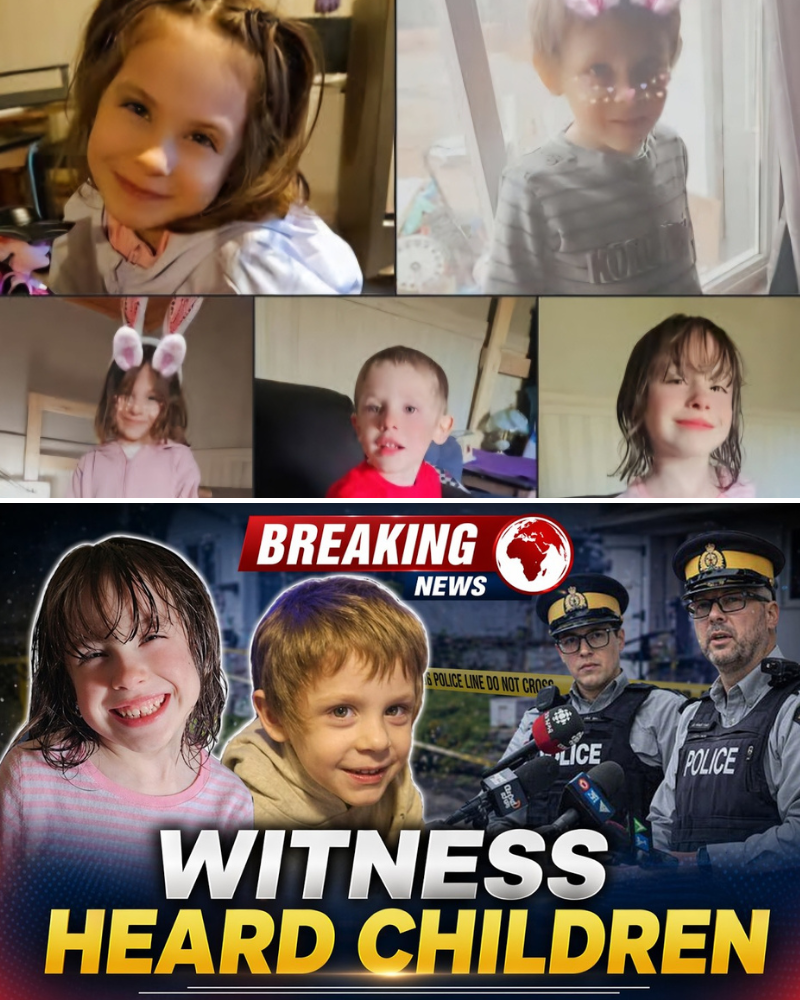
According to the witness account circulating in online discussions and some media reports, she gave authorities detailed information shortly after making the connection. However, she claims that for nearly a year, there was no follow-up action. She has stated that investigators never requested security footage from the motel, nor did they appear to pursue the lead aggressively despite her repeated attempts to provide more details. The claims have fueled public frustration, with questions arising about why such a specific tip involving possible sightings or sounds linked to the missing children was not prioritized.
RCMP officials have not publicly confirmed the details of this particular tip or any motel-related investigation in Idaho. The primary focus of the official probe has remained on the area surrounding the family’s property in Nova Scotia, where searches continue amid challenging terrain and weather conditions. Court documents and public updates have revealed prior allegations of family tensions and abuse in the months leading up to the disappearance, though no charges have been filed against any individuals in direct connection to the children’s vanishing. The stepfather, Daniel Martell, has cooperated with authorities, including passing a polygraph test, according to some reports, while maintaining that the children wandered off unnoticed.
The Sullivan case has drawn significant online attention, with numerous theories and unverified claims circulating on platforms like TikTok and YouTube. Some commentators have pointed to perceived inconsistencies in the initial timeline, including questions about the silent patio door and the speed of the family’s response. A $150,000 reward has been offered by provincial authorities for information leading to the children’s recovery or resolution of the case. Public pressure has mounted for greater transparency, particularly regarding how tips from outside the province are handled.
Investigators have emphasized that the case remains active, with resources dedicated to following credible leads. RCMP spokespeople have noted that while public tips are valuable, they must be verified against available evidence, including forensic reviews and witness statements from the Nova Scotia area. No confirmed sightings of Lilly and Jack have been established outside their home region, and searches have expanded based on limited physical clues, such as a footprint found near the property edge early in the investigation.
The emotional toll on the family and the broader community continues to be evident. Lilly was described as having shoulder-length light brown hair with bangs, often wearing bright clothing like a pink sweater and pants with a distinctive white backpack featuring red strawberries. Jack was wearing a pull-up at the time and had limited verbal communication skills for his age. Their mother and stepfather have made public appeals for information, expressing hope that the children may still be found safe.
As the case approaches its one-year mark, questions persist about resource allocation and the handling of tips that appear to point far from the original location. Legal experts note that in long-term missing children investigations, cross-jurisdictional leads can be complex to pursue, requiring coordination between agencies and verification to avoid diverting focus from stronger evidence. The witness’s frustration highlights broader concerns about how law enforcement prioritizes and documents incoming information in high-profile cases.
For now, the RCMP continues to urge anyone with information to come forward through official channels. The disappearance of Lilly and Jack Sullivan has become one of the most closely watched missing persons cases in Canada, underscoring the challenges of searching vast rural areas and the difficulties in maintaining public trust when leads appear to go unaddressed. Families and advocates stress the importance of methodical investigation while acknowledging the pain of prolonged uncertainty for loved ones still waiting for answers.
The case serves as a reminder of the vulnerabilities faced by young children and the critical role that timely follow-up on tips can play in resolving such mysteries. As new details or verified evidence emerge, authorities are expected to provide updates to keep the search efforts focused and effective.