Cardi B’s Rise Continues to Shape Conversations Around Modern Female Rap
Cardi B’s career trajectory continues to be one of the most discussed success stories in modern hip-hop, with fans and industry observers pointing to both her commercial achievements and cultural impact as reasons her influence remains visible across today’s rap landscape.
Over the years, Cardi transformed from an internet personality and breakout music act into one of the defining commercial forces of her generation. Supporters frequently highlight the speed of her rise and the number of milestones she reached in a relatively short period of time compared with traditional industry timelines.
One of the achievements most often referenced is her breakthrough on the Billboard Hot 100.
With “Bodak Yellow,” Cardi became the first female rapper in the 21st century to reach No. 1 on the chart with a solo song, ending a gap that had lasted nearly two decades. The success established her as more than a viral artist and introduced her as a long-term commercial figure in mainstream music.
Her debut album, Invasion of Privacy, further expanded that momentum.
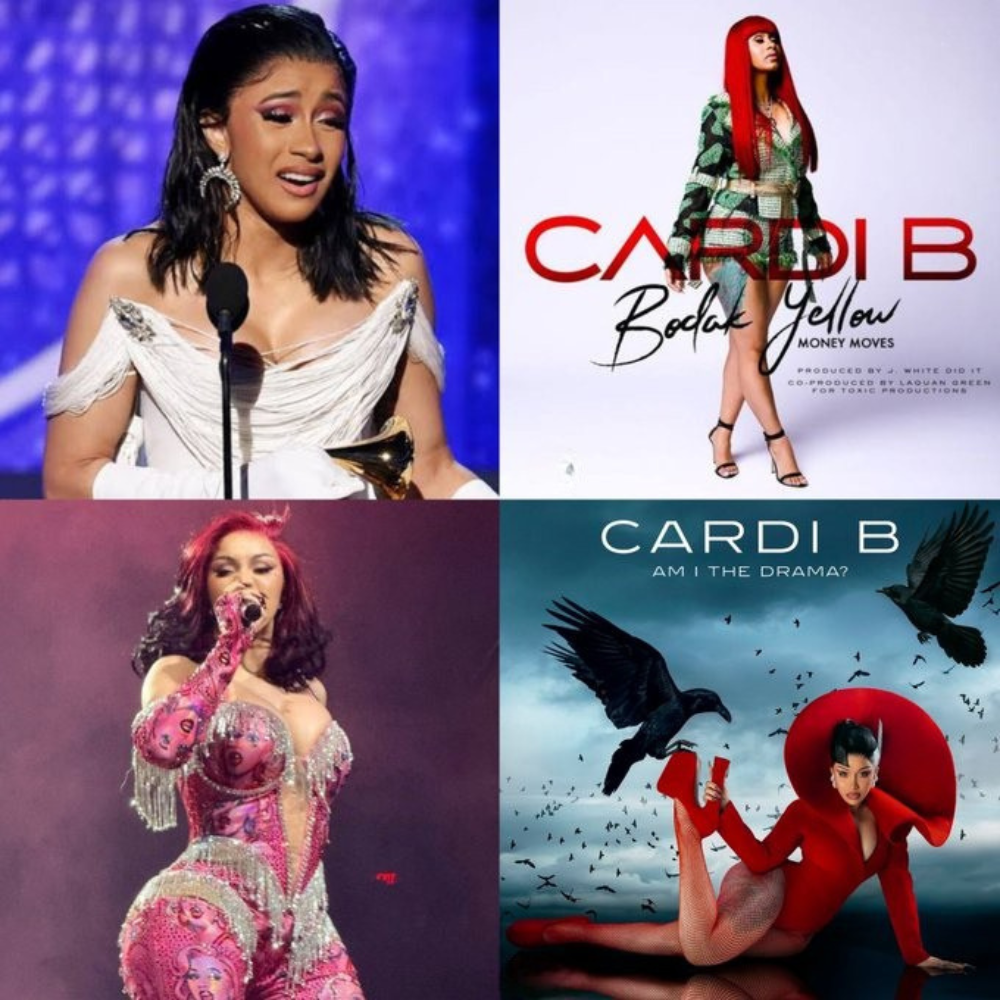
Released in 2018, the project debuted at No. 1 and later earned one of the most historic moments in rap awards history when Cardi became the first solo female artist to win the Grammy Award for Best Rap Album. The victory remains one of the defining milestones for women in the genre.
Years later, Cardi extended her chart record again.
Her second studio album, Am I the Drama?, debuted at No. 1 as well, making her the first female rapper to open her first two studio albums at the top of the Billboard 200. The project reinforced her position as one of the most commercially consistent artists in rap.
Supporters also point to her touring and live-performance business as evidence of growth beyond streaming numbers and singles. Large-scale performances, premium production, and strong fan demand helped expand her reputation as an artist capable of drawing audiences across different markets.
Beyond awards and charts, many fans argue that Cardi’s broader impact may be her most lasting contribution.
Her arrival coincided with a period that saw increasing visibility for women across hip-hop. While no single artist can be credited for an entire movement, supporters often view Cardi as one of the major figures who helped demonstrate that female rappers could dominate commercially, headline major releases, and compete at the highest level of the industry simultaneously.
Observers frequently note that the current rap environment includes more women reaching mainstream attention than in previous eras. Those changes reflect multiple factors—streaming growth, social media, label investment, audience demand, and the success of artists across generations—but Cardi is regularly included in conversations about that shift.
At the same time, discussions about influence remain subjective.
Some fans emphasize her business success and mainstream crossover appeal, while others focus more on artists from earlier generations who helped establish pathways before her. Most observers agree that hip-hop’s growth has been built through multiple eras rather than a single breakthrough moment.
Even so, Cardi’s rise remains difficult to ignore.
From chart records and major awards to shaping discussions around visibility and opportunity in rap, her career continues to occupy a central place in conversations about what success for female rappers looks like in the modern era.
Whether viewed through numbers, cultural impact, or influence on newer audiences, Cardi B’s journey has become one of the defining stories in contemporary hip-hop.