Did Hannah Harper Sing It Better? Her Emotional Cover of “You’re Still The One” Is Dividing Fans
Some songs feel almost impossible to touch.
For decades, “You’re Still The One” has remained one of those rare country crossover hits that fans associate with a specific feeling, a specific voice, and a specific moment in music history. That is exactly why reactions exploded after American Idol winner Hannah Harper shared her own version of the beloved love song as a tribute to her husband.
What was intended as a heartfelt personal performance quickly turned into one of the most debated musical moments among her supporters.
The question spreading across social media became surprisingly direct:
Did Hannah actually sing it better?
The answer depends entirely on who is listening.
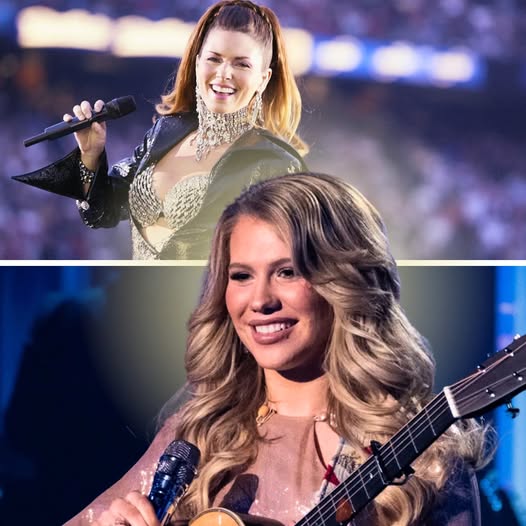
Harper’s performance arrived during one of the busiest and most emotional periods of her young career. Following her rapid rise after American Idol, supporters have watched her move from reality competition stages into increasingly personal and intimate musical moments. Fans say one of the qualities that continues separating her from other emerging artists is her willingness to connect performances to real experiences rather than simply showcasing vocal ability.
That approach appeared again in this cover.
Rather than dramatically reinventing the song, supporters say Harper delivered it with a softer and more intimate tone, allowing the lyrics to feel personal and reflective.
Because the performance was framed as a tribute to her husband, many listeners immediately focused less on technical comparison and more on emotion.
For those supporters, that became the performance’s biggest strength.
Comment sections quickly filled with reactions describing the cover as warm, sincere, and unexpectedly moving. Fans praised the way Harper appeared to prioritize storytelling over vocal showmanship.
Many viewers argued that the emotional context changed the experience.
Instead of hearing a famous song, they felt like they were watching someone express gratitude and love through music.
Supporters repeatedly commented that moments like this remind them why they originally connected with Harper during American Idol.
Her strongest performances often feel personal rather than performed.
But not everyone agreed.
The reaction online quickly evolved into a much larger debate surrounding originals versus reinterpretations.
Many fans defended the original recording passionately and argued that certain songs carry emotional history that cannot be replaced.
Supporters in that group emphasized that “You’re Still The One” became iconic for a reason and that comparing any cover directly against it creates impossible expectations.
Some listeners described the original version as timeless and argued that its emotional identity remains inseparable from the artist who introduced it.
Others took a different position.
Rather than viewing the performance as competition, they argued that covers succeed when they reveal something new.
Supporters in that camp suggested Harper’s version worked because it approached the song from another perspective.
Where the original carries a polished and enduring romantic confidence, some fans felt Harper’s version sounded quieter, more reflective, and rooted in everyday gratitude.
Those listeners argued that emotional interpretation matters as much as vocal identity.
That perspective became one of the strongest themes across reactions.
Interestingly, many viewers landed somewhere in the middle.
Instead of choosing one version over the other, they argued that the performances achieved different things.
One became iconic.
The other became personal.
Fans described the comparison itself as evidence of how powerful the songwriting remains decades later.
If a song continues inspiring new interpretations and emotional discussions, supporters argued that speaks to its lasting impact.
The conversation surrounding Harper’s performance also reflects something broader about her growing career.
Since winning American Idol, supporters have become increasingly interested in moments that reveal who she is away from competition settings.
Performances tied to family, marriage, motherhood, and ordinary life experiences continue generating strong reactions because fans believe those themes fit naturally with her style.
That emotional accessibility has become one of her strongest advantages.
Supporters frequently describe her voice not as overwhelming or theatrical, but as welcoming.
For many listeners, that quality matters.
Industry observers often note that successful covers rarely replace originals.
Instead, they invite audiences to hear familiar emotions through another perspective.
That appears to be exactly what happened here.
The performance created discussion, encouraged comparison, and reminded listeners why the song continues connecting with people.
As clips continue spreading and fans keep debating online, one thing has become increasingly clear.
People are not only talking about whether Hannah Harper sang the song better.
They are talking about whether she made them feel something different.
And based on the reactions so far, that conversation may be the strongest compliment a cover can receive.