The Six Hidden Motives That Could Finally Solve the Lynette Hooker Mystery at Sea.
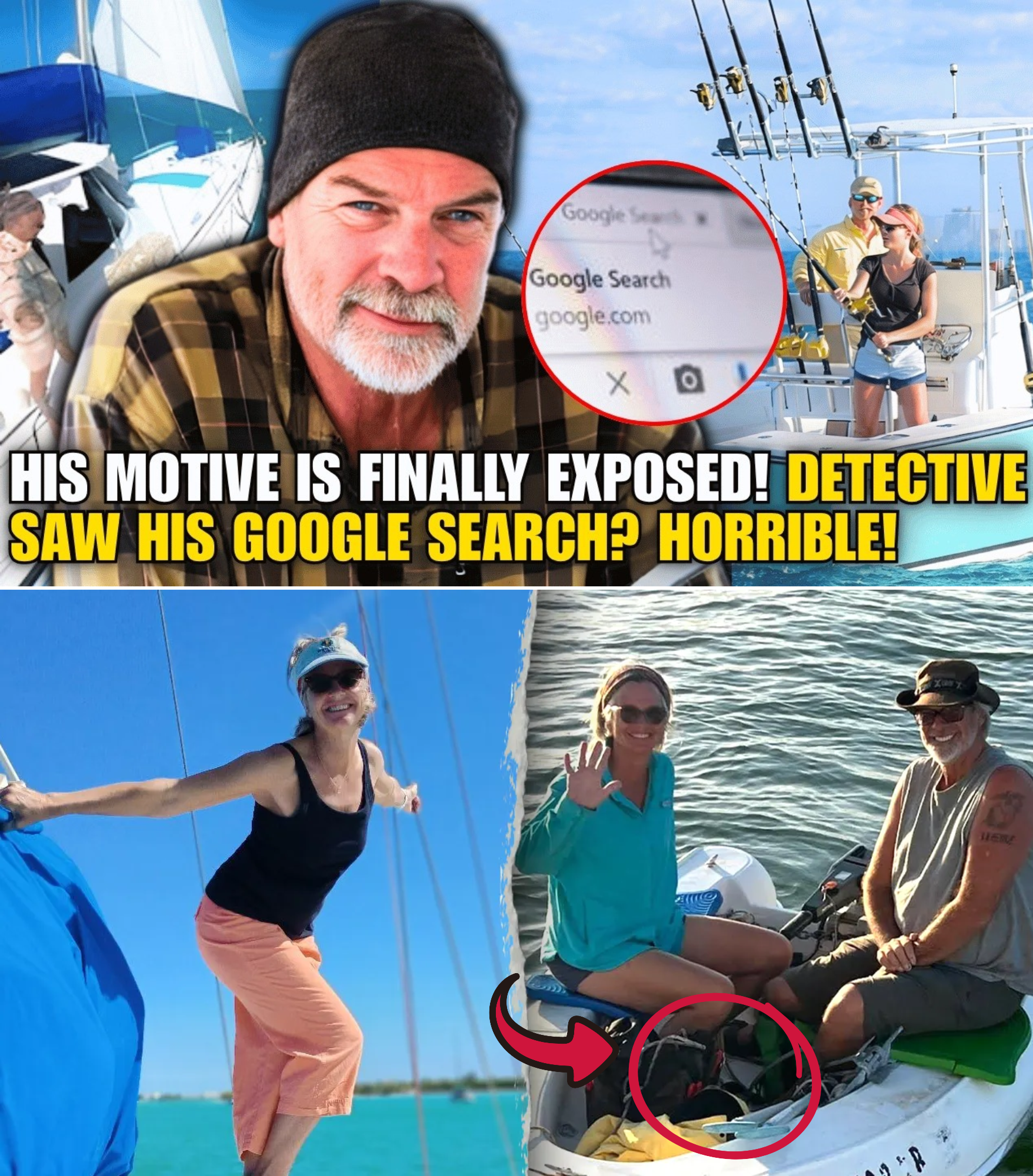
In the turquoise waters of the Bahamas, a 55-year-old woman named Lynette Hooker simply vanished. Her husband, Brian Hooker, claimed she fell overboard from their small dinghy during rough weather while they were sailing on their yacht named “Soulmate.” No body has been recovered. No eyewitnesses. Just one man’s account of a “cascade of failures” that ended in tragedy.
But Lynette’s family refuses to accept the accident narrative. In a powerful national television interview on the podcast “Drop Dead Serious” with investigative journalist Ashleigh Banfield, Lynette’s mother, Darlene Hamlet, laid out six verified motives that paint a far more disturbing picture of what may have happened in March 2026. These insights, drawn from statements by Lynette’s daughter Carly Alessworth and close friend Marne Stevenson, have now been corroborated by multiple major news outlets including CBS News, CNN, and Newsweek.
The case has drawn intense scrutiny because of its eerie similarities to other “lost at sea” mysteries where digital footprints ultimately cracked the investigation wide open. A former FBI agent, Jennifer Coffindaffer, stated that the entire case could hinge on Brian Hooker’s Google search history, text messages, emails, and social media activity — evidence that has proven decisive in similar prosecutions.
Here is what the family revealed:
1. Complete Financial Dependence Lynette had built a successful career at AT&T and accumulated around $600,000 in savings and retirement funds. Brian, by contrast, had no savings, no pension, and no steady income after being fired from the same company. According to her mother, Lynette was the sole provider for their sailing lifestyle — paying for the yacht, provisions, port fees, Brian’s child support, and even his legal bills. Without Lynette, Brian would have been left with virtually nothing.
2. Repeated Attempts to Leave the Marriage Lynette had tried to walk away multiple times. Just 24 days before her disappearance, she purchased a one-way ticket home and called her mother in tears, saying she “couldn’t take it anymore.” In January 2024, she messaged her longtime friend Marne Stevenson that she was ending the 21-year marriage, citing “too much closeness.” She had already quit her career, sold her house, and given away many possessions to pursue the cruising life — only to return both times. Her family believes the pressure of another potential exit created a breaking point.
3. Total Sacrifice of Assets and Identity To commit fully to the off-grid sailing dream, Lynette gave up her stable job, sold her home, and divested herself of nearly everything that could serve as a safety net. Brian contributed nothing financially or materially. Once she left the traditional world behind, she became entirely dependent on the boat — and on him — for survival.
4. Brian’s Preference for an Off-Grid, No-Paper-Trail Lifestyle The couple used Lynette’s mother’s address as their official residence while living nomadically with no fixed address. This lifestyle minimized institutional records of their movements, something investigators note can complicate — or conceal — criminal inquiries.
5. Alleged History of Violence Family members claim that roughly 1.5 years earlier, Brian allegedly choked Lynette aboard the “Soulmate” and threatened to throw her overboard. He reportedly later said he wished he had “finished the job.” These allegations were repeated across interviews by both Lynette’s daughter and mother. A 2015 Michigan police report documented mutual assault accusations with no charges filed, and Brian was acquitted in a separate 2006 child abuse case. The alleged prior threat is especially haunting because it mirrors the exact circumstances of Lynette’s reported disappearance.
6. A Perfect Storm of Desperation When you combine Brian’s total financial and lifestyle dependence on Lynette, her repeated attempts to leave, the alleged history of violence, and the fresh one-way ticket purchase, investigators see a clear proximal motive. Her departure would have stripped him of everything — money, home, identity, and future.
Brian Hooker has denied any wrongdoing. He cooperated with authorities, was released by Bahamian police after nearly a week without charges, and has publicly expressed heartbreak. He was active on Facebook during the search efforts and left the Bahamas shortly after media interviews, citing his mother’s health. The U.S. Coast Guard continues a parallel criminal investigation with no detention deadline.
The absence of a body makes prosecution challenging, yet digital evidence has convicted suspects in comparable cases. Former FBI agent Coffindaffer emphasized that modern investigations routinely examine private searches for signs of planning, disposal methods, or attempts to create alibis.
As the search shifted from rescue to recovery, Lynette’s family continues to demand answers. They insist the “accident” story does not add up — especially given the monotone tone in Brian’s recorded call reporting her missing and his description of events as a series of failures while claiming he never saw her reach for a flotation device.
This case highlights broader issues in maritime disappearances: the difficulty of proving foul play without physical evidence, the power of digital trails in the age of smartphones, and the hidden dangers that can exist even in seemingly idyllic “soulmate” relationships.
Lynette Hooker left behind a daughter and a mother who refuse to let her story fade into the ocean. Whether Brian’s Google searches ultimately reveal innocence or guilt may decide the outcome. For now, the turquoise waters of the Bahamas hold their silence — but the family’s voices grow louder with every interview.