The Groom’s “Final Inspection”: Why I Halted My Wedding Moments Before the Altar.
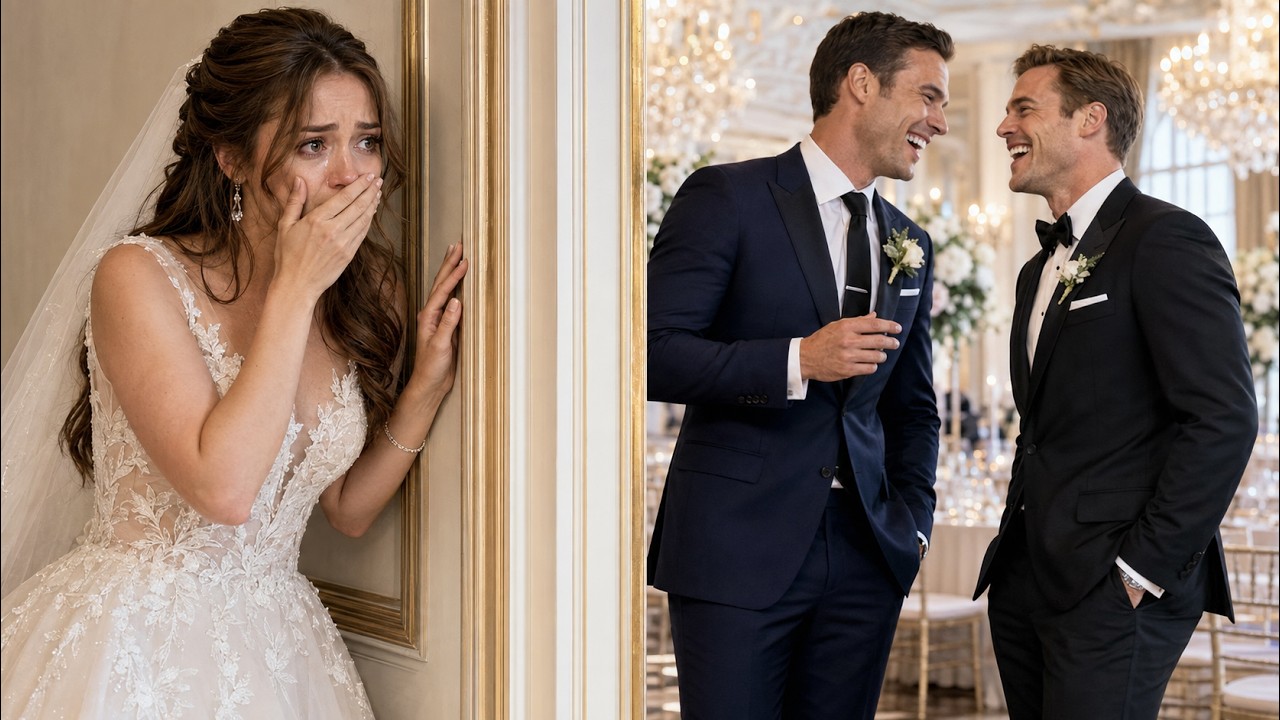
The morning of my wedding, the air smelled of forced jasmine, roasted coffee beans, and the faint, chemical bite of hot-glued floral arrangements. I should have been nervous about the seating charts, or whether my father would step on my dress during our dance, or if the string quartet would actually remember to play the specific arrangement of Bach I had spent three weeks coordinating.
Instead, I was standing in the quiet, carpeted corridor of the hotel, holding a heavy, cream-colored cardstock bearing Dorian’s handwritten vows.
A hotel attendant had accidentally delivered both of our vow packets to the bridal suite earlier that morning, and I had offered to drop his off in the sunroom upstairs while the stylists were still pinning my veil. The mistake had seemed harmless—a domestic little errand, the sort of mundane coordination I had handled for the four years of our relationship.
I was seven minutes away from walking down the aisle when I reached the half-opened double doors of the sunroom.
“If Cory looks that good under the dress, marriage might be the cheapest gym membership a man can buy,” Camden’s voice carried through the gap.
My hand froze an inch from the polished brass handle.
Inside the sunroom, several men laughed. The sound was bright, casual, and entirely devoid of the reverence people usually reserved for the morning of a wedding.
“Give it six months,” another groomsman chimed in, his voice muffled by the clinking of ice in crystal. “The ring goes on, the discipline comes off. You’re locking down a trophy, man, but you’ve got to keep the maintenance up. Otherwise, the model starts to look a little soft around the edges.”
The laughter grew louder, punctuated by the brittle pop of a champagne cork striking the ceiling and the sharp ringing of glasses touching.
I did not move. My feet felt as though they had been glued to the commercial-grade hotel carpet. The corridor overlooked Lake Michigan through an enormous wall of plate glass; afternoon sunlight flashed off the white caps of the water, turning the brass wall fixtures into blinding points of light. Behind me, down the hall, the wedding coordinator was gently arranging the bridesmaids for the processional. Ahead of me, the man I had trusted with my future was presiding over a locker-room seminar about my physical depreciation.
I had come to return his vows. I stayed because of a single, careless phrase that dropped the temperature in the hallway by twenty degrees.
“Does the dress hide the scar?” Camden asked.
The men quieted. The sudden drop in ambient noise felt heavier than their laughter.
Only Dorian knew about the thin, pale scar across my lower abdomen. When I was nineteen, an emergency medical crisis had left it there—a jagged, unwelcome souvenir that took years for me to look at in the mirror without flinching. I had shown it to Dorian two years into our relationship. We had been sitting on the floor of my apartment after turning off every lamp except the small brass reading light beside the bed. He had traced the pale line with a single, slow finger, whispering that it changed nothing, that my body was entirely safe with him.
Inside the sunroom, Dorian laughed. It was a relaxed, confident sound—the sound of a man who believed he owned the narrative.
“Mostly,” Dorian answered, his tone dripping with proprietary amusement. “The tailoring does impressive work. But the birthmark near her hip… well, that’s another story.”
Something cold and heavy expanded rapidly through my chest, cutting off my breath.
Camden whistled low. “You saw the fitting picture, then?”
“The whole group saw it,” Dorian replied smoothly.
“That photograph,” Camden laughed, “deserved a wider audience.”
The Screenshot
I looked down at the thick vow card in my hand. My fingers had begun to shake, making the heavy paper whisper against the platinum band of my engagement ring.
The photograph they were discussing had been taken three weeks earlier during my final exterior fitting. The outer lace shell of the gown had not yet been fully attached, and the seamstress had folded one side of the inner waist panel down to adjust the structural boning. My fitted undergarments covered me completely, but the pale abdominal scar and the curved edge of my birthmark remained partially visible.
I had sent that photograph to Dorian because he was away on a business trip, begging for a private preview. He had called it torture not being able to see me in the dress. He had promised, with all the theatrical solemnity he could muster, that he would delete it immediately after opening it.
I stepped one inch closer to the sunroom opening without touching the door. Through the narrow gap of the hinge, I could see Camden’s polished leather shoes resting on an ottoman, and the corner of a low table covered in empty champagne bottles.
“What was the final bet?” someone asked from the back of the room.
Dorian answered with the relaxed authority I had once mistaken for steady kindness. “Three months before she starts dressing like a tired wife who gave up on the morning run. Six months before she complains that pregnancy ruined her core strength. More laughter followed.”
“You planning to get her pregnant that fast?” Camden asked.
“Not immediately,” Dorian said. “Cory likes plans. She’ll follow the right one if you give her the structure. She gets anxious when her routine slips. I keep her motivated.”
I pressed Dorian’s handwritten vows against my ribs.
For four years, Dorian had managed my life with the soft, insidious touch of concern. He had gently suggested a different dress style because the one I liked “made my waist look short.” He had quietly removed bread from our restaurant orders because I had once mentioned feeling sluggish after lunch. He had praised me when I swam laps before dawn, and asked whether I was “giving up on our shared goals” when I slept in on a rainy Saturday.
I had called it support. I had called it love.
“And tonight?” Camden asked, his voice dropping into a conspiratorial lower register. “You going to report back to the group?”
Dorian laughed again—a short, dry sound. “Some details remain private, Camden. That principal arrived late.”
The men found that especially funny.
I felt a sudden, fierce heat rise beneath the high collar of my silk getting-ready robe. My first primitive impulse was to kick the door open, rip the phone from Dorian’s hand, and scream until my throat tore. My second, more dangerous impulse was to turn around, take off the dress, walk out the service exit, and disappear from his life without a single word of explanation.
I followed neither. Instead, I stepped backward into the dim alcove beside the commercial ice machine, unlocked my phone, and opened our message history.
There it was. The fitting photograph sat in the chat box, glowing against the dark screen. Beneath it was Dorian’s reply from three weeks ago: Only for me, I swear. Deleting it now so nobody else ever sees what’s mine.
I took continuous screenshots of the entire chat thread—every smug comment, every forwarded image, every timestamp. Then I opened my contacts and forwarded the entire archive to my older sister, Anuk.
Come to the second-floor service corridor immediately, I typed. Bring my leather purse and the original marriage license folder. Do not tell Dorian.
Anuk’s reply blinked onto the screen two minutes later: I am in the lobby elevator. Moving now.
Inside the sunroom, Camden offered another toast, congratulating Dorian on “locking down the best body in the college friend group.”
Dorian’s voice floated out, smooth and immovable. “Cory will never leave anyway. She needs everything to look right. Her family is downstairs in the holding room. The photography packages are paid for, the caterers are locked in, and 186 people are sitting out on that terrace waiting for the show.”
I had personally checked the seating chart six times; there were 186 guests, not 200. But his factual error didn’t matter. His meaning was absolute. Dorian believed the witnesses downstairs belonged to him. He was convinced that the flowers, the food, the relatives, and the cameras formed an unbreakable cage of social pressure. He thought public humiliation was a leash that would force me to swallow my own dignity and smile for the cameras.
I turned around and walked away. The heel of one satin slipper caught briefly in the hotel’s heavy commercial carpet, but I steadied myself against the wallpaper and kept moving. My breath was coming too quickly, but inside my skull, my thoughts had suddenly become razor-sharp and completely clear.
The Strategy
Anuk found me near the service staircase behind the ballroom. Her dark green silk bridesmaid dress swished around her ankles as she hurried down the corridor, her face tense with alarm.
“What happened?” she asked, grabbing my hands. “Your message sounded like a hostage note.”
Without a word, I unlocked my phone and pressed it into her palms. “Read the screenshots first. Then listen to the audio coming from the sunroom if you want a matching soundtrack.”
Anuk scanned the screen. Her eyes widened, tracking the lines of text, and then the color drained entirely from her face. Her jaw clamped shut so hard a muscle twitched in her cheek. “He shared this? Camden described your scar and your birthmark, and Dorian admitted the group saw it?”
“Every single one of them,” I said, my voice dangerously steady.
Anuk spun around, her fist balling up as she turned toward the sunroom corridor. “I am going to kill him. I am going to rip his throat out with my bare hands right now—”
I caught her wrist, yanking her back with a strength I didn’t know I possessed. “No. Do not confront them. Not yet. I need the marriage license.”
Anuk searched my eyes, her initial rage momentarily stalled by my calmness. “Are you canceling?”
“I am refusing,” I corrected her. “There is a massive difference.”
Anuk reached into her leather tote bag and handed me the heavy manila folder containing our state-issued marriage license and my personal purse. Without being asked, she also pulled my passport, checkbook, and apartment keys from the bottom of the bag and transferred them into my hands.
“I’ve got your car keys and your backup wallet,” Anuk whispered, her voice dropping into a fierce, protective rhythm. “What do you need me to do?”
“Unlock my phone,” I instructed. “Change the passcode to my birthday—Dorian knows the old one by heart. Strip him of administrative access to the shared wedding photo cloud, and back up every single chat export to my encrypted drive.”
While Anuk worked furiously on her phone, I walked down the hall and located Tessa Harrow, our lead wedding coordinator. Tessa was standing near the grand ballroom entrance, a wireless headset pressed to her ear as she directed a pair of ushers.
Her professional smile faltered when she saw my face. “Cory? Darling, you should be in the bridal suite! The string quartet is finishing the prelude—”
“Tessa,” I interrupted, my tone cutting through her frantic timeline. “I need to delay the processional.”
Tessa blinked, her eyes dropping to my ivory dress and then back to my eyes. “Is someone ill? Is it a dress emergency? We have safety pins—”
“No one is ill. The wedding is canceled.”
The coordinator stared at me as though I had spoken in an ancient, dead language. “Canceled? As in… the reception? The dinner?”
“As in the legal ceremony will not take place,” I said calmly. “I want you to keep the musicians playing out on the terrace. Let the guests take their seats. Let the families sit down. I need fifteen minutes to speak with the officiant and my parents in private.”
Tessa’s professional training kicked in instantly, overriding her shock. She pressed the button on her headset, cutting off her communications with the sound technician. “Do you need hotel security stationed at your dressing room door, Cory?”
“Not yet,” I said. “Just keep someone near the aisle exit so my fiancé doesn’t wander back looking for me.”
Tessa nodded once, her expression hardening into absolute solidarity. Without asking a single intrusive question, she tapped her radio and began shifting an entire multi-thousand-dollar timeline around a broken promise.
The Holding Room
I found my parents sitting in the private VIP holding room adjacent to the grand ballroom. My mother, Lita, was nervously adjusting the pearl clasp on her evening handbag, while my father, Ronin, practiced standing up from a velvet armchair without wrinkling the front of his tailored suit.
They both looked up and smiled when the door clicked open.
That almost broke me. The sight of their proud, expectant faces—parents who genuinely believed their daughter was about to be safely handed over to a good man—sent a hot, jagged ache straight through my ribs.
“Oh, look at you,” my mother breathed, stepping forward with her hands clasped. “You look like a queen, Cory. Is it time? Are they lining everyone up?”
“The wedding isn’t happening,” I said.
My mother’s fingers froze halfway across her pearl clasp. My father rose slowly from his chair, his tall frame straightening as he instantly read the raw devastation and ice hidden beneath my calm exterior.
“Did Dorian hurt you?” Ronin asked, his voice dropping an octave into a low, dangerous rumble that belonged to a man ready for violence.
“He didn’t lay a hand on me,” I replied, walking over to the coffee table and setting my phone down display-up. “He shared my private fitting photographs with his college friend group chat. He let his friends mock my body, catalog my surgical scar, and place bets on how long it would take for me to become a tired, compliant wife who can’t complain about domestic control.”
My mother stared at the screen as though the glowing pixels were venomous insects. She looked up, her face pale. “Are you… are you certain Dorian sent them? Boys can be foolish, they forward things by accident—”
“I have the screenshots, Mother,” I said, my voice slicing through her desperate attempt at rationalization. “He didn’t forward it by accident. He wrote the caption. He gave them a guided tour of my anatomy.”
My father looked toward the heavy oak door, his jaw set like granite. “I am going out there right now.”
“No,” I said, stepping directly into his path. “You are not going to drag him out by the collar in the hallway. I am going to ask him one question—in front of every single person he expected to trap me in front of.”
Lita reached out and grabbed my wrist, tears pooling in her eyes. “Cory, please. You don’t owe 180 snobby acquaintances an explanation. Let’s just pack your bags, slip out the back service elevator, and let your attorney handle the rest. Don’t subject yourself to a public circus.”
“I am not creating a circus, Mother,” I replied softly, pulling my wrist free with infinite gentleness. “I am turning on the lights.”
The door opened, and the elderly officiant stepped into the room, holding his prayer book. “Ah, bride-to-be! The terrace is fully seated. Are we ready to begin our walk into holy matrimony?”
“We are not,” I told him, holding out my hand. “I am officially withdrawing my consent to this marriage. Here is the license back.”
The officiant looked from my face to the unblemished state document in my palm. He didn’t argue, didn’t lecture, and didn’t quote scripture. He simply bowed his head, took the folder, and quietly excused himself from the room.
Outside the heavy double doors, the string quartet struck up the opening bars of the bridal march.
I reached up and unhooked the long, delicate silk robe I had worn over my wedding dress, letting it drop to the floor. Beneath it, my gown was breathtaking: ivory silk crepe, fitted snugly through the waist, cascading down into a long train covered in narrow, hand-embroidered leaves of lace. For months, Dorian had praised this specific dress every time we visited the boutique, whispering that it made my waist look impossibly small and showcased my figure to absolute perfection.
Now, the heavy fabric felt less like a garment and more like an institutional uniform—a costume designed to certify my compliance.
Anuk stepped up behind me, smoothing the heavy lace train. “You can still walk out through the kitchen, Cory. The chef has a private exit that leads straight to the underground parking garage. Nobody would blame you.”
“And what story would he tell them?” I asked, looking at my reflection in the gilded wall mirror. “He’d tell them I had a last-minute panic attack. He’d paint me as unstable, emotional, and fragile.”
“Does their belief matter?” Anuk asked gently.
“Not after today,” I said, turning to face my family. “Today, I want him to answer me once—without his private audience to protect him.”
My father stepped forward, offering his arm with a dignity that made my throat tighten. “Then let’s go out there, daughter. We will walk down that aisle together.”
The Grand Entrance
The heavy ballroom doors swung inward, opening onto the sun-drenched, lakefront stone terrace.
White folding chairs were arranged in neat rows facing a massive floral archway framed against the deep blue expanse of Lake Michigan. One hundred and eighty-six guests turned in unison as I appeared in the doorway. A collective murmur of admiration rippled through the crowd—the standard, Pavlovian reaction to a glowing bride in expensive lace.
Dorian stood at the front of the terrace beside the flower-covered podium, waiting in a custom midnight-blue tuxedo. His expression was a masterpiece of practiced, romantic devotion; his eyes softened with what looked like overwhelming adoration as I came into view. Standing one step behind him as best man was Camden, whose smug, self-satisfied grin faltered the second he caught sight of my face.
I didn’t smile. I didn’t lower my eyes demurely. I kept my chin high, my shoulders back, and my stride measured and even.
I walked halfway down the stone aisle—past my college roommates, past my aunts and uncles, past Dorian’s wealthy, status-obsessed parents—and then I stopped dead in my tracks.
The string quartet continued playing for several confused measures before the cellist noticed my posture and abruptly stopped bow.
I raised my right hand, and Tessa immediately signaled the sound technician to cut the remaining background music. A sudden, heavy silence fell over the terrace, broken only by the steady rush of wind off the lake and the distant, mournful wail of a boat horn out on the water.
Dorian stepped forward from the altar, his smile flickering with the first genuine trace of confusion. “Cory? Darling, what’s wrong? Did you drop a hairpin?”
His concern might have convinced me an hour ago. Now, I heard the hollow, mechanical performance vibrating underneath every syllable.
I reached into the small, hidden pocket sewn into the hip of my dress, pulled out a wireless handheld microphone Tessa had discreetly slipped me earlier, and brought it to my lips.
“Dorian,” I said. The amplification made my voice bounce cleanly off the glass facade of the hotel. “Did you send my private fitting photograph to your college group chat?”
Dorian stopped walking instantly. The color vanished from his cheeks, leaving him looking like a carved piece of chalk. The terrace became so deathly quiet you could hear the silk of my dress rustling in the lake breeze. Camden stared fixedly at the stone tiles between his polished shoes.
“Cory… this is not the place,” Dorian warned, his voice dropping into a harsh, controlled hiss, his eyes darting frantically toward the seated crowd.
I kept the microphone steady against my mouth. “That is not an answer, Dorian.”
Dorian’s mother rose sharply from the front row, her face twisting in outrage. “Cory! What kind of tasteless joke is this? Put down that microphone right now!”
Dorian glanced toward his mother, then back at me, desperately trying to salvage his public composure. “It was just one picture,” he muttered defensively, his voice rising to address the crowd. “Everyone in that chat is a close friend, they’re all married or engaged. It was harmless humor!”
A low, collective shock wave rippled through the rows of white chairs. Heads whipped back and forth between us.
My hand trembled around the plastic body of the microphone, but my voice remained like steel. “Harmless? Did you let them discuss my surgical scar, my birthmark, and what you expected to do with my body after tonight?”
Dorian’s face darkened, the mask of the loving fiancé shattering completely to reveal the angry, entitled stranger underneath. “They were joking! Men say stupid things before weddings to blow off steam! Don’t turn this into a public interrogation over locker-room talk!”
Camden suddenly stepped forward, raising his hands. “Hey, come on, nobody meant—”
Anuk didn’t wait for him to finish. She pushed past the first row of chairs, stepping squarely between Camden and me like a soldier taking a hill. “You described a medical scar under her dress, Camden. You scored her body like a piece of meat.”
Several guests turned in horror toward the groomsmen. One older man near the back row—a distant uncle of Dorian’s—slowly removed his reading glasses, placed them deliberately on an empty chair, and folded his arms.
Dorian took two fast strides down the aisle, reaching out a hand. “Cory, hand me the microphone. Stop this right now. We can fix this privately in the suite—”
I looked at the man I had planned to spend the rest of my life with. He didn’t look ashamed of violating my privacy. He didn’t look remorseful for turning our intimacy into a digital circus. He looked incandescently furious that I had dared to change the audience and rewrite his script.
I reached up with my left hand, caught the heavy platinum engagement ring with my teeth, pulled it off my finger, and held it out.
“A man who needs an audience to validate my body will never have access to it again,” I said clearly into the microphone.
I dropped the ring onto the empty chair beside the uncle’s glasses. It hit the wood with a sharp, definitive clink.
“There is no wedding.”
Dorian lunged forward, grabbing wildly for my elbow. “Cory, you are making a massive mistake—”
Before his fingers could graze my sleeve, my father stepped across the aisle with the terrifying speed of an apex predator, his hand clamping onto Dorian’s wrist and wrenching him backward. Simultaneously, two burly hotel security guards materialized from the terrace entrance, stepping neatly between Dorian and me.
“Do not touch my daughter,” my father whispered, his voice vibrating with suppressed fury.
I pulled my arm free, turned my back on the altar, and began walking back down the stone aisle. Anuk fell into step beside me, her head held high.
Nobody applauded. There were no cheers of triumph. I was profoundly grateful for that. This wasn’t a movie, and it wasn’t a victory parade yet; it was simply an exit. But as my heels clicked steadily against the stone, walking away from the flowers, the altar, and the man who thought he owned me, I realized something staggering:
For the first time in four years, I was completely, beautifully alone—and I had never felt safer.
The Aftermath
The silence inside the private bridal suite felt thick and heavy, like wool soaked in water.
Anuk helped me peel out of the heavy ivory wedding gown, hanging it gently back inside its white garment bag while my mother paced back and forth across the carpet, her pearl handbag still clutched defensively against her ribs like a shield.
“His parents are demanding to speak with us in the lobby lounge,” Lita said, her voice shaking with residual shock. “They say the men were just drinking, that Dorian has always been prone to exaggerating around Camden…”
“They can speak to my attorney if they have legal questions about the catering deposits,” I said calmly, pulling on a pair of loose black trousers and an oversized cashmere sweater that hung past my hips, swallowing every natural contour of my body.
Anuk zipped the garment bag with a sharp, final zip. “And what about the lease on the apartment? You and Dorian share a two-year contract.”
“We’ll break it,” I said, sitting down at the white vanity table and pulling the jeweled bobby pins from my hair one by one. “Or he can buy me out. I’m not spending another night under a roof where my private life is open-source material for a group chat.”
Two days later, accompanied by the building manager and two massive suitcases, I returned to the apartment I had shared with Dorian to pack my belongings.
Dorian was sitting on the living room sofa when we unlocked the door. The framed engagement photographs were still lined up along the floating shelves, but he had systematically turned every single frame face down against the wood.
“You brought supervision,” he noted bitterly, standing up.
“I brought witnesses,” I replied, not breaking stride as I walked past him toward the bedroom. “Apparently, you only respect boundaries when other people are watching.”
While Anuk and the building manager began boxing my books, clothes, and sentimental items, Dorian followed me into the master bedroom, hovering awkwardly by the doorframe.
“I never meant for you to see those messages, Cory,” he muttered, his voice dropping into a defensive whine. “Camden shouldn’t have shown you—”
“Camden didn’t hack my phone, Dorian you sent the photograph,” I said, folding my winter coats into a duffel bag without looking up. “You wrote the captions. You invited them in.”
“It was a joke! A stupid, locker-room joke that got out of hand!” he shouted, his anger finally flaring through the cracks of his rehearsed contrition. “You’re throwing away four years over one text thread? You’re being hysterical!”
I stopped folding. I stood up slowly, turned around, and walked out to the master bathroom. I reached under the sink cabinet, pulled out a sleek digital scale Dorian had bought for me the previous winter after I skipped a week of swimming, and carried it out into the living room, setting it firmly on the coffee table right in front of him.
“This belongs to you,” I said evenly.
Dorian stared at the scale, confused. “What is that for? That’s yours.”
“You bought it for me to track my morning metrics under the guise of ‘shared health goals,'” I said. “You recorded the numbers in a shared notes app. I stood on it every Tuesday. But we weren’t partners, Dorian. You were inspecting livestock.”
His face twisted in genuine confusion and panic. “I was trying to help you stay healthy! I loved you!”
“No,” I said, picking up my suitcase. “You loved having a project that made you look good on paper.”
The Truth Unfolds
The full magnitude of what Dorian had been doing didn’t arrive all at once; it bled out slowly over the following weeks, delivered in digital installments.
The morning after I cleared my things from the apartment, my phone buzzed with an anonymous notification that turned into a direct message from Ephraim Cole—one of the groomsmen who had stood near the end of the altar line and removed his reading glasses.
Cory, his message began. You deserve to know the truth. This wasn’t just one stray conversation. I should have stopped it months ago, and I am sick to my stomach about what I let happen.
Attached to his message were eight full screen exports from the group chat, which was chillingly titled: The Last Free Men.
I sat at Anuk’s kitchen table and read through them with a cold, detached numbness.
Three weeks before the wedding, Dorian had sent my fitting photograph with the caption: Final inspection passed. Zero defects.
Camden had immediately replied by digital enlargement, zooming in on the lower edge of my abdomen and placing a digital red arrow pointing directly at my surgical scar, asking if it came with a warranty. Another groomsman had posted a numerical rating out of ten.
Dorian hadn’t defended me. He hadn’t told them to back off. Instead, he had responded with a laughing-tears emoji and added, She gets defensive if you mention the scar, but the tailoring hides it well enough for public consumption.
Scrolling further up the chat history—dating back nearly eleven months—revealed an entire catalog of casual cruelty. Whenever I ordered dessert during our anniversary dinners, Dorian would photograph the plate and post it to the group with captions mocking my “lack of discipline.” Whenever I skipped a morning swim, he logged my absence like an employer marking an unexcused tardiness.
I set the phone down on the wooden table. The room smelled faintly of burnt toast and coffee from Anuk’s breakfast. Through the thin apartment wall, a neighbor’s child was practicing piano scales—repetitive, halting notes that kept missing the correct cadence before starting over.
My phone buzzed again. It was Ephraim. There are more screenshots. The chat has been active for three years. If you want the full export for your attorney, I’ll send it.
Send it, I replied.
Reclaiming the Water
By September, I had moved into a small, modest apartment near the high school where I worked as a librarian. The floors were slightly uneven, the kitchen was narrow enough that I could touch both walls at once, and the front windows faced a boring brick alleyway. I chose it because the lease bore only one name: mine.
Yet, despite my physical relocation, the psychological architecture Dorian had built inside my head remained stubbornly intact.
I found myself wearing high-necked cardigans even during the stifling September heatwaves. I avoided the full-length mirror in the faculty lounge. When a colleague genuinely complimented my new blouse, my immediate, panicked internal reaction was to wonder what hidden flaw she was mocking behind her smile.
Anuk finally staged an intervention, dragging me by the elbow to a trauma therapist named Dr. Samira Vance.
During our third session, Dr. Vance asked a question that stopped me dead in my tracks. “Cory, when you look at those screenshots of what Dorian and his friends wrote about your body, what do you feel?”
“Anger,” I answered immediately. “Disgust. They’re vile.”
“And when you look at your body in the mirror today, what do you feel?”
I fell silent. The truth was heavier and more shameful to admit. “I feel watched,” I whispered. “Even when I’m alone in my apartment with the locks thrown. I feel like there’s an invisible audience grading my posture, measuring my waist, waiting for me to fail.”
“And swimming?” Dr. Vance asked softly. “Have you returned to the pool?”
I shook my head, my throat tightening. Before I met Dorian, swimming had been my sanctuary. I had loved the heavy, total silence beneath the water’s surface, the clean, rhythmic mechanics of breath, pull, and kick. But Dorian had slowly weaponized the pool, turning it into an audit. He tracked my lap times, questioned my caloric intake after workouts, and turned every session into an assessment of my physical compliance.
I had stopped swimming six months before the wedding.
“What would swimming look like if Dorian’s stopwatch didn’t exist?” Dr. Vance asked.
I didn’t have an answer. But for the first time in months, the question itself felt like an open window.
The First Lap
The following Saturday morning, I drove my old sedan to the municipal community aquatic center. I didn’t go inside. I simply parked in the farthest corner of the gravel lot and sat behind the steering wheel for twenty-three minutes, watching families carry colorful kickboards and rolled-up towels through the double glass doors.
Finally, I killed the engine, got out, and walked inside.
The indoor natatorium smelled exactly as it always had: a sharp, heavy cocktail of industrial chlorine, wet concrete, and damp rubber. I changed inside a private locker room stall, trading my street clothes for a plain, unflashy black one-piece swimsuit, and wrapped a thick towel tightly around my waist like armor.
At the edge of the shallow end, a coach with silver-streaked hair and a whistle around her neck checked clipboards.
“First time with our Saturday open session?” she asked, looking up.
“It’s been a while,” I admitted.
“I’m Marabel,” she said, sizing me up with sharp, kind eyes. “We run three lanes this morning: Fast, Steady, and Returning. Pick the lane that tells the truth about where your body is today—not where your ego wishes it was.”
I chose the Returning lane.
I walked to the edge of the tile, dropped my towel onto the bench, and lowered myself into the water without looking at anyone else. The initial, shocking chill of the chlorinated water hit my skin, stealing my breath for a split second. Then, my feet lifted off the concrete floor, and I pushed off.
The water closed over my ears, instantly drowning out the echoes of the natatorium.
Reach. Pull. Breathe.
My shoulders burned almost immediately. My form was sloppy, my breathing ragged. By the end of the first lap, my lungs were screaming for air, and my old internal critic—the voice that sounded suspiciously like Dorian—whispered that I was out of shape, slow, and pathetic.
Stop, I told the voice. I am just swimming.
I reached the wall, gripped the blue plastic lane marker, and dragged in a deep, shuddering gulp of air.
Marabel crouched down on the tile above me, resting her forearms on her knees. “Not bad for day one. How does the shoulder feel?”
“Tight,” I panted, wiping water from my forehead.
“Then stretch it out before lap two,” she said simply, walking away to check on another swimmer.
She didn’t time me. She didn’t grade my form. She didn’t ask what my target metrics were.
I completed six continuous laps that morning. My muscles ached with a deep, clean exhaustion that had nothing to do with punishment and everything to do with effort. When I climbed out of the pool and wrapped my towel around my shoulders, I realized I hadn’t thought about my surgical scar once during the entire twenty minutes.
The Open Water Challenge
By November, my Saturday sessions had expanded from six laps to forty. The pool had stopped being an audit room and had genuinely become a sanctuary again.
One Saturday after practice, Marabel handed me a glossy colored brochure while I was drying my hair in the locker room. It was an information packet for the annual Lake Michigan Women’s Open Water Challenge—a grueling, two-mile supported swim held every July off the Chicago shoreline.
“It’s not a race,” Marabel explained, noticing my hesitation. “It’s a personal test. You swim with a safety kayaker escorting you the entire distance. Strict safety protocols, mandatory wetsuits, zero podium pressure. Finishing is optional. Training honestly is not.”
I stared at the brochure. Two years earlier, Dorian had looked at an advertisement for this exact event while we were eating brunch, laughed, and dismissed it as “an expensive, freezing-cold vanity project for women who don’t know when to quit.” I had quietly folded the brochure away and thrown it into the recycling bin to keep the peace.
This time, I didn’t throw it away. I slid it into the front pocket of my backpack and wrote my name on the registration form that very night.
Training for an open-water swim in the dead of a Chicago winter is an exercise in psychological resilience. It meant moving from the predictable, heated indoor pool to bone-chilling cold-water acclimatization clinics, practicing sighting techniques in choppy water, and learning how to swim surrounded by dozens of other thrashing bodies without triggering a panic attack.
In January, my left shoulder flared up with sharp, stabbing tendonitis.
My old, conditioned instinct was to pop a couple of anti-inflammatory pills, ignore the pain, and double my workout volume to prove I wasn’t weak. Dorian had spent four years teaching me that stopping was a moral failure.
Instead, I walked onto the pool deck, handed Marabel my training log, and said, “My shoulder is failing. I need to drop down to kickboard drills for two weeks.”
Marabel didn’t sigh or look disappointed. She smiled, patted my arm, and sent me straight to a recommended physical therapist. “Discipline isn’t about destroying your body to prove a point, Cory. True discipline is knowing when to listen so you can keep going tomorrow.”
The Reckoning at the Pool
In March, just as the ice along the lakefront was beginning to break into dark, floating slabs, Dorian tried to reclaim a piece of my life.
I was drying my hair outside the aquatic center when I saw him standing beyond the glass double doors. He was wearing the tailored wool overcoat I had bought him for Christmas during our second year together, his hands shoved deep into his pockets.
I stopped. My heart gave a brief, angry lurch, but the paralyzing dread I once would have felt was gone, replaced by a cold, clinical curiosity.
I stepped outside into the chilly spring air, leaving my phone safely tucked inside my gym bag with Anuk on speed dial.
“You have five minutes, Dorian,” I said, stopping six feet away from him.
He looked tired. The crisp, arrogant posture that had defined him on our wedding day was replaced by a slouch, his eyes shadowed with the weight of social ostracization, broken lease penalties, and the slow unraveling of his professional network. Ephraim and several other groomsmen had quietly cut ties with him after the group chat scandal broke, and his firm had quietly suggested he take an extended, indefinite leave of absence.
“You’re swimming again,” he said softly, gesturing toward the building.
“I never stopped,” I replied.
“I went to counseling, Cory,” he said, his voice dropping into a pleading cadence. “I went for eight months. I left the group chat. I fired Camden as a client. I finally understand… I understand how toxic male approval and peer pressure distorted my behavior.”
I listened to him speak, watching the familiar cadence of his hands, the practiced sorrow in his voice. A year ago, those exact words delivered with that exact tone would have melted my resolve, making me feel guilty for holding onto my anger.
“Dorian,” I interrupted quietly. “When your friends were laughing at my body in that chat… what part of you actually wanted them to stop?”
Dorian opened his mouth to give his rehearsed, therapeutic answer. Then he stopped.
The silence stretched between us, thick and heavy, punctuated only by the roar of city traffic on the wet street behind us. He looked down at the concrete, his shoulders slumping.
“I was performing for them,” he finally whispered, the mask cracking entirely. “I liked the feeling of being the guy who had everything under control.”
“That doesn’t answer my question,” I said.
“No part of me wanted them to stop,” he admitted, the words tasting like ash in his mouth. “I enjoyed it. Until the bill came due.”
“I loved you,” he added, a pathetic, desperate edge creeping into his voice. “We built four years together.”
“You loved having access to my loyalty while you treated me like a beta test for your ego,” I said. “Keep walking, Dorian. Don’t call me, don’t email me, and if you ever see me in public, pretend you don’t know my name.”
I turned my back on him, walked back through the glass doors of the aquatic center, and did not look back once.
Crossing the Finish Line
The July morning of the Lake Michigan Open Water Challenge arrived with brilliant, cloudless skies and a crisp, cooperative breeze that flattened the surface of the water into a shimmering blue highway.
By 6:00 a.m., hundreds of swimmers, coaches, volunteers, and cheering family members had crowded onto the sandy Chicago shoreline. Brightly colored safety buoys bobbed on the horizon, marking the two-mile triangular course.
My parents and Anuk had arrived before dawn, setting up folding chairs near the official finish arch. My mother wasn’t carrying a pearl handbag today; she was wearing a bulky windbreaker and holding a massive canvas tote bag stuffed with spare towels, electrolyte drinks, protein bars, and heavy wool blankets. My father had spent the previous evening studying marine weather maps until he could recite wave heights and water temperatures from memory.
Marabel walked down the line of swimmers with a black Sharpie, drawing a bold blue identification number on our shoulders and marking a small check symbol on our wrists.
Before I pulled my swim goggles over my eyes, Marabel gripped my shoulder. “What lane tells the truth today, Cory?”
I looked out across the vast, glittering expanse of Lake Michigan, feeling the cool morning wind whip against my wet-suit collar. “The one that finishes, coach.”
The starting horn blared across the water—a sharp, echoing bellow that instantly swallowed the morning chatter.
One hundred and fifty swimmers surged forward into the surf. The water was biting, fresh, and shockingly alive. For the first hundred yards, the mass of thrashing arms and kicking legs felt chaotic; a stray foot caught me square in the ribs, and a wave broke directly over my mouth, filling my throat with bitter lake water.
My old panic reflex flared—that sudden, hot constriction in the chest telling me I was trapped, exposed, and failing.
Exhale, I told myself, sinking my face back beneath the surface. Bubbles. Release.
I forced a slow, measured breath through my snorkel, rolled my shoulders, and locked into my cadence. Reach. Pull. Turn. Breathe.
By the halfway mark, around the first major turn buoy, my left shoulder began to ache with a dull, throbbing familiarity. A year ago, I would have fought through the pain to prove a point, punishing my body for daring to struggle. Today, I simply shortened my stroke fractionally, adjusted my body roll to distribute the load, and kept moving forward at a steady, sustainable pace.
A safety kayaker paddled quietly ten yards to my right, keeping a respectful, protective distance.
When the red finish arch finally loomed large ahead of me, rising out of the sand against a backdrop of cheering voices, I didn’t sprint. I swam with clean, deliberate strokes until my fingertips scraped hard against the shallow lake bottom.
I stood up too fast, wobbling slightly on the uneven sand, and laughed out loud as a volunteer rushed forward to steady my elbow.
Water streamed down my wetsuit, clinging tightly to the contours of my hips, my waist, and the faint, pale line of my surgical scar cutting across my abdomen.
I didn’t reach for a towel to hide myself. I didn’t check to see if anyone was grading my posture.
Anuk broke through the volunteer barrier first, throwing her arms around my neck and nearly knocking me back into the surf. My mother was crying openly, clutching a bundle of dry towels like a lifeline, while my father pumped his fist in the air, shouting that my pacing strategy had been textbook perfection.
Marabel waded out into the shallow water, caught my hand, and grinned. “How does finishing feel, swimmer?”
I stood on the wet sand, wiped the lake water from my eyelashes, and took a deep, full breath of the summer air.
“It feels,” I said, looking out across the sparkling water, “like my body belongs entirely to the person living inside it.”