The 22-Minute Nightmare: How a Father of Two Died Trapped in a Boston Escalator While Commuters Walked By.
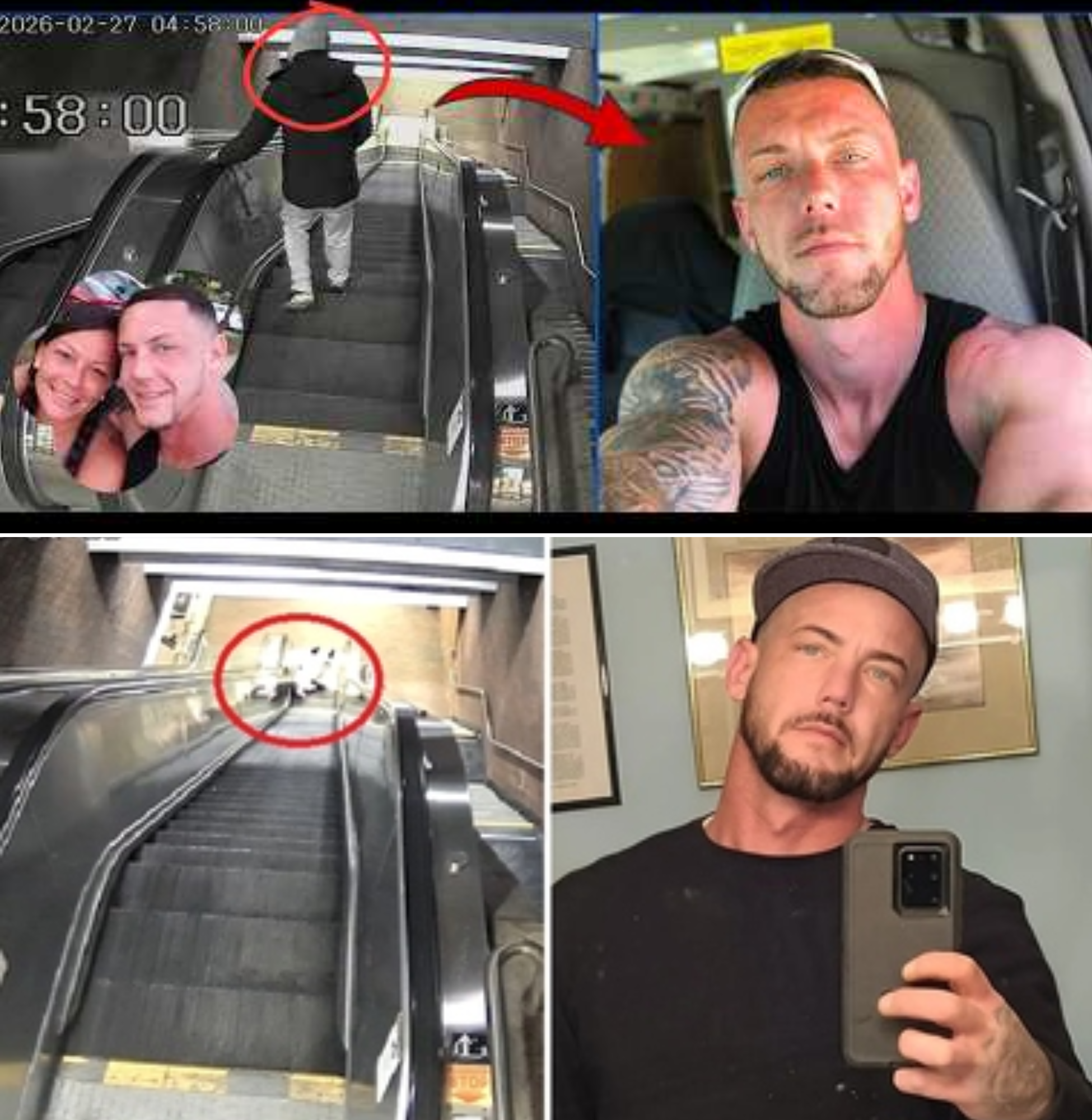
In the early morning quiet of Davis Station in Somerville, Massachusetts, on February 27, 2026, a routine commute turned into a nightmare that exposed uncomfortable truths about human indifference. Steven McCluskey, a 40-year-old carpenter and devoted father of two young sons from South Boston, lost his balance at the bottom of a descending escalator. What should have been a minor stumble became a fatal entrapment when his coat snagged in the machinery, pulling tighter around his neck and eventually constricting his airway as horrified bystanders simply walked past.
Surveillance footage released by investigators shows the harrowing sequence in stark detail. Just before 5 a.m., McCluskey stepped onto the escalator heading toward the subway platform. As he reached the bottom, he stumbled and fell forward. His clothing lodged into the moving steps. For more than 20 agonizing minutes, he struggled visibly — attempting to unzip his coat, wiggling to free himself, and flailing his legs in desperation. Over a dozen commuters passed within feet of him. One man paused, watched for several moments, then turned and continued on his way. No one pressed the bright red emergency stop buttons located nearby.
McCluskey, described by family as a talented carpenter who ran his own home improvement business, was a man who loved building things and being a dad. His mother and sister later spoke of his warm personality — someone who could talk for hours, share stories, and offer help to others. Yet on this cold February morning, that same community failed to extend even basic assistance when he needed it most. His clothing tightened progressively, pulling skin from his back into the escalator mechanism. He eventually collapsed motionless on the steps.
It took an MBTA employee more than 22 minutes to arrive and activate the emergency stop. Somerville police and firefighters responded shortly after, finding McCluskey pinned at the bottom, unresponsive, bare-chested, with fabric deeply lodged in the machinery. Firefighters performed CPR and revived a pulse after difficult extrication — at one point considering dismantling parts of the escalator. He was rushed to Massachusetts General Hospital, where he remained in critical condition before passing away in March 2026.
The incident has sparked outrage and soul-searching across Boston and beyond. McCluskey’s grieving family is demanding accountability, questioning both the MBTA’s response times and the disturbing bystander inaction captured on video. His mother told investigators, “Nobody cared. Nobody stopped. Nobody took the time to help.” The case highlights the well-documented “bystander effect,” where individuals in crowds assume someone else will act, leading to collective paralysis in emergencies.
MBTA officials called it a “terrible accident” and noted that anyone can stop an escalator using the emergency buttons. General Manager faced questions about station staffing, especially during off-peak early morning hours. Davis Station, a busy Red Line hub, serves thousands daily, yet on this pre-dawn commute, help was dangerously delayed. Investigations continue into maintenance records, emergency protocols, and whether faster intervention could have changed the outcome.
McCluskey’s story resonates because it forces society to confront its own reflection. In an era of constant connectivity and surveillance, basic human compassion appeared absent. Psychologists point to diffusion of responsibility — the more people present, the less likely any one person feels personally obligated. The footage shows clear visibility of his struggle, yet rationalizations like “he’s probably drunk” or “someone else will handle it” may have prevailed. Some reports noted McCluskey had faced personal challenges with addiction in recent years, but family emphasized he was a loving father working to rebuild.
This tragedy echoes past incidents worldwide where bystanders failed to intervene in escalator entrapments or similar public emergencies. Escalators, while generally safe, pose unique risks at the comb plates where steps meet the landing. Loose clothing, shoelaces, or bags can snag, creating rapid entanglement. Safety experts recommend standing clear of sides, holding children’s hands, and knowing emergency stop locations. Yet no training prepares the public for the moral choice of whether to act.
For McCluskey’s two sons, the loss is profound. Friends and colleagues remember him as hardworking and generous — qualities that defined his carpentry work and family life. The family has called for broader awareness campaigns on bystander intervention, similar to “If You See Something, Say Something” initiatives but focused on immediate personal action. They want clearer station signage, more frequent employee patrols during low-traffic hours, and public education on escalator safety.
The MBTA has responded by reviewing procedures and emphasizing emergency button accessibility. Yet critics argue systemic issues — understaffing, aging infrastructure, and societal desensitization — contributed to the delay. The video’s release has gone viral, sparking debates on social media about eroded community values in urban America. Some defend the passersby citing personal safety fears or uncertainty about the situation; others see it as a damning indictment of modern detachment.
As investigations proceed, the focus remains on prevention. Simple actions — pressing a button, calling for help, or offering assistance — could have altered this outcome. McCluskey’s death serves as a painful reminder that technology cannot replace human vigilance and empathy. In busy transit hubs, lives hang not only on mechanical safety but on our willingness to see and respond to those in distress.
The carpenter who built for others left behind a legacy that now demands better systems and bolder humanity. His final moments, captured forever on surveillance, challenge us all: In a world quick to record tragedy, will we choose to intervene next time? For his grieving family and two fatherless boys, the answer came too late — but perhaps his story can save others.