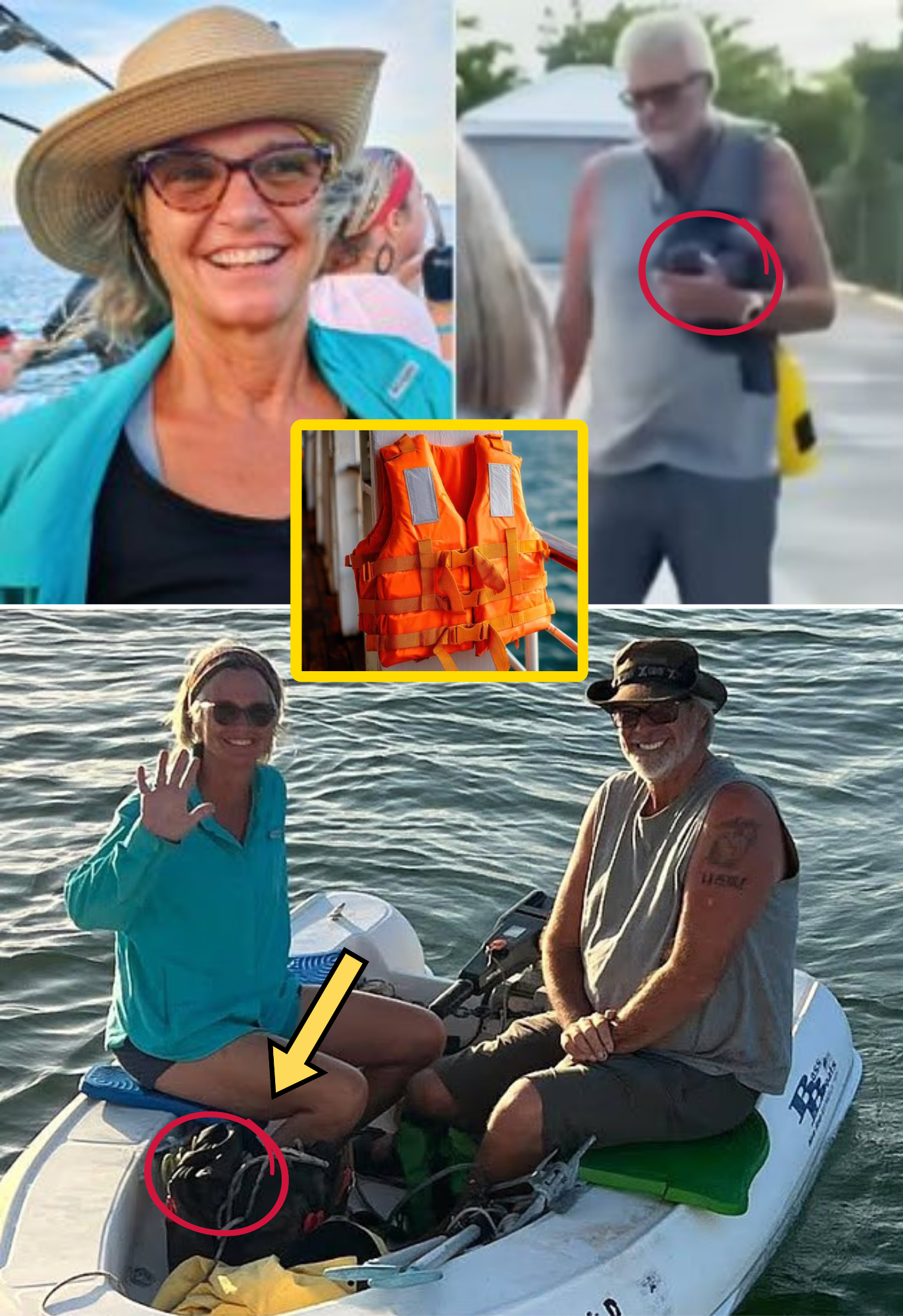
The disappearance of Lynette Hooker continues to raise troubling questions after her husband Brian revealed that the only thing his wife carried with her when she vanished overboard was the engine safety lanyard and keys — not a life jacket or any other flotation device.
Lynette Hooker, 55, from Onsted, Michigan, went missing on the evening of April 4, 2026, during a short 2.5-mile dinghy trip from Hope Town to Elbow Cay with her husband Brian Hooker, 58. The couple was returning to their anchored yacht “Soulmate” in an 8-foot hard-bottom inflatable dinghy when, according to Brian, Lynette fell overboard around 7:30 p.m. amid strong winds gusting between 18 and 22 knots.
Brian told the Royal Bahamas Police Force that his wife took the engine safety lanyard and keys with her in the fall. This immediately shut off the outboard motor, leaving the small dinghy powerless and adrift. He stated he last saw Lynette actively swimming toward shore before powerful currents swept her away and darkness caused him to lose sight of her completely. Left alone, Brian paddled for hours and eventually drifted about four miles to Marsh Harbour, where he alerted authorities early Sunday morning.
Search and rescue teams from Hope Town Volunteer Fire & Rescue, the Royal Bahamas Defence Force, and later the U.S. Coast Guard conducted extensive operations but found no trace of Lynette. By April 7, the mission shifted to recovery mode. Lynette was wearing a black bathing suit at the time, and local officials confirmed she was not reported to have been wearing a personal flotation device.
In a voicemail message left for Lynette’s daughter Karli Aylesworth, Brian mentioned throwing a flotation device to his wife after she fell. However, rescue teams later found that device floating in open water, and no confirmation exists that Lynette ever had one on her person. This discrepancy has only added to the growing skepticism surrounding the case.
Lynette’s daughter Karli has been vocal about her concerns from the beginning. She describes her mother as a physically fit, experienced sailor with more than 10 years on the water who was highly unlikely to “just fall” overboard. Karli has highlighted several inconsistencies, including why her mother — who reportedly never drove the dinghy — was holding the keys, and why Lynette appeared to be swimming away from the boat rather than staying close for help.
Adding further complexity, Karli revealed that her mother sent a final text message just hours before the incident. The message reportedly exposed deep fear and serious troubles in the marriage, hinting at problems so severe they may have contributed to the sudden disappearance.
A recent examination of the yacht “Soulmate” uncovered a suspicious detail in the sleeping area of the wheelhouse cabin — an ordinary item whose condition or placement does not align with Brian’s account of a routine evening trip. This unexpected clue has become a significant lead, suggesting possible activity aboard the yacht in the hours before the couple left in the dinghy.
Brian Hooker has cooperated with investigators by providing his statement, and Bahamian police have not officially declared foul play. The U.S. State Department is assisting while maintaining its Level 2 travel advisory that warns “boating is not well regulated” and that injuries and deaths have occurred in the region.
The combination of the husband’s revelation about the keys being the only item Lynette took, the absence of a life jacket, the final text message, the wheelhouse cabin detail, and the known history of volatility in the marriage — including reports of fighting, drinking, and past threats — has intensified calls for a thorough investigation.
Karli Aylesworth has hired legal representation and continues pressing for transparency. She has expressed frustration over the limited information shared with the family and believes the facts “simply don’t add up.” In emotional statements, she has urged authorities to examine every detail, including the timing of events, the direction Lynette was swimming, and what really happened aboard “Soulmate” before the fatal dinghy ride.
Local rescue officials emphasized the genuine dangers that night: high winds, strong tidal currents, complete darkness, and the risks of operating a tiny dinghy without proper safety equipment. Yet many observers now question whether external factors, including possible marital tensions hidden behind the couple’s adventurous social media posts under “the_sailing_hookers,” played a larger role.
This case has sparked important broader conversations about boating safety for couples: the critical need for life jackets and personal locator beacons on every trip, secure engine kill switches, clear communication plans, and avoiding nighttime travel in marginal weather. It also serves as a sobering reminder that relationships appearing idyllic on social media can sometimes conceal deeper struggles.
As recovery teams continue methodical searches of the waters around Elbow Cay with divers, drones, and patrol boats, Lynette’s family — especially her determined daughter — waits in painful uncertainty. Optimism for a safe return has faded, but the quest for answers remains strong, fueled by the husband’s account of what Lynette carried with her and the mounting inconsistencies.
Lynette Hooker embraced life on the sea with passion and courage. The only item she reportedly took with her that night — the boat keys — has now become a symbol of the many unanswered questions surrounding her disappearance. Her final text to her daughter and the suspicious detail in the wheelhouse cabin stand as haunting pieces of a puzzle that investigators must solve.
While the turquoise waters of the Abaco Islands continue to guard their secrets, the revelations keep coming. The sailing community mourns a vibrant adventurer, and people around the world watch closely, hoping that truth and justice will finally emerge from the depths.
News
“The One Detail in the Wheelhouse Cabin No One Saw Coming”: Suspicious Find Becomes Crucial Clue in Lynette Hooker’s Overboard Disappearance.
The investigation into the disappearance of Lynette Hooker has taken a dramatic new direction after authorities discovered a suspicious detail in the sleeping quarters of the wheelhouse aboard the couple’s…
Mom’s Final Text Exposed a Shocking Secret: Daughter Reveals Chilling Last Message Hours Before Lynette Hooker Vanished at Sea.
The disappearance of Lynette Hooker in the Bahamas has grown even more disturbing after her daughter disclosed that a final text message sent by her mother hours before she vanished…
“Prior Issues” and Threats to Throw Her Overboard: Daughter Doubts Lynette Hooker’s Overboard Death Was Accident as New Revelations Emerge.
The disappearance of 55-year-old Lynette Hooker in the waters near Elbow Cay, Abaco, Bahamas, has taken a more disturbing turn as her daughter publicly questions whether the incident was truly…
“I Lost Sight of Her Swimming Toward Shore”: Husband’s Haunting Account as 55-Year-Old Lynette Hooker Vanishes at Sea Near Elbow Cay.
The tranquil turquoise waters of the Abaco Islands in the Bahamas turned deadly on the night of April 4, 2026, when Lynette Hooker, a 55-year-old woman from Onsted, Michigan, disappeared…
Chilling Dashcam Audio Captures 7-Year-Old Athena Strand’s Final Moments Before Murder.
In a North Texas courtroom on April 7, 2026, the capital murder case against former FedEx driver Tanner Horner took a shocking turn when he entered a surprise guilty plea…
Evidence at the Body Dump Site Proves FedEx Driver Tanner Horner Planned Athena Strand’s Kidnapping and Murder.
Prosecutors in the punishment phase of Tanner Lynn Horner’s capital murder case have presented compelling evidence showing that the former FedEx driver did not simply “panic” after hitting 7-year-old Athena…
End of content
No more pages to load