Postpartum Mom’s Deadly Secret: How Lindsay Clancy Used Exercise Bands to End Her Children’s Lives in Brutal Attack.
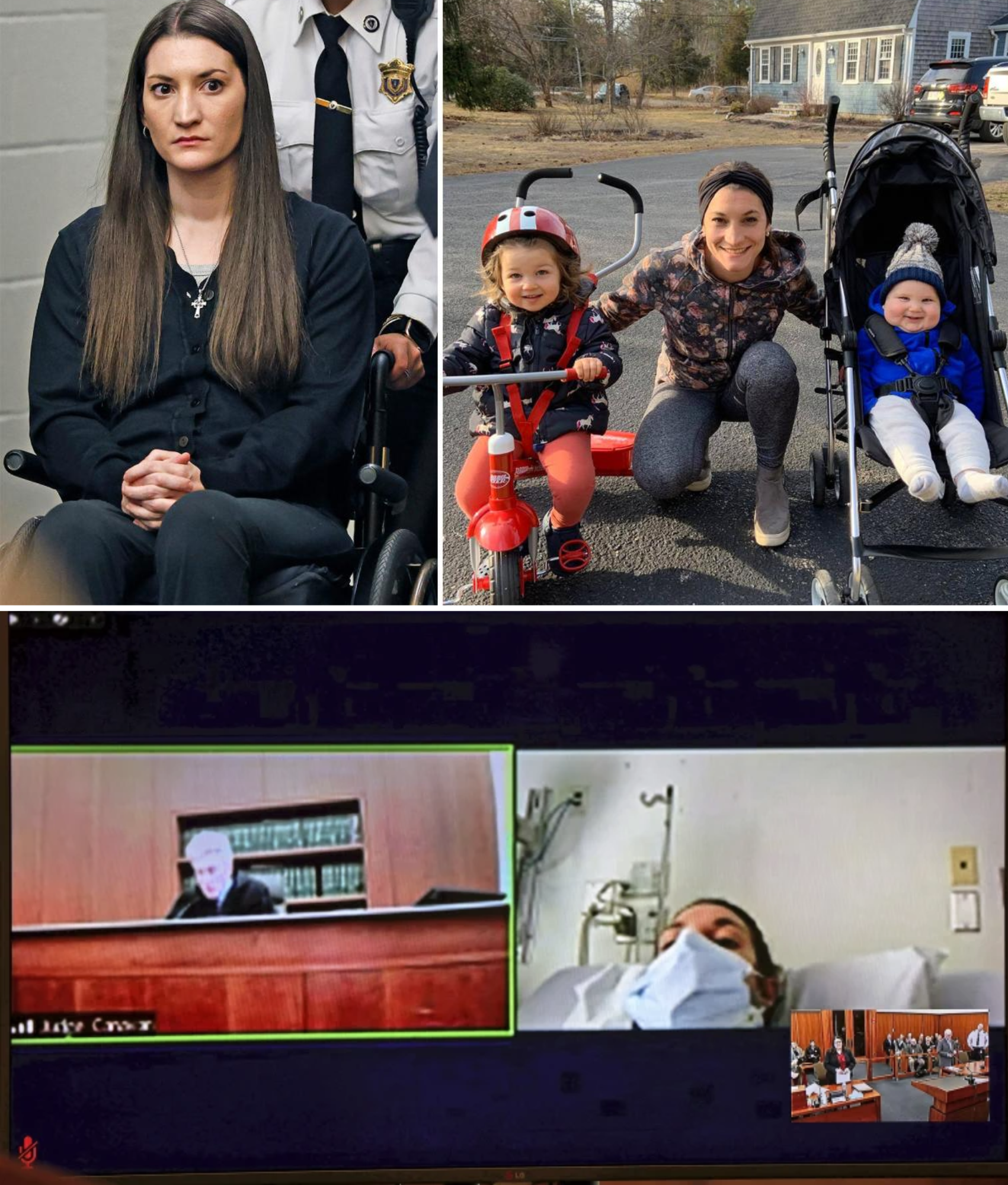
Lindsay Clancy, a 35-year-old former labor and delivery nurse from Duxbury, Massachusetts, stands accused of one of the most heart-wrenching crimes imaginable — the strangulation deaths of her three young children in January 2023. Prosecutors have painted a picture of deliberate planning and “extreme atrocity and cruelty,” claiming she used common exercise bands to carry out the acts while her husband was briefly out of the house.
On the evening of January 24, 2023, Patrick Clancy left their home for about 25 minutes to pick up dinner and run an errand at his wife’s request. When he returned, he discovered a scene of unimaginable horror. His children — 5-year-old Cora, 3-year-old Dawson, and 8-month-old Callan — were found in the basement, each strangled with a separate exercise band. The 911 call captured Patrick’s anguished screams: “She killed the kids!” Prosecutors allege that Lindsay had meticulously planned the timing, even checking how long her husband would be away.
Each child reportedly had to be held down as the bands tightened around their necks for several minutes, an act requiring sustained force and intent according to court documents. Lindsay then attempted to take her own life by jumping from a second-story window, resulting in severe injuries that left her paralyzed from the waist down. She has been hospitalized and appears in court via video or remote means for hearings.
Lindsay does not deny killing her children but argues through her defense team that she was suffering from severe postpartum psychosis, a rare and debilitating condition that can cause hallucinations, delusions, and a break from reality. Her attorney has pointed to a history of anxiety and depression following the birth of her third child, along with being prescribed multiple psychiatric medications. The defense is pushing for a focus on her mental state, potentially seeking a not guilty by reason of insanity verdict or a two-phase trial separating guilt from criminal responsibility.
Prosecutors, however, counter that Lindsay showed signs of normalcy that day. She had taken her daughter to a pediatrician appointment, texted photos of the kids playing in the snow, and appeared to be having “one of her best days,” according to her husband. They argue the killings were premeditated, not the result of an uncontrollable psychotic break, and have filed motions highlighting evidence like the separate bands used for each child.
The case has sparked intense national debate about postpartum mental health. Advocates worry it could stigmatize mothers struggling with mood disorders, while others emphasize the need for better screening and support systems. Postpartum psychosis affects roughly 1-2 per 1,000 new mothers and, in rare cases, can lead to tragic outcomes if untreated. Lindsay had sought help, including evaluation at a perinatal psychiatric center, but prosecutors note she was not diagnosed with severe postpartum depression at the time.
As the trial approaches, set for July 20, 2026, in Plymouth Superior Court, both sides are preparing extensive witness lists — over 200 from the prosecution alone. Issues like psychiatric evaluations, discovery, and even a potential jury tour of the home are being litigated. Lindsay’s parents have described her as a loving mother, while her husband Patrick has expressed forgiveness in public statements, navigating unimaginable grief.
This tragedy highlights the complex intersection of mental illness, motherhood, and justice. Families across the country are left questioning how a seemingly dedicated nurse and mother could reach such a breaking point — or if darker motives were at play. The upcoming trial promises to delve deeper into these questions, potentially reshaping how courts handle similar cases involving perinatal mental health crises.
The pain of losing three young lives in such a manner is beyond comprehension. Cora, Dawson, and Callan were robbed of their futures, and their father must live with the aftermath forever. As society grapples with this case, it serves as a stark reminder of the urgent need for improved mental health resources for new parents.