Karmelo Anthony Supporters Post Sick AI Images of Themselves Urinating on Austin Metcalf’s Grave in Twisted Show of Solidarity.
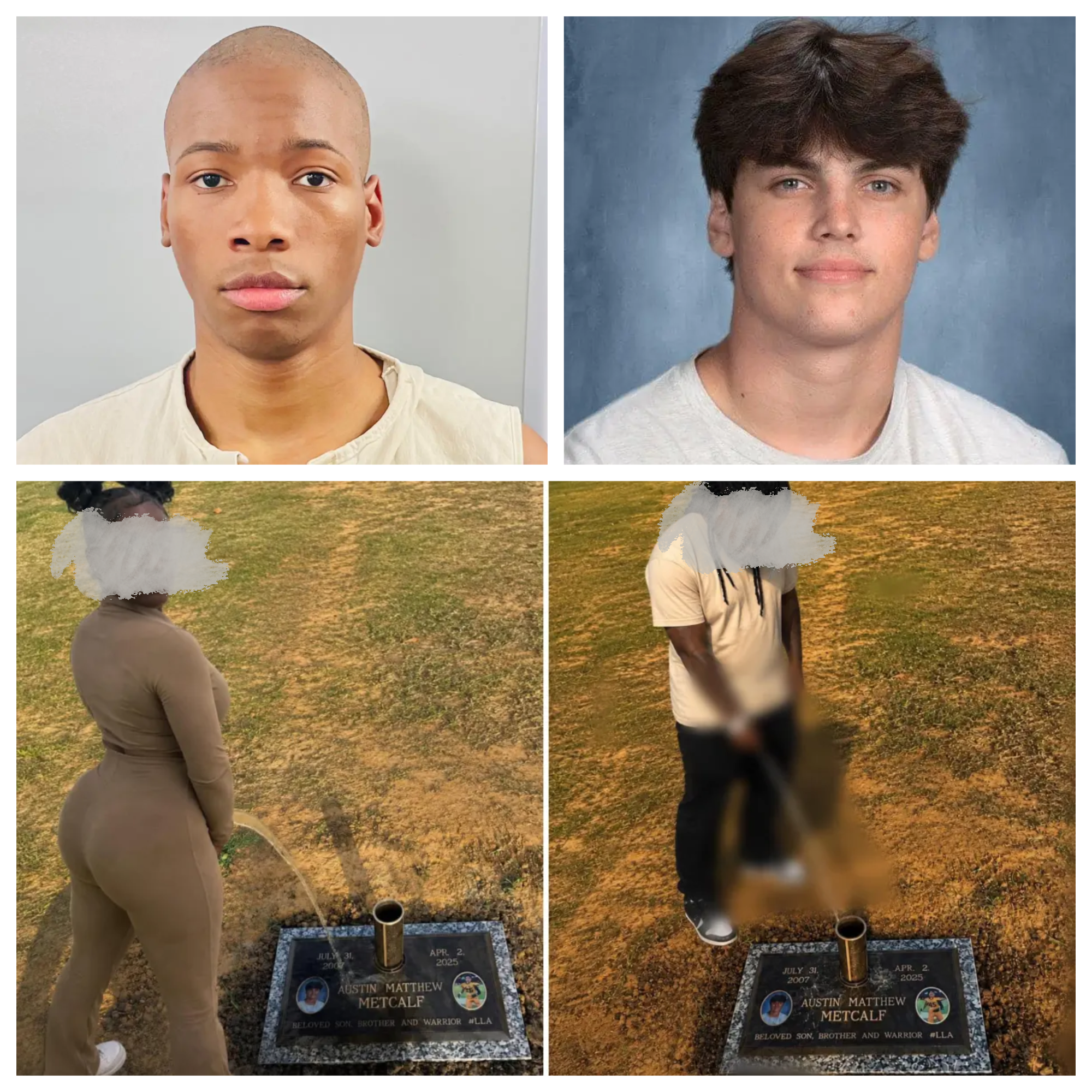
In a deeply disturbing development following the murder conviction of Karmelo Anthony, supporters of the convicted killer have taken to social media with vile, AI-generated or heavily edited photos depicting themselves urinating on the grave of 17-year-old Austin Metcalf in Little Elm Cemetery, Texas. The images, which surfaced shortly after Anthony’s guilty verdict and 35-year sentence for the fatal stabbing at a Frisco high school track meet in April 2025, have sparked widespread outrage and renewed grief for Metcalf’s family.
Austin Metcalf, a student at Memorial High School, was stabbed in the chest during an altercation at a track meet in Frisco. Anthony, then 17, claimed self-defense after Metcalf allegedly shoved him during a weather delay, but a Collin County jury rejected that narrative and convicted him of first-degree murder. The case drew national attention amid racial tensions, with supporters on both sides clashing online and in person.
The latest wave of toxicity involves edited images showing individuals — often appearing to be Black activists aligned with BLM — standing over Metcalf’s grave marker, which honors him as a “Beloved son, brother and warrior.” Fake streams of urine are photoshopped or AI-generated to flow onto the tombstone, accompanied by mocking captions, hashtags like #FreeKarmeloAnthony, and explicit taunts. Accounts such as those linked to users including Mari Hicks and others have been highlighted for sharing the content.
These posts are widely condemned as ghoulish and indicative of a complete lack of basic human decency. Commentators, including prominent voices on platforms like X, have called the trend “pure evil” and a new low in social media depravity. While authorities confirm no actual physical desecration occurred at the grave, the digital vandalism has deeply wounded Metcalf’s loved ones and reignited debates about online hate, racial division, and the glorification of violence.
The Metcalf family, still mourning the loss of their son who died in his twin brother’s arms, has faced relentless harassment. The grave photos represent not just disrespect for the dead but a brazen celebration of Anthony’s actions, despite his conviction. Police are investigating related threats, and community leaders have urged calm while condemning the posts as sickening attempts to provoke.
This incident highlights the toxic undercurrents that persisted throughout the trial, where narratives of racial injustice clashed with calls for accountability for the stabbing death. Anthony’s supporters have previously raised significant funds for his defense, but the post-verdict behavior has alienated many and drawn condemnation across political lines.
As the Metcalf family seeks peace and justice, these images serve as a painful reminder of how tragedy can be exploited for online clout. The broader public reaction has been one of unified disgust, with many calling for platforms to remove the content and for society to reject such hateful displays. Austin Metcalf’s memory deserves honor, not further violation, even in digital form.
The case continues to divide opinions, but the desecration trend has crossed a line that most find indefensible. In the wake of the verdict, the focus remains on healing for Austin’s family and ensuring his story is remembered with dignity, not dragged into further ugliness.