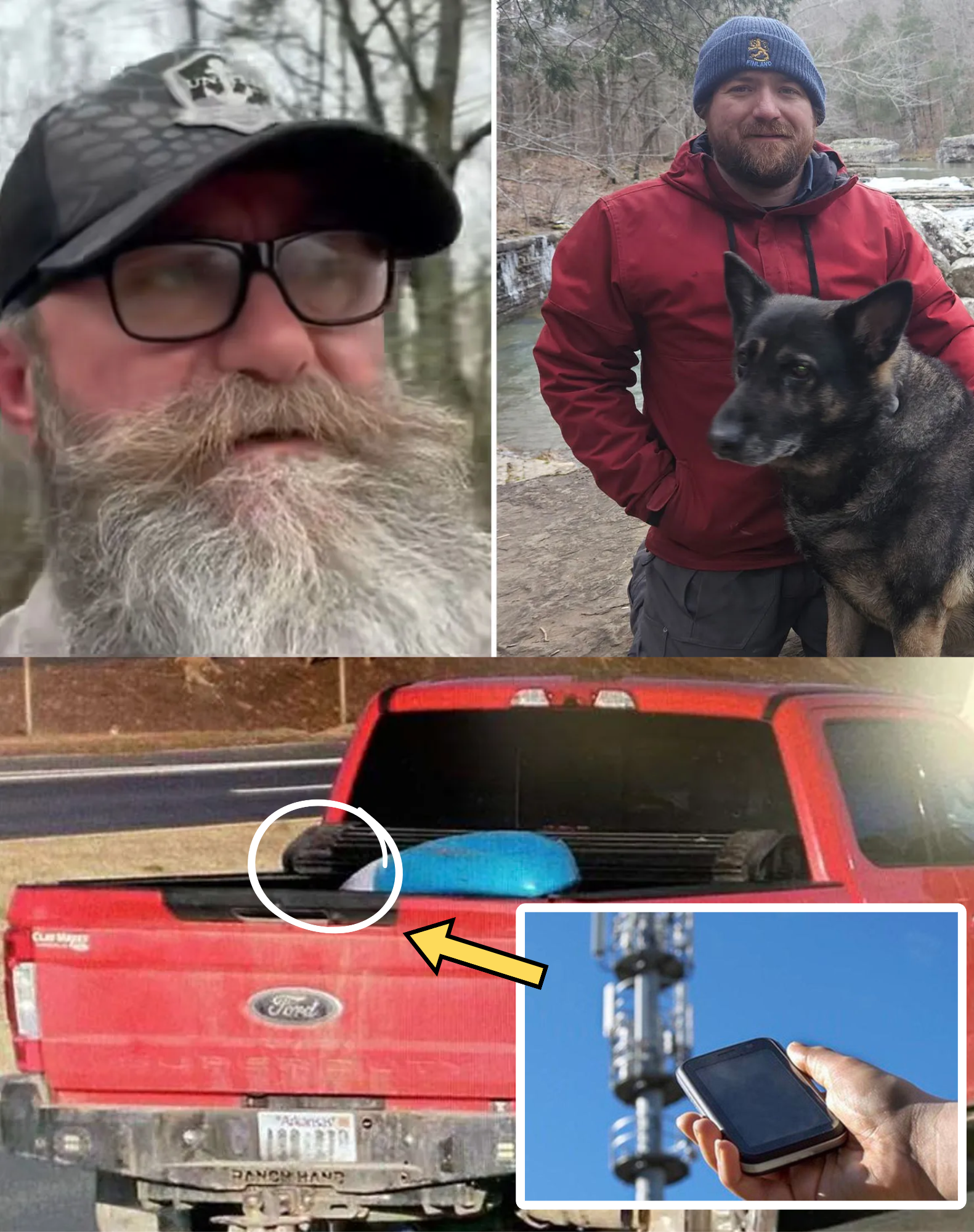
New revelations in the case of missing hiker Chris Palmer have intensified the mystery surrounding his disappearance along North Carolina’s Outer Banks. Cell phone data obtained by investigators shows that Palmer’s device briefly connected to a weak offshore signal nearly an hour after his red Ford F-250 truck was abandoned in deep sand on a Buxton beach. The ping originated from open water, not from any land-based tower, and the connection terminated abruptly mid-transfer, raising urgent questions about what transpired in those critical moments.
Palmer, 39, from Arkansas, was last known to be alive on January 9, 2026, when he texted family members about enjoying his solo hiking and camping trip through eastern national parks. He mentioned heading toward George Washington National Forest but never arrived. His truck was discovered stuck on the beach in Cape Hatteras National Seashore on January 12, containing keys, a shotgun, camping gear, and other personal items. Palmer and his German Shepherd Zoey were nowhere to be found, prompting a large-scale search involving National Park Service rangers, the United Cajun Navy volunteers, local residents, helicopters, and drones.
The phone ping adds a layer of intrigue and concern. Tower data previously indicated the device was near Avon on the evening of January 10 and near Cape Point in Buxton on January 11—both locations within the Outer Banks. The new offshore connection, occurring roughly an hour after the truck’s abandonment timeframe, suggests the phone moved significantly from the beach into the Atlantic. The signal’s weakness and offshore origin imply it connected to a maritime tower or satellite relay, common in coastal areas but rare for a hiker unless near or on the water.
The abrupt end mid-transfer has fueled speculation. Partial data uploads or attempted calls often terminate when a device loses power, submerges, or moves out of range. Authorities have not confirmed whether the phone was recovered, but the ping’s timing rules out simple misplacement on land. Combined with earlier finds—a water bottle and backpack discarded along a coastal trail near the water’s edge—the evidence points toward Palmer possibly entering the ocean, either voluntarily or under duress.
Several theories have emerged. One centers on a potential kayak attempt: surveillance footage from nearby areas reportedly captured images of a kayak or similar vessel around the time Palmer’s truck was spotted, sparking rumors he tried to paddle for help after the vehicle became stuck. The Outer Banks’ strong currents and winter swells make such an endeavor extremely risky. If Palmer launched into the water with Zoey, the offshore ping could represent his phone’s last signal before being swept out to sea. Hypothermia, drowning, or capsizing remain plausible given the cold water temperatures and rough conditions.
Another possibility involves disorientation or injury. Palmer may have wandered from the beach into the surf during low visibility—fog and wind are common on the Cape Hatteras coast—and attempted to signal for help. The mid-transfer cutoff could indicate the phone fell into the water or powered down from exposure. Zoey’s role adds complexity: as a loyal companion, the dog might have stayed with Palmer or tried to seek assistance, yet no sightings of her have been reported despite widespread appeals.
The search operation has faced mounting challenges. An ice storm sweeping the region has brought freezing rain, high winds, and hazardous conditions, forcing teams to scale back ground efforts and limit aerial support. Volunteers, many from the tight-knit Outer Banks community, have braved the elements for days, organizing beach sweeps, distributing flyers, and monitoring social media for tips. The United Cajun Navy has coordinated much of the volunteer response, emphasizing the need for more resources before weather fully grounds operations.
Palmer’s family has remained vocal, updating a dedicated missing persons page with pleas for information. They describe him as an experienced outdoorsman who always stayed in touch during trips, making the prolonged silence deeply troubling. His aunt and other relatives have highlighted Zoey’s importance, noting the dog’s protective nature and hoping any sighting could lead rescuers to Palmer. Posters feature photos of both man and dog, urging anyone with dashcam footage, boating observations, or unusual beach finds to contact authorities.
Public interest has surged, with social media groups amassing thousands of members sharing theories, maps, and encouragement. Hashtags like #FindChrisPalmer and #BringZoeyHome trend locally, while videos from search briefings and volunteer accounts circulate widely. Some posts speculate about foul play, though no evidence supports this—no signs of struggle at the truck, no reported conflicts, and the case remains a missing persons investigation.
Experts in maritime search and rescue note that offshore pings complicate efforts. If the phone entered the water, currents could have carried it miles from the original site. Recovery depends on drift patterns, water temperature affecting battery life, and whether the device remained powered. The Outer Banks’ dynamic coastline—shifting sands, inlets, and barrier islands—makes systematic searching difficult even in ideal conditions.
As the storm passes and weather improves, teams plan to resume full-scale operations, focusing on expanded water searches with boats and divers if conditions allow. The offshore ping has refocused attention seaward, prompting requests for any boater logs, fisherman sightings, or debris washes ashore that might relate to Palmer or Zoey.
For the family enduring an agonizing wait, each new detail brings both dread and faint hope. The ping proves the phone was active after the truck was left, suggesting Palmer survived those initial hours. Yet its location in open water casts a shadow over optimistic scenarios. Until more evidence emerges—perhaps a phone recovery, a Zoey sighting, or a witness account—the mystery persists.
The Outer Banks, known for its beauty and treacherous waters, has claimed many over the years through rip currents and sudden storms. Chris Palmer’s case serves as another somber chapter, reminding adventurers of the sea’s unforgiving nature. As searches continue amid the cold, the community holds collective breath, praying the next discovery brings answers rather than finality.
News
Driver Breaks Silence on Deep River Crash — Claims “Short Argument” with Rico Montes Caused the Truck to Flip.
The driver of the black pickup truck involved in the fatal Deep River crash has finally spoken publicly for the first time since the March 2026 incident that claimed the…
Phone Recovered from Deep River Still Trying to Send Final Location — The Last Desperate Act of Rodrigo “Rico” Montes.
In the early hours of March 23, 2026, 18-year-old high school senior Rodrigo “Rico” Montes made one final, heartbreaking attempt to reach his family. As police divers searched the murky…
“Mom, I’m Riding Home With a Friend, See You Soon” — The Final Text Before Rodrigo “Rico” Montes Was Found in the Overturned Truck in Deep River.
On a quiet Sunday night in March 2026, 18-year-old Rodrigo “Rico” Montes sent his mother a simple, reassuring text that would become the last words she ever received from her…
The Black Bag in the Ravine: Chilling Discovery in the Death of American Airlines Flight Attendant Eric Gutierrez.
The tragic case of 32-year-old American Airlines flight attendant Eric Fernando Gutierrez Molina took an even darker turn as investigators in Colombia recovered a black bag linked to the missing…
The Secret Weekend Pattern: How the FBI’s Latest Breakthrough May Finally Trap Nancy Guthrie’s Abductor.
As March 2026 draws to a close, the disappearance of 84-year-old Nancy Guthrie from her home in Tucson’s Catalina Foothills has entered its 55th day with no arrest and no…
The Insider Who May Have Opened the Door: FBI Hunts for the Person Who Knew Nancy Guthrie’s Home Too Well.
In the affluent Catalina Foothills neighborhood of Tucson, Arizona, where residents often leave garage doors open and security feels routine, the abduction of 84-year-old Nancy Guthrie on the night of…
End of content
No more pages to load