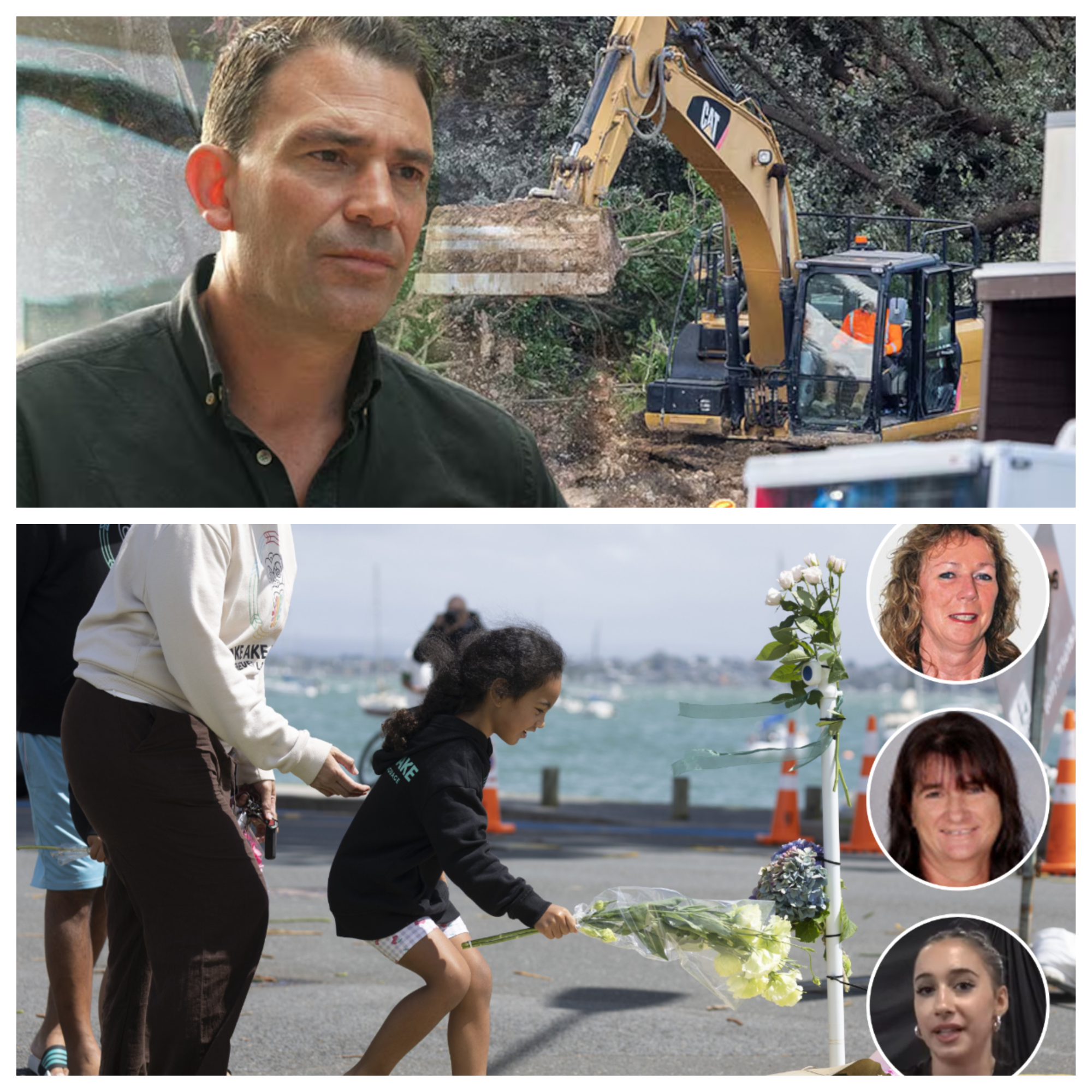
As night descended for the third time since the landslide, the base of Mount Maunganui remained illuminated only by powerful floodlights and the occasional flash of emergency vehicles. The recovery operation, now in its several night phase, continued relentlessly despite deteriorating weather and mounting emotional strain on the families still waiting for word on their loved ones. The Mount Maunganui Beachside Holiday Park, once filled with summer laughter and holiday anticipation, had become a somber, cordoned-off zone of heavy machinery, forensic tents, and quiet, determined searchers.
The massive slip that struck on the morning of January 22, 2026, had buried sections of the campground under meters of saturated volcanic soil, rock, and debris. Six people were confirmed missing in the immediate aftermath. Police had shifted the mission from rescue to recovery after locating human remains early in the process, acknowledging that survival after such deep burial and prolonged entrapment was no longer realistic. Yet the operation persisted with painstaking care—every layer of debris removed slowly to preserve dignity and allow for identification.
Families of the missing gathered in a designated support area nearby, shielded from media but visible in their quiet vigil. One of the most poignant figures was the Italian father whose two children remained unaccounted for. He had arrived in New Zealand for what was meant to be a cherished family holiday; instead, he found himself standing in the cold rain each night, watching the glow of lights on the mountain where his children were believed to be trapped. Local iwi members from Ngāti Ranginui and Ngāi Te Rangi had offered him support through karakia and presence, a gesture that provided brief solace in his isolation far from home.
Recovery teams worked in rotating shifts to combat fatigue and the harsh conditions. Heavy rain had returned intermittently, turning already unstable ground slick and treacherous. Excavators moved cautiously, guided by geotechnical engineers monitoring for further slips. Sniffer dogs, though limited by the depth and waterlogged material, continued to be deployed in targeted zones. Police liaison officers updated families hourly when possible, delivering the difficult truth that progress was slow and definitive answers might still be days away.
The six missing represented a heartbreaking cross-section of lives: Susan Knowles, 71, a beloved Rotorua grandmother known for her warmth and love of horses; Sharon Maccanico, 15; Max Furse-Kee, 15, two classmates on a group holiday; Måns Loke, a Swedish traveler exploring New Zealand; and two others, including the children of the Italian father. Each family endured their own private agony—some waiting for confirmation, others clinging to the faint, fading possibility of a miracle.
Tributes continued to pour in. Schools held memorial assemblies, friends shared photos and stories online, and community fundraisers grew rapidly to support grieving relatives with funeral costs, travel, and counseling. The father from Italy had been seen accepting hugs and shared silence from iwi members during evening karakia services, a cultural bridge that transcended language and distance. Ngāti Ranginui spokesperson Tracy Ngatoko described the moment: “We saw a father’s heart breaking in real time. We could only offer karakia, waiata, and our presence—to let him know he is not alone on this whenua.”
The physical and emotional toll on responders was evident. Many had been working nonstop since the first call came in. Fatigue, cold, and the grim nature of recovery work took their toll, yet the teams pressed on, driven by duty and compassion. Police reiterated their commitment to treating every find with the utmost respect, ensuring families were informed first and that identification processes were thorough to avoid unnecessary pain.
The landslide’s cause remained under investigation, but experts pointed to prolonged heavy rain saturating the volcanic ash and soil layers on Mauao’s steep upper slopes. Smaller precursor slips had been reported overnight before the main event, and one widely circulated photo—taken nearly two hours after the initial 911-equivalent call—showed people standing perilously close to an unstable edge. That image had fueled public debate about warning systems, evacuation triggers, and whether campers could have been moved to safety sooner.
As the fourth night approached, the mood among waiting families grew heavier. Some sat in cars with heaters running, others stood under umbrellas near the perimeter, eyes fixed on the illuminated work zone. The father from Italy remained one of the most visible—his silhouette often seen against the floodlights, a solitary figure in a foreign land carrying a grief that needed no translation.
Community support showed no signs of fading. Meals arrived for families and responders, blankets and hot drinks were distributed, and online groups coordinated messages of solidarity from across New Zealand and the world. The tragedy had united people in shared sorrow and a renewed call for better protection in known hazard zones.
For the families, each passing hour without closure deepened the wound. The wait was not just for remains or confirmation—it was for the moment when the unbearable uncertainty might give way to truth, no matter how painful. The iwi’s ongoing karakia and quiet companionship offered a thread of comfort in that darkness: a reminder that even in profound loss, humanity and cultural respect could still reach across oceans and cultures.
As floodlights cut through the rain and machinery hummed steadily, the search entered yet another night. The mountain stood silent above, its slopes forever changed. Below, families waited—anguished, exhausted, but refusing to leave. Their vigil, like the recovery teams’ work, continued through the darkness, holding space for the lost and hoping, against all odds, for some form of peace.