Left Alone at My Best Friend’s Wedding, I Danced With a Stranger—Then Learned He Was the Mafia Boss the Underworld Feared.
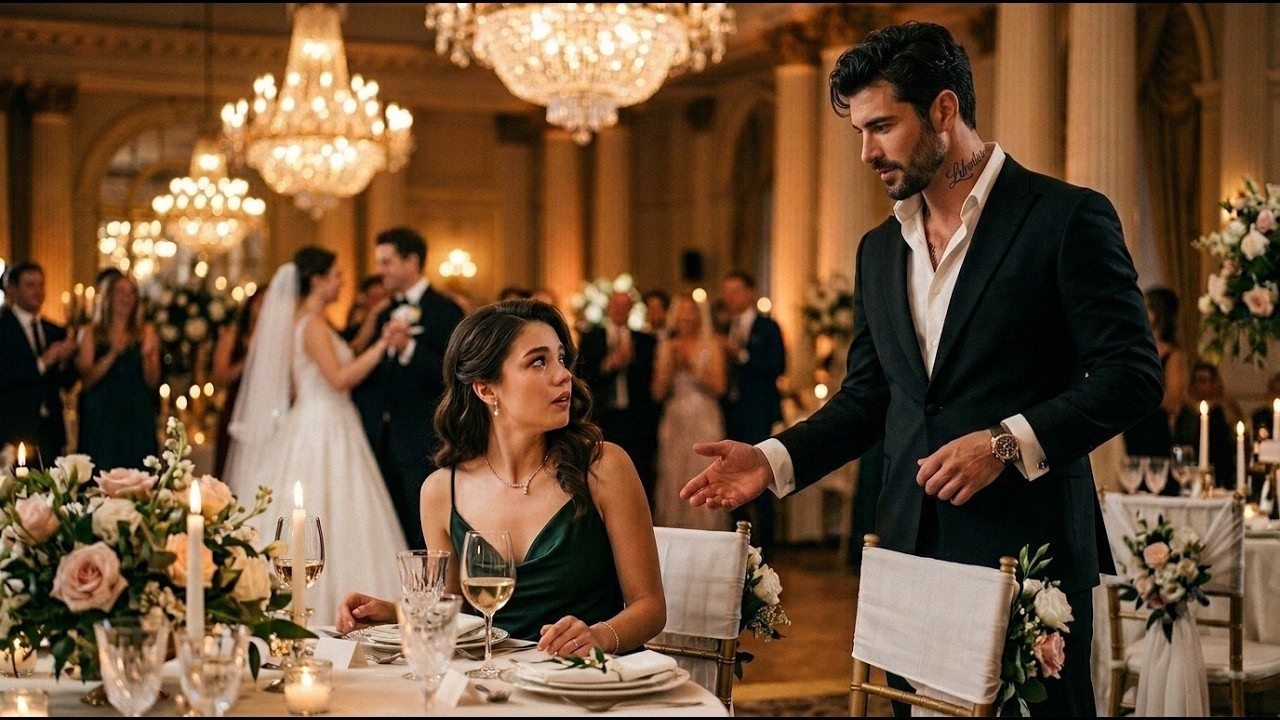
She arrived at her best friend’s wedding with an engagement ring on her finger and left heartbroken just hours later.
But that night wasn’t the worst thing that happened to me.
The worst was when I accepted a dance invitation from a stranger… and discovered that the handsome man was none other than the Godfather—the man the entire underworld feared.
Then the shots rang out, and I realized this night wasn’t a coincidence.
It was all pre-arranged.
Including my appearance.
My name is Elena Voss.
The message came while I was still standing in the hotel corridor, one heel already on and one heel in my hand. I thought it was Sophia asking where I was. Sophia was always asking where I was. It was practically a character trait.
I smiled before I even looked at the screen.
Then I read it.
I can’t do this anymore. The engagement is over. I’m sorry. Don’t call me.
Four sentences.
I stood there for a moment with one shoe on and one shoe off, the corridor humming with that particular hotel air smell of industrial carpet cleaner and recycled air, and read it again. Then a third time—not because I didn’t understand it. I understood it perfectly on the first pass the way you understand a fist connecting with your sternum—but because some part of my brain refused to accept that this was real.
No phone call. No conversation. No face. Just a text message in a hotel hallway while I was standing on one foot like a badly balanced bird.
Don’t call me.
I called him anyway. Five times. It went to voicemail on the first ring each time, which meant he’d already blocked my number and then unblocked it just long enough to send the message. I wasn’t sure which part of that hurt more—the cowardice of the text or the calculated precision of what came after it.
The sixth time I dialed, I stood with the phone pressed against my ear and listened to the automated message and looked at the carpet pattern beneath my one bare foot. Dark green diamond shapes repeating into infinity. I counted four of them before I lowered the phone.
I put my other shoe on.
I smoothed the front of my dress.
I walked to the elevator and pressed the button for the bridal suite floor. And I stood in the mirrored elevator with my ruined reflection staring back at me, eyes already red at the corners, and I made myself a promise.
Sophia would not know tonight.
Her wedding day—seven years in the making—would not be contaminated by this. Not by Julian. Not by whatever this was. I could fall apart tomorrow. Tonight I would smile until my face cracked.
The suite was full of the particular chaos specific to women preparing for an event. Hairspray haze and laughter and someone’s heel catching in the edge of a garment bag. Sophia was in front of the main mirror, her mother adjusting something at the back of her dress. And the second I walked through the door, Sophia’s face did that thing it always did—that open, uncomplicated thing I had loved since we were nineteen years old and sharing a dorm room with a broken radiator.
“You look incredible,” she said.
“You look like someone who should be on a magazine cover,” I answered. I kept my voice even. I crossed the room and kissed her cheek and did not look at myself in the mirror.
I made it through the ceremony without once losing my expression. Sophia cried during the vows. Her husband, Thomas, steady and good and slightly overwhelmed-looking in the way of genuinely decent men thrust into spotlight, had to stop twice and breathe. The officiant was patient. The guests were warm. The music swelled at the right moments. Everything was correct and beautiful, and I sat in the second row with my hands folded in my lap and felt the distance between myself and the rest of the room like a physical membrane.
The reception was worse in the way that loud, joyful places are worse when you are privately drowning.
The ballroom was exactly what Sophia had wanted for years—crystal chandeliers casting prism light across walls the color of old champagne, round tables draped in ivory, a dance floor already filling with bodies before the first toast was finished. The kind of room that suggested money and effort and love in equal measure.
I had been assigned to a table near the back, which turned out to be a mercy. The other guests at my table were colleagues of Thomas’s—pleasant, professional people who didn’t know me well enough to notice anything was wrong and didn’t particularly require conversation. I ate what was put in front of me. I drank one glass of champagne and then switched to water. I kept my phone face down on the table and willed myself not to turn it over.
By the time the dance floor had become the center of everything and the tables had largely emptied out, couples migrating toward the music and the warmth and the particular permission that receptions give to publicly display affection, I stayed where I was.
I refilled my water glass from the pitcher on the table and watched the room and told myself I was fine.
I was not fine.
I was sitting at the edge of a party with a broken engagement and no one to tell and a glass of water and the beginning of a headache forming behind my left eye. And the distance between where I was and where I was supposed to be—at this table, at this wedding, in this year of my life—felt like something I could measure in miles.
I didn’t hear him approach.
That was the first thing I registered later when I was able to think about it clearly—that a man of his size in a room that loud had somehow moved across the floor without making a sound I could detect.
One moment the chair to my left was empty.
The next moment it wasn’t.
“You’ve been staring at that glass for about ten minutes,” he said.
I turned.
He was tall. The kind of tall that registers even when sitting. Something about the proportion of his shoulders to the chair back behind them. Dark suit, no tie, the collar opened by exactly one button in the way of men who have decided that formality ends at a particular point and refuse to negotiate. His face was composed in that specific way I associated with people who had learned through some sustained effort to keep their faces from showing what they were thinking. Not cold. Not warm. Still in the way of deep water.
I held his gaze.
“Counting the reflections,” I said.
One corner of his mouth lifted—not quite a smile, the beginning of one, abandoned halfway.
“From the ice? From the chandelier?”
I looked up briefly, then back at him. “There are forty-seven of them on this wall.”
He looked at the wall, then back at me. “Forty-nine. You missed the two near the sconce.”
I looked again. He was right.
“I’m Matteo,” he said. He did not offer a last name. He did not extend his hand immediately the way most people did, that reflexive performative greeting gesture. He said his name the way you state a fact.
“Elena.”
“You came alone.”
It wasn’t a question, which I appreciated more than I expected to.
“I did.”
“So did I.” He picked up the glass of scotch he’d apparently been carrying when he sat down—she hadn’t registered it until now—and took a single measured sip. “Bad night?”
I considered lying. It was the obvious move. Fine. No, I’m great. Lovely party. I’d been executing that particular lie for the past three hours with some success. But something about the directness of the question, the absence of performed sympathy, made me want to skip it.
“Mediocre,” I said. “Trending downward.”
He set his glass on the table, looked at the dance floor for a moment, then back at me.
“Would it help or hurt to dance?”
I thought about it honestly. “I don’t know.”
“Honest answer,” he said. He stood and extended his hand. The gesture was simple, unadorned, not theatrical, not pressuring—just a hand and an open question. “Then find out.”
I looked at his hand for a moment longer than was socially comfortable.
Then I took it.
The floor was crowded enough that we became anonymous within it—two more bodies in the slow-moving constellation of couples and small groups navigating the space between the band and the tables. He danced the way he moved—without wasted motion, without apology, leading with enough certainty that following was easy but never mechanical.
I hadn’t expected that.
I wasn’t sure what I had expected.
We didn’t speak for the first song. The second one began and neither of us stopped. His hand rested lightly at the small of my back. Mine rested against the solid plane of his shoulder. The music was slow enough that conversation would have been possible, but neither of us offered any.
It was the first time all night that the distance between me and the rest of the room had felt smaller instead of larger.
When the song ended he didn’t immediately release me.
“One more,” he said. It wasn’t quite a question.
I nodded.
We were still dancing when the first shot rang out.
The music cut mid-note. Someone screamed. Guests scattered toward the walls like startled birds. Matteo’s body shifted instantly—turning, placing himself between me and the direction of the sound, one arm locking around my waist as he moved us toward the nearest structural column with a speed that felt practiced.
More shots. Glass shattered somewhere near the entrance.
“Stay behind me,” he said, voice low and utterly calm.
I stayed.
His free hand had already produced a gun I hadn’t known he was carrying. Two of his men—I realized only then that the quiet figures near the exits had been watching the room the entire time—moved with similar efficiency, clearing a path toward a side door.
We were almost there when a man in a dark suit raised a weapon toward us.
Matteo fired once.
The man dropped.
I didn’t scream. I simply watched the red bloom across the man’s shirt and understood, with sudden clarity, that the stranger who had asked me to dance was not a stranger at all.
He was the man the underworld feared.
The Godfather.
Outside, in the service corridor that smelled of industrial cleaner and cold air, Matteo finally turned to look at me. His expression hadn’t changed. The same deep-water stillness.
“You were never supposed to be alone tonight,” he said.
I stared at him. “What?”
“Your fiancé’s message. The timing. The table assignment near the back. None of it was coincidence.” His eyes held mine without apology. “Julian Crowe has been working with people who want me dead. He was supposed to keep you away from this reception. When he failed, they decided to use the chaos of the wedding as cover.”
The floor tilted under my feet.
“You knew,” I whispered.
“I knew enough to be here.” He put the gun away with the same calm efficiency. “I did not know they would involve you so directly. That was a miscalculation on their part.”
Sirens were already rising in the distance.
Matteo looked toward the sound, then back at me.
“You have a choice, Elena. Walk away from this night and pretend it never happened. Or come with me and learn exactly how deep the people who hurt you are willing to go.”
I looked at the door leading back into the ballroom—at the ruined celebration, the broken glass, the fear still hanging in the air.
Then I looked at the man who had danced with me when no one else noticed I was drowning.
“I already know how deep they go,” I said. “They sent a text instead of a face.”
I stepped closer.
“Take me with you.”
Matteo Romano studied me for a long second.
Then one corner of his mouth lifted—the same almost-smile from the table.
“Good,” he said. “Because the night isn’t finished yet.”
And as his men closed around us and the black cars waited in the alley beyond the service door, I understood that the engagement ring still on my finger had never been the beginning of a life.
It had been the opening move in a war I hadn’t known I was part of.
And the stranger who had offered me a dance had just claimed the next one.