Infidelity, Imminent Divorce, and a Felon’s Gun: Family Reveals What Really Triggered the Shreveport Massacre.
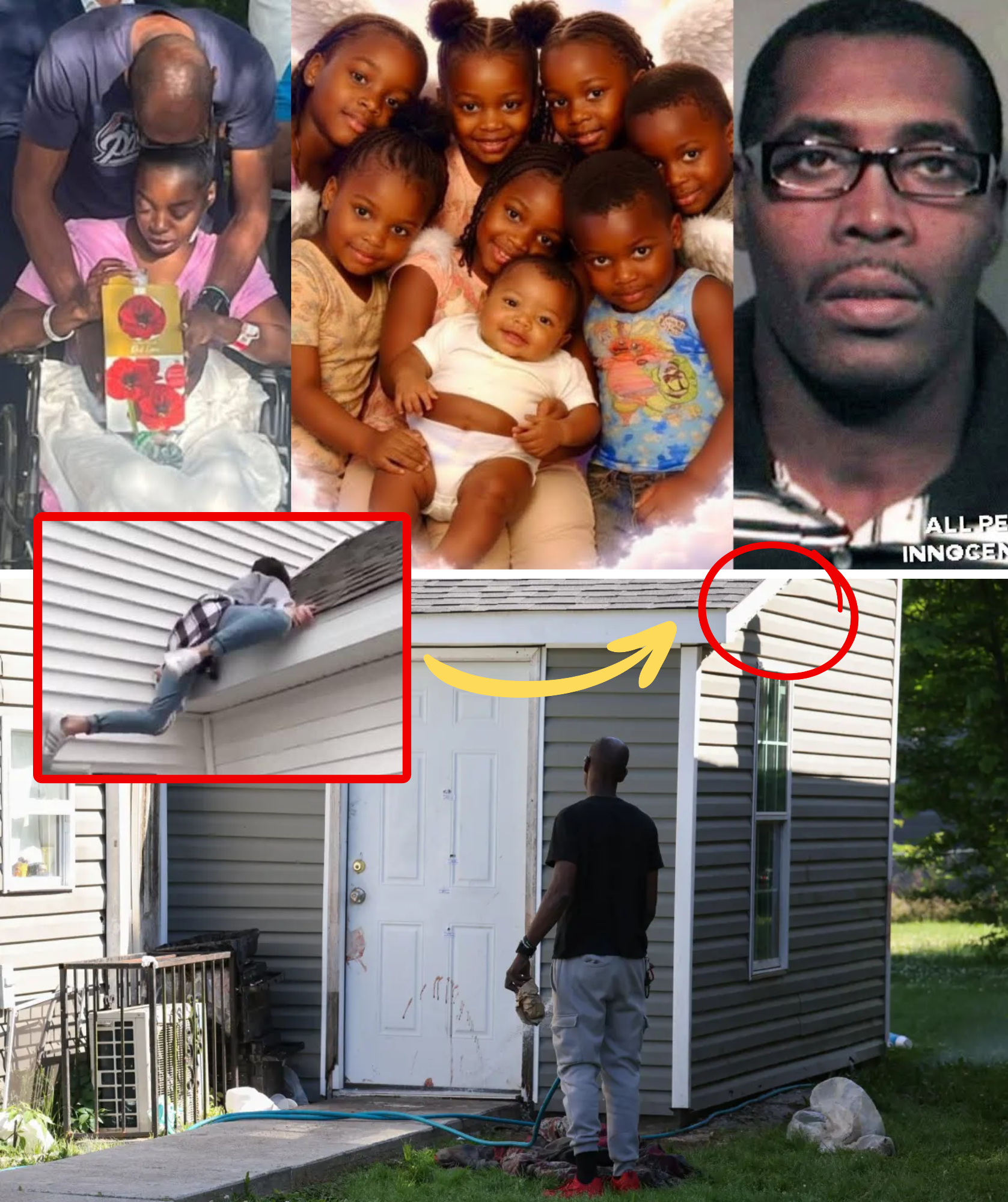
Family members of the victims in Shreveport, Louisiana, are breaking their silence about the events leading to the April 19, 2026, mass shooting that claimed the lives of eight children. New interviews reveal a volatile mix of suspected infidelity, an impending divorce scheduled for the very next day, recent mental health treatment, and a prohibited firearm supplied by a convicted felon.
Shamar Dwan Elkins, 31, killed seven of his own children and their 10-year-old cousin before turning the gun on two women — his wife Shinequa (Sheniqua) Pugh and another woman believed to be his ex or girlfriend. Both women survived but remain hospitalized after being shot multiple times. Elkins was later killed by police following a carjacking and chase into Bossier City.
The victims were Jayla Elkins (3), Shayla Elkins (5), Braylon Snow (5), Khedarrion Snow (6), Kayla Pugh (6), Layla Pugh (7), Mar’Kaydon Pugh (10), and Sariahh Snow (11). Many were found shot while sleeping in their beds.
Crystal Brown, a cousin of one of the surviving women, told reporters that infidelity played a central role. She said Shinequa had confided in her about issues in the marriage and asked for help filing divorce papers. Court was scheduled for Monday, April 20 — the day after the shooting. Brown described Elkins as becoming increasingly argumentative when confronted about the situation, though she noted no physical violence had occurred prior to that Sunday morning.
“He was upset about it,” Brown recalled. “But nothing physical before that day.”
Family members also highlighted Elkins’ recent mental health struggles. His brother-in-law, Troy Brown, confirmed to NBC News that Elkins had sought treatment through Veterans Affairs just weeks earlier. He stayed at a VA facility for a week and a half, returned home appearing happy, and had served seven years in the Louisiana Army National Guard before leaving in 2020. Coworkers at UPS had noticed extreme stress, including compulsive hair-pulling.
Despite these red flags, family said they never imagined he would commit such an act. “He loved his kids. He loved his wife. I just don’t know what happened,” one relative shared.
The firearm used in the attack has led to federal charges against 56-year-old Charles Ford (also referred to as Charles Floyd Ford in some reports), a convicted felon. ATF agents traced the Mossberg-style pistol to Ford, who initially denied knowledge but later admitted he believed Elkins had taken it from him. Ford kept the weapon unsecured under his truck seat and now faces up to 15-20 years in prison on charges of felon in possession of a firearm and lying to federal agents. The second handgun used remains under investigation.
This tragedy strikes even deeper for the surviving family. The two wounded women — sisters Sheniqua Elkins and Kosha Pew — had already lived through horror nearly 20 years ago when their own mother was shot and killed in a crossfire incident. Now they must cope with losing their children while recovering from multiple gunshot wounds. One survivor reportedly posted on social media apologizing to the children, saying she was sorry she couldn’t save them.
An uncle of the victims expressed raw devastation while standing outside one of the homes. He said the house now brings unbearable memories and wants it demolished. “I don’t want to look at this anymore,” he told reporters. “It’s devastating.”
The attacks unfolded rapidly in the Cedar Grove neighborhood. Around 5:55 a.m., shots were reported at the Harrison Street home. Elkins then moved to the West 79th Street residence he shared with Shinequa and the children. A 12-year-old girl and another relative escaped by jumping from the roof. Police bodycam and home security footage later captured the confrontation that ended with Elkins’ death.
Community vigils have filled local churches, with leaders calling for better domestic violence intervention and mental health resources. The case has reignited debates about:
- Enforcement of firearm prohibitions for convicted felons and those with recent mental health crises
- The heightened danger during divorce and separation periods
- The need for families to report threats even when they come from loved ones
- Support systems for veterans transitioning to civilian life
Shreveport officials continue to urge anyone with information to come forward. A reward remains active for additional details that could clarify the full sequence of events.
As the two surviving mothers fight for recovery in the hospital, their extended family grapples with unimaginable grief compounded by prior trauma. Relatives emphasize that while Elkins appeared devoted on the surface, the combination of personal crises, suspected cheating, and easy access to a gun created a perfect storm.
This story serves as a painful reminder that behind closed doors, many families hide struggles until it is too late. The eight children lost that morning had their entire futures stolen in minutes, leaving a community asking how love, pain, and unresolved issues can collide so catastrophically.