Harrowing Inside Video Shows NYC Seaplane’s Terrifying Hard Landing Into Choppy East River With 8 Aboard.
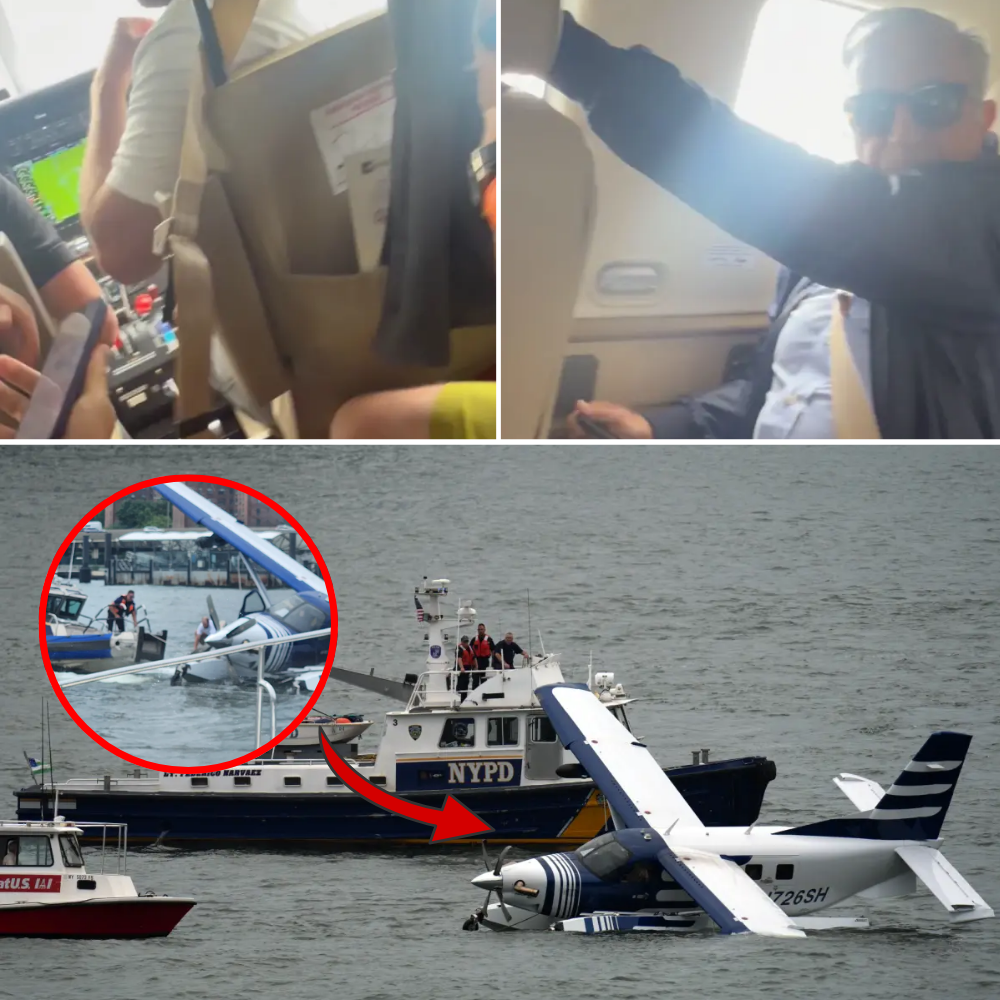
A routine scenic flight over New York City ended in heart-stopping drama on Sunday when a seaplane carrying eight people made a violent hard landing in the East River near the Skyport terminal along 23rd Street and FDR Drive. Video captured from inside the cabin reveals the raw panic and resilience of passengers as the aircraft slammed into the choppy waters, offering a rare, chilling glimpse into what could have been a far deadlier disaster.
The Kodiak 100 seaplane, operated by Acadian Seaplanes through Blade Air, was approaching for landing when it hit the river with a loud boom. Passengers can be heard gasping sharply as the plane rocks violently against the waves. “Oh my gosh! Oh my gosh!” several voices exclaim amid the chaos, followed by nervous laughter once the aircraft stabilizes, bobbing with one wing partially submerged. The footage, obtained by media outlets, captures the intense moments as the group braces for impact and processes the sudden ordeal.
Two pilots remained composed, instructing passengers to stay calm and keep life vests handy as emergency sirens wailed in the background. Quick response from NYPD and FDNY crews ensured everyone was rescued safely. At least two people sustained minor injuries, including 16-year-old Khloe Todd’s grandmother, Ada, who complained of pain in her ribs, back, and head after the impact. Khloe, traveling with family after a birthday celebration in East Hampton, described it as “a crash, a very bad one” and admitted feeling traumatized — her first seaplane experience turning into a nightmare despite the family’s frequent flying history.
The company attributed the hard landing to choppy conditions from the previous night’s storm and waves generated by nearby ferries and passing boats. “There were a lot of ferries in the vicinity and there may have been wind at the last second,” officials explained. The plane was eventually righted and towed back to the dock after passengers were safely removed. Investigations by authorities are ongoing to determine exact contributing factors, though no fatalities occurred — a fortunate outcome given the East River’s history with aviation incidents.
Insights Into the Incident and Aviation Safety Over Water
This event highlights both the vulnerabilities and safeguards of seaplane operations in busy urban waterways like New York’s East River. Seaplanes offer unique, breathtaking views of the city skyline, but landing on water introduces variables absent in traditional runways: waves, wind, boat traffic, and visibility challenges. The nervous laughter in the video speaks volumes — a human coping mechanism in the face of sudden danger — while the pilots’ calm instructions likely prevented greater panic or injury.
From a personal perspective, watching the inside footage is profoundly unsettling yet inspiring. These passengers, including a teenager and her grandmother returning from a happy family trip, faced the unknown together. It reminds us that even “safer” modern aviation can encounter edge cases where human skill, quick emergency response, and a bit of luck determine survival. Khloe Todd’s account humanizes the story: what begins as an exciting adventure can test resilience in seconds. Her grandmother’s injuries, though minor, underscore how impact forces affect different age groups variably.
This isn’t an isolated event. Just weeks earlier, another seaplane required rescue after a wave struck during takeoff near the Throggs Neck Bridge. Such recurring incidents near NYC waterways raise questions about operational protocols during variable weather, traffic management with ferries, and pilot training for “hard” water landings. The FAA and local authorities will likely scrutinize wind data, wave conditions, and approach procedures. For passengers, it reinforces the value of paying attention to safety briefings, especially on water-based flights where life vests and exit strategies differ from commercial jets.
Broader lessons extend to all forms of travel: complacency around familiar routes or “scenic” experiences can be risky. Operators like Blade Air provide thrilling alternatives to standard flights, but they operate in dynamic environments where external forces — storms, boat wakes — demand split-second adjustments. The successful rescue of all eight aboard (including two pilots) credits rapid emergency services and the aircraft’s design, which stayed afloat long enough for evacuation.
In an era of viral travel content, this video serves as both a cautionary tale and a testament to human spirit. Survivors emerge with stories of survival rather than loss, yet it prompts reflection on improving safety margins for seaplane tourism in high-traffic areas. Families like the Todds now carry a memorable — if frightening — tale from their East Hampton birthday adventure. As investigations proceed, the focus remains on ensuring such “close calls” don’t escalate into tragedies in the future.
For anyone who flies, drives, or boats around bustling cities, this incident is a powerful nudge: respect the elements, stay vigilant, and appreciate the professionals who train for these exact scenarios. Miraculously, what could have been a major disaster became a story of survival — one that will linger in the minds of those aboard for years to come.