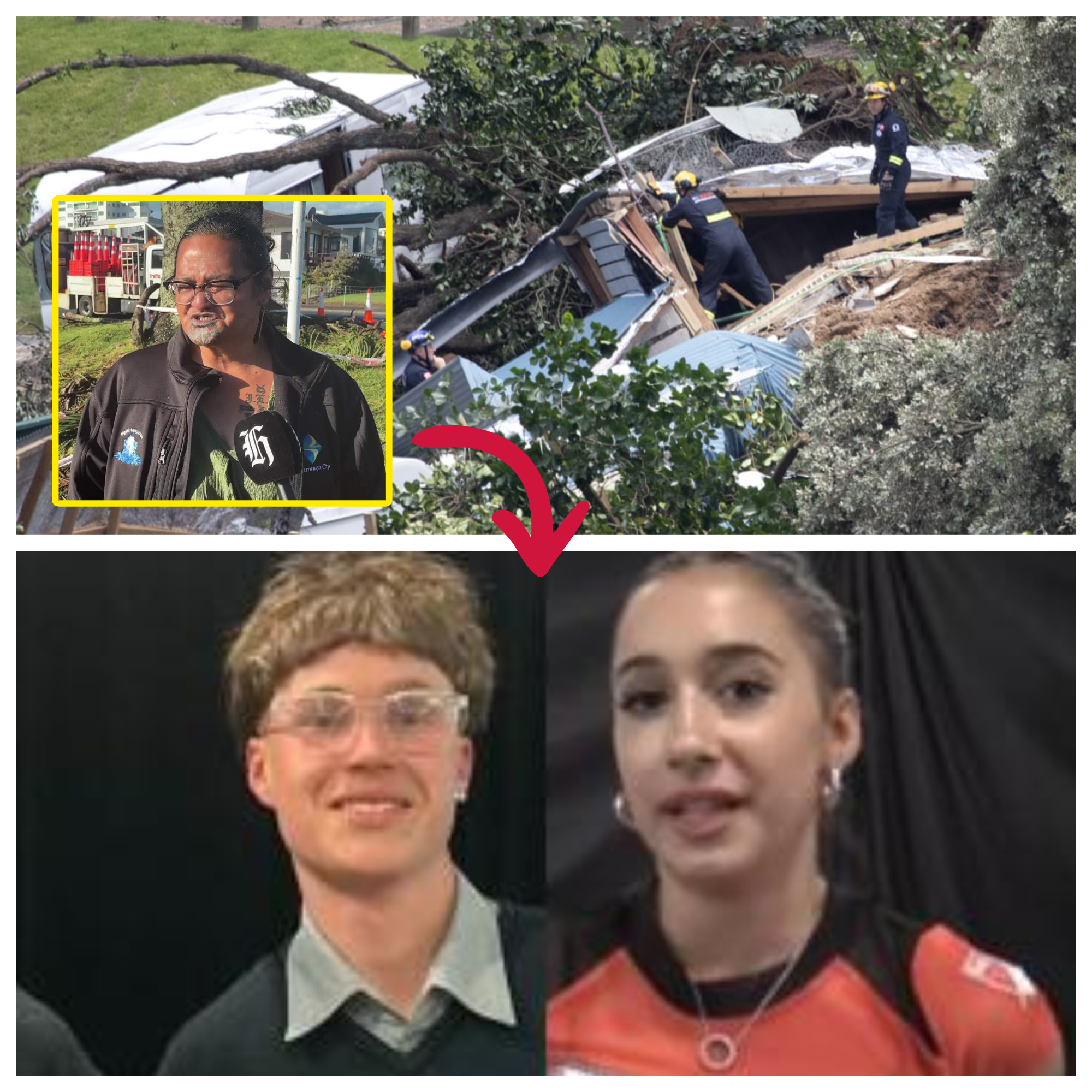
As the sun set over the scarred slopes of Mauao on January 24, 2026, a small group gathered at the base of Mount Maunganui for a karakia service. The air was heavy with grief and the faint scent of salt from the nearby beach. Among those present was a distraught father from Italy whose two children remain unaccounted for in the rubble of the devastating landslide that struck the Mount Maunganui Beachside Holiday Park two days earlier. Local iwi representatives, including members of Ngāti Ranginui and Ngāi Te Rangi, approached him with quiet respect, offering words of support, prayer, and shared sorrow in a moment that has since been described as profoundly moving.
The landslide had erupted without warning on the morning of January 22, triggered by days of relentless heavy rain saturating the volcanic soil on Mauao’s steep faces. A massive wall of mud, rock, and debris surged down the mountain and engulfed parts of the popular holiday park below. Six people were confirmed missing in the immediate aftermath, with the operation shifting from rescue to recovery after human remains were located deep within the unstable debris. The scale of destruction—tents buried meters deep, vehicles overturned, screams echoing through the chaos—left the Bay of Plenty community reeling.
The father, who has not been named publicly to protect his privacy, had been camping at the site with his children during what was meant to be a family holiday in New Zealand. Reports indicate the family was among the international visitors drawn to the area’s beaches and natural beauty. When the slip occurred, the father escaped but lost contact with his two children in the mayhem. He has since maintained a vigil near the cordoned-off area, waiting for any word from recovery teams. His anguish was visible as he stood among the flickering candles and gathered mourners.
Local iwi leaders, recognizing the cultural and spiritual weight of the tragedy on ancestral land, initiated the karakia to bless the site, honor the lost, and support those waiting. Tracy Ngatoko, a representative from the iwi, later spoke of the encounter. She described meeting the father during the service, noting his “lamentable cry” as he shared that his two children were still trapped beneath the rubble. The words captured the raw humanity of the moment—a man far from home, facing the unimaginable loss of his children in a foreign land, met with compassion from tangata whenua who opened their hearts despite their own community’s pain.
The karakia itself was a traditional Māori prayer and blessing, led by a kaumātua to acknowledge the maunga (mountain), the whenua (land), and the lives affected. Participants joined in waiata (songs) and shared moments of silence, creating a space for collective mourning. For the father, the gesture provided a brief anchor amid the storm of grief. Iwi members emphasized that Mauao holds deep significance as a sacred site, and the landslide’s impact extended beyond physical loss to spiritual disruption for both locals and visitors.
This encounter highlights the role of iwi in times of crisis. Ngāti Ranginui and Ngāi Te Rangi have issued statements expressing deepest aroha (love) and condolences to all affected families, acknowledging the profound sorrow felt by whānau (families), visitors, and the wider Bay of Plenty community. They have stood in solidarity, offering cultural support, karakia, and a listening presence to those grieving. The father’s story, shared through iwi voices, has resonated widely, reminding New Zealanders of the human cost behind disaster statistics.
The broader search and recovery operation continues under challenging conditions. Unstable slopes risk further slips, and teams proceed layer by layer with heavy machinery, forensic experts, and police oversight. Police have reassured families that remains will be treated with dignity and returned only after positive identification to avoid additional trauma. The six missing include a mix of locals and visitors, with the father’s two children among the youngest and most heartbreaking cases.
Public reaction has been one of overwhelming empathy. Social media has filled with messages of support for the father, prayers for his children, and gratitude toward iwi for their compassion. Many have noted the cultural sensitivity shown—bridging distances of geography and background through shared humanity. One online comment read: “In the darkest moment, local iwi stepped in to hold space for a grieving dad from the other side of the world. That’s true manaakitanga.”
The tragedy has also prompted reflection on preparedness. Mauao, a taonga (treasure) to Māori and a beloved landmark to all, has shown its volatile side under extreme weather. The landslide joins a series of slips across Tauranga suburbs in 2026, underscoring the need for enhanced monitoring, early warnings, and evacuation protocols in high-risk zones. Holiday parks and councils face questions about risk communication, while geologists continue assessing the mountain’s stability.
For the father, each passing hour brings no relief—only the agonizing wait. His children, whose ages and names remain private, were part of a family adventure now turned nightmare. The iwi’s outreach provided a small measure of comfort, a reminder that even in profound isolation, compassion can reach across cultures and oceans.
As the karakia concluded under the evening sky, candles flickered against the shadowed maunga. The father stood quietly, supported by those who had come to offer solace. In that shared silence, the pain of loss was acknowledged, the search for answers continued, and a grieving parent was not alone. The moment, captured in words from iwi, has become a poignant symbol of humanity amid tragedy—proof that in New Zealand’s darkest hours, community and cultural respect can offer light.